This guide explains exactly how to make a mint masala chai recipe with measured ingredients, clear stovetop timing and practical adjustments. The formula is designed for two small cups and separates the slower flavouring stage from black-tea extraction. It is research-based and has not yet been physically tested by TeaTurbo, so the measurements are a careful starting point for editorial review rather than a claim of one perfect or universally authentic method.
The images are AI-generated illustrations of the intended drink, not photographs of a tested recipe.
Quick answer: brewing at a glance
Simmer 4 g washed fresh spearmint leaves, 4 g sliced ginger, one crushed green cardamom pod and a 1 g cinnamon piece in 300 ml water for 4 minutes. Add 6 g Assam CTC tea for 90 seconds, then 200 ml milk and optional 8 g sugar. Bring to a rise and simmer gently for 2 minutes. Strain for two small cups. Mint varieties differ, so treat 4 g as a starting point.
Mint Masala Chai
Fresh spearmint, ginger and warm spices cooked with Assam black tea and milk for two small cups.
By Krishna Sahani
No ratings yet · Be the first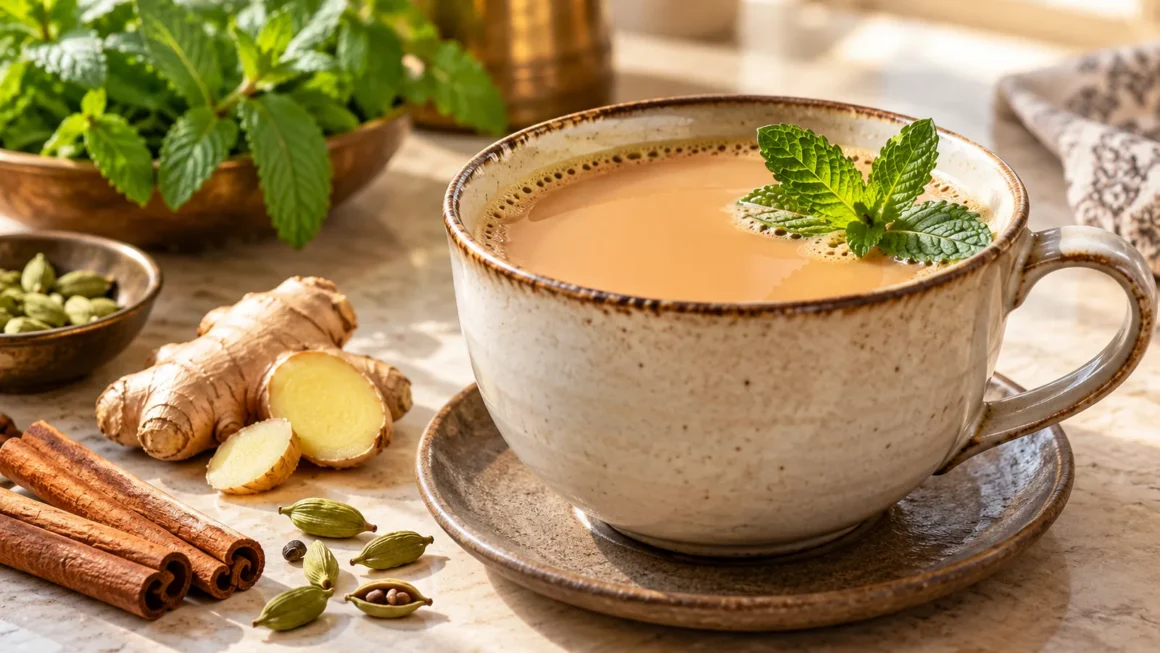
Equipment: Small deep saucepan
Fine strainer
Digital kitchen scale
Knife and cutting board
Two heat-safe cups
Ingredients
Instructions
-
Prepare aromatics
Wash and bruise 4 g mint, slice 4 g ginger and crush 1 cardamom pod. -
Simmer spices and mint
Simmer mint, ginger, cardamom and 1 g cinnamon in 300 ml water near 100°C / 212°F for 4 minutes. -
Add black tea
Add 6 g Assam CTC black tea and simmer for 90 seconds. -
Add milk
Add 200 ml milk and optional 8 g sugar. Bring to a rise and gently simmer for 2 minutes. -
Strain and serve
Strain into two cups, cool before drinking and discard the cooked ingredients after this single infusion.
Storage
Serve promptly. Strain and refrigerate leftovers within 2 hours; reheat gently once.
Ratings
Rate this recipe
What is this tea?
Mint and tea appear together in many beverage traditions, but this version is specifically a contemporary mint-led masala milk chai. Texas A&M AgriLife Extension publishes a lime-mint tea in which fresh mint is infused with black tea and then strained. Tea Board India describes black tea as the base of masala tea. Those sources support the pairing, while the exact milk-chai ratio here is TeaTurbo's measured synthesis. The finished drink should remain opaque caramel; fresh mint should add aroma, not turn it green.
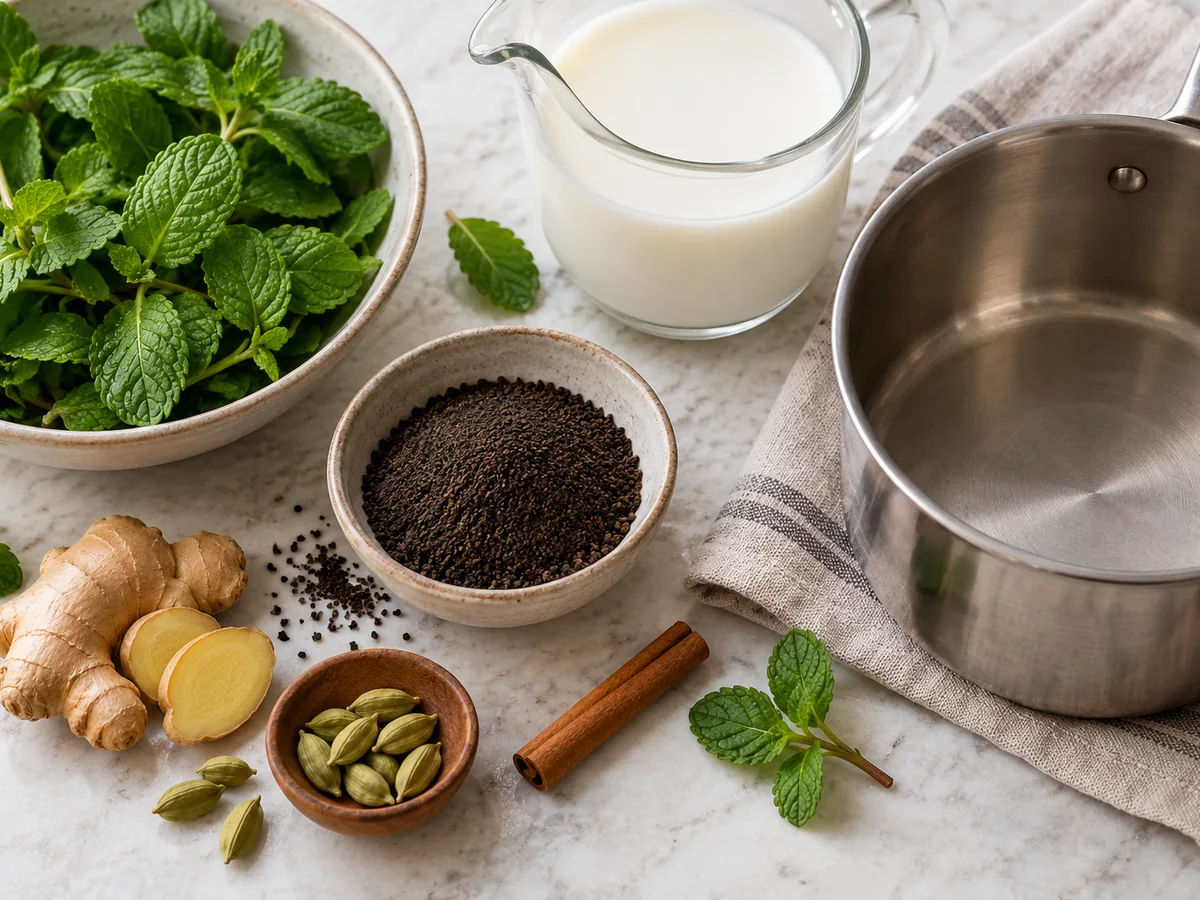
Ingredients and equipment
Use 300 ml water, 200 ml whole milk, 6 g Assam CTC black tea, 4 g fresh spearmint leaves, 4 g fresh ginger, one green cardamom pod, a 1 g cinnamon piece and optional 8 g sugar. Have a small deep saucepan, scale, knife, board, fine strainer and two cups. Wash mint under cool running water and discard damaged leaves. The drink contains milk and caffeine.
Step-by-step method
- Wash and dry the mint. Lightly bruise the leaves, slice the ginger, crush the cardamom and add them with cinnamon to 300 ml water.
- Bring to a boil and simmer for 4 minutes. The steam should smell minty and warm-spiced without a cooked-vegetable note.
- Add the tea and simmer for 90 seconds. Add milk and optional sugar, bring to a rise, then simmer gently for 2 minutes.
- Strain into two cups and serve warm. Discard the cooked herb, spices and tea after this single infusion.
Why these brewing settings?
Mint is delicate, so bruising exposes aroma without chopping it into fragments that pass through the strainer. The four-minute water stage also develops ginger, cardamom and cinnamon before milk dilutes them. Texas A&M's mint tea uses a longer post-tea mint contact in a much larger chilled batch; this hot milk version uses a shorter cooked stage to avoid a stewed green taste.
Troubleshooting
- Mint is faint: Bruise the leaves more firmly or increase to 5 g after tasting; do not simply boil the tea longer.
- Vegetal flavour: Shorten the mint stage to 2–3 minutes or use younger leaves.
- Spices cover the mint: Omit cinnamon first, then reduce ginger if needed.
- Tea is bitter: Reduce the tea simmer to 60 seconds while keeping the spice stage unchanged.
Variations, serving and storage
For mint-only chai, omit ginger, cardamom and cinnamon. For a lighter modern version, replace 50 ml of milk with water. Peppermint is sharper than spearmint and may need a smaller weighed amount. Serve immediately; mint aroma fades as the drink stands. Refrigerate strained leftovers within two hours and reheat gently only once.
Frequently asked questions
Can I use dried mint?
Yes, but it is not a direct weight substitute. Start with a small amount and test because dried mint is concentrated.
Should the mint boil in milk?
A brief milk simmer is included, but prolonged boiling can make the herb taste cooked.
Can I use peppermint?
Yes as a variation, though it is often more intense than spearmint.
Is mint masala chai caffeine-free?
No. Assam black tea supplies caffeine.
References and further reading
- Texas A&M AgriLife Extension: Good Herbs in the Kitchen — fresh mint with black tea and straining guidance.
- Tea Board India: Masala Tea — black tea as a base for spiced milk tea.
Related TeaTurbo articles
Editorial method: research-based preparation awaiting TeaTurbo hands-on verification. Author: Krishna Sahani.