This guide explains exactly how to make a chocolate chai recipe with measured ingredients, clear stovetop timing and practical adjustments. The formula is designed for two small cups and separates the slower flavouring stage from black-tea extraction. It is research-based and has not yet been physically tested by TeaTurbo, so the measurements are a careful starting point for editorial review rather than a claim of one perfect or universally authentic method.
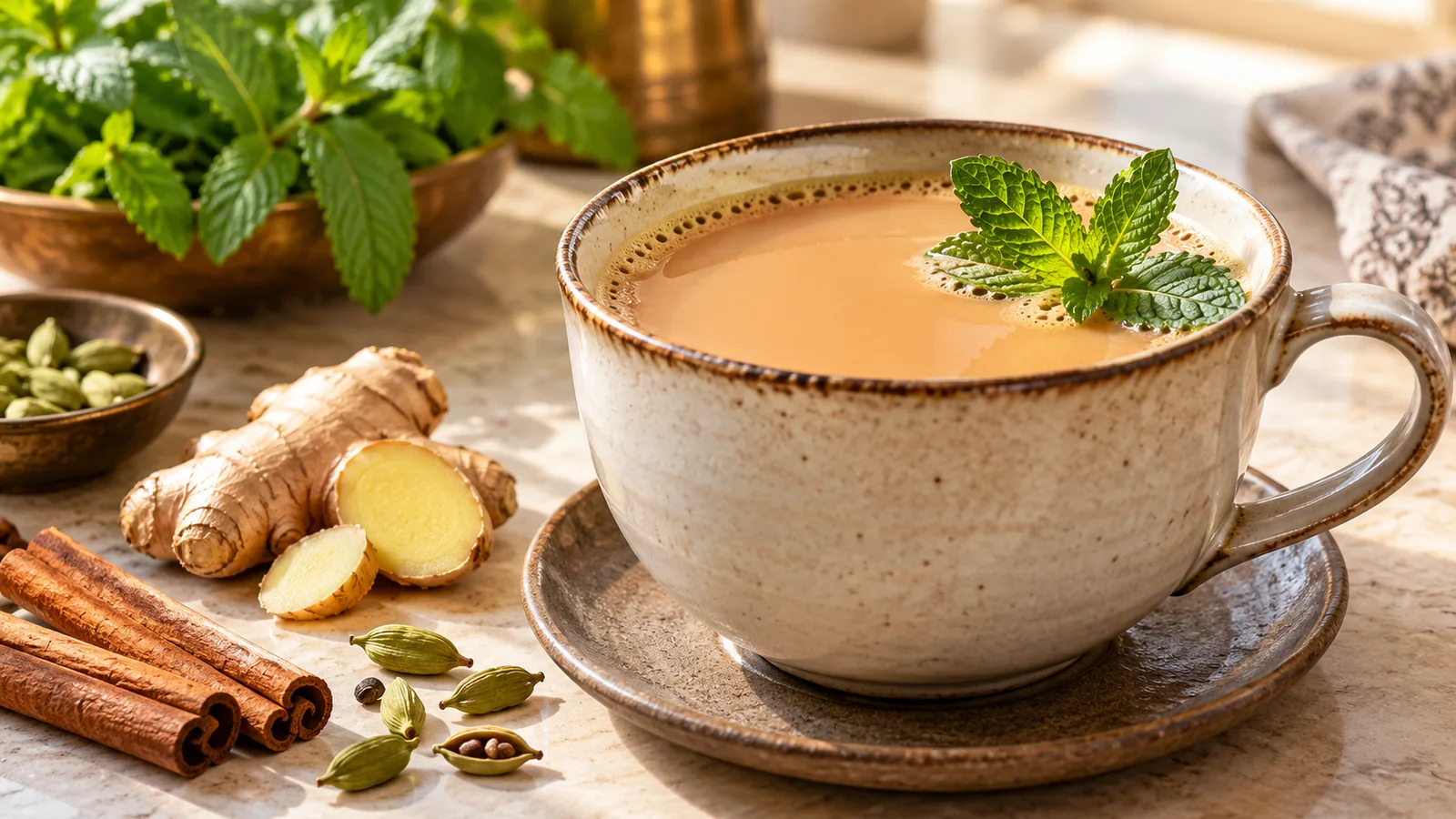
The images are AI-generated illustrations of the intended drink, not photographs of a tested recipe.
Quick answer: brewing at a glance
Whisk 5 g unsweetened cocoa with 30 ml of the measured milk to make a smooth paste. Simmer a 1 g cinnamon piece and two crushed cardamom pods in 250 ml water for 3 minutes. Add 6 g Assam CTC tea for 90 seconds. Add the cocoa paste, remaining 220 ml milk and 10 g sugar; whisk and gently simmer 2 minutes. Strain for two small cups. This is a modern café-style adaptation.
Chocolate Chai
Unsweetened cocoa, Assam black tea and restrained warm spices combined as a modern two-cup milk chai.
By Krishna Sahani
No ratings yet · Be the first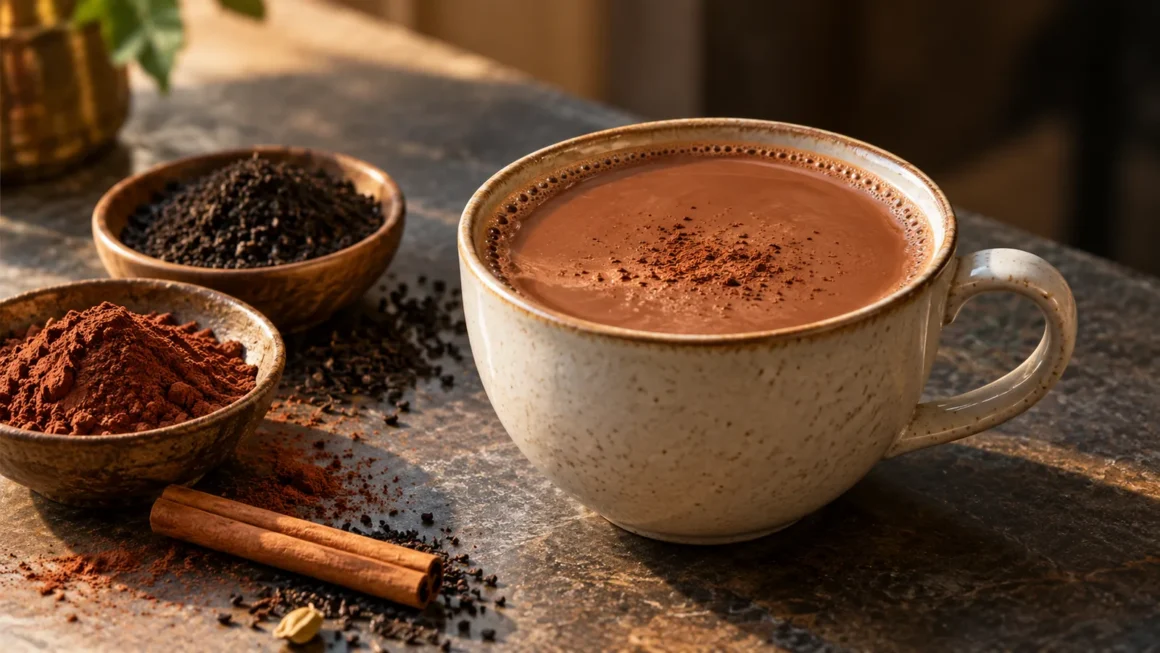
Equipment: Small deep saucepan
Small mixing bowl
Whisk
Fine strainer
Digital kitchen scale
Two heat-safe cups
Ingredients
Instructions
-
Make cocoa paste
Whisk 5 g cocoa with 30 ml taken from the measured milk until smooth. -
Simmer spices
Simmer 2 crushed cardamom pods and 1 g cinnamon in 250 ml water near 100°C / 212°F for 3 minutes. -
Add black tea
Add 6 g Assam CTC black tea and simmer for 90 seconds. -
Finish with cocoa and milk
Whisk in the cocoa paste, remaining 220 ml milk and 10 g sugar. Bring to a rise and gently simmer 2 minutes. -
Strain and serve
Strain into two cups and let cool before drinking. Discard the cooked tea and spices.
Storage
Serve warm. Strain and refrigerate leftovers within 2 hours; whisk gently while reheating once.
Ratings
Rate this recipe
What is this tea?
Chocolate chai is a modern flavoured milk tea rather than an old regional standard. Iowa State University Extension explains that unsweetened cocoa provides flavour and colour in drinks where leavening chemistry is irrelevant. Tea Board India's black-tea brewing guidance gives a three-to-five-minute range for a conventional infusion. Here cocoa is whisked into milk, while tea gets a shorter stovetop extraction because boiling continues after it is added. Expect a smooth cocoa-brown drink, not the thickness of hot chocolate.
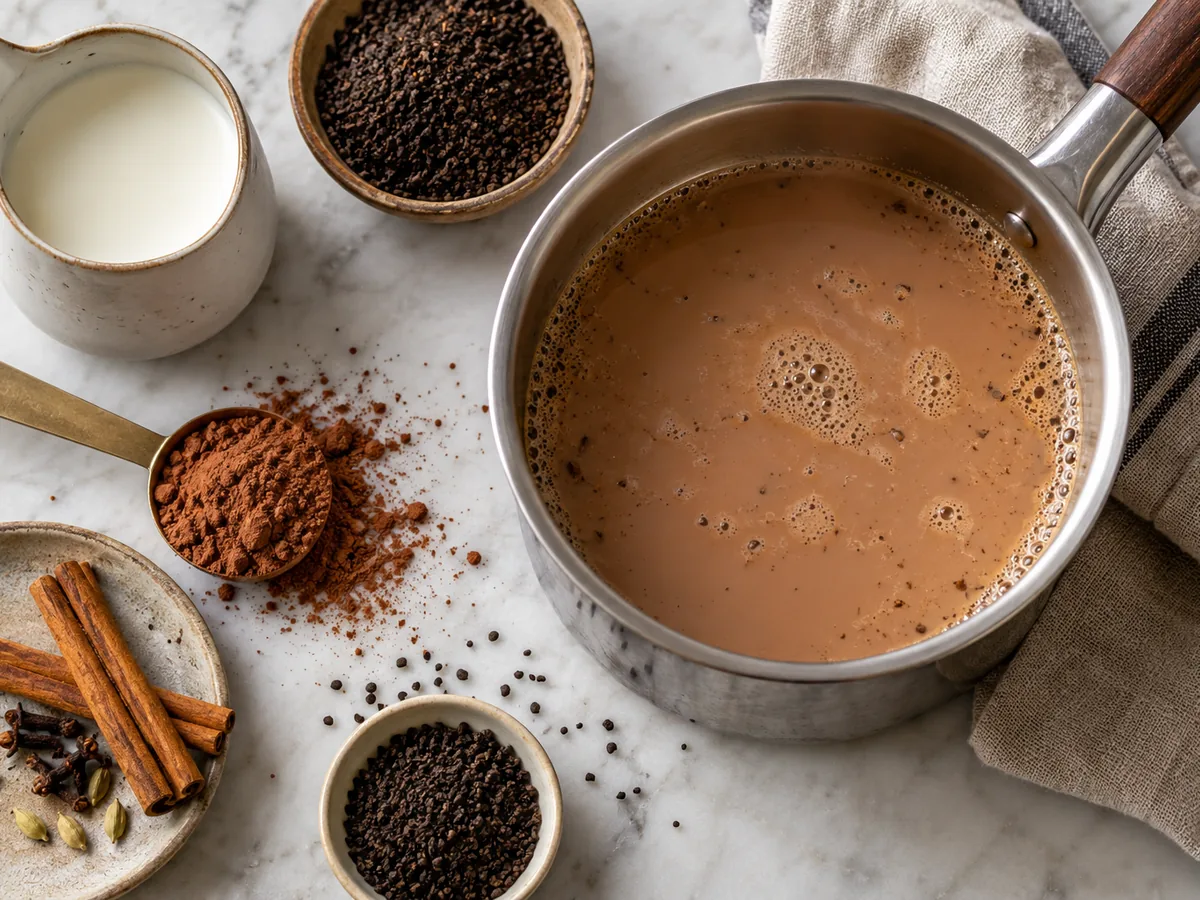
Ingredients and equipment
Use 250 ml water (about 1 cup plus 1 tablespoon), 250 ml whole milk (about 1 cup plus 1 tablespoon), 6 g Assam CTC tea, 5 g unsweetened cocoa powder, two green cardamom pods, a 1 g cinnamon piece and 10 g sugar (about 2½ teaspoons). Have a small deep saucepan, small bowl, whisk, scale, fine strainer and two cups. Cocoa is bitter without sweetener, but the sugar may be adjusted after testing.
Step-by-step method
- Take 30 ml from the measured milk. Whisk it with cocoa in a bowl until no dry pockets remain.
- Crush cardamom. Simmer it and cinnamon in 250 ml water for 3 minutes.
- Add the black tea and simmer for 90 seconds. Add the cocoa paste, remaining milk and sugar while whisking.
- Bring to a controlled rise and simmer gently for 2 minutes. Strain into two cups and let cool before drinking.
Why these brewing settings?
A cocoa paste disperses more evenly than dry powder tipped directly into hot liquid. Iowa State notes that natural and Dutch-process cocoa differ in acidity, but either can supply flavour in a drink without leavening. Natural cocoa gives a sharper result; Dutch-process is usually smoother and darker. The modest 5 g dose keeps tea and spice perceptible.
Troubleshooting
- Cocoa lumps: Make the cold-milk paste before it enters the pan and whisk as the milk heats.
- Tea disappears: Reduce cocoa to 4 g before increasing the tea dose.
- Harsh or drying: Shorten tea contact to 60 seconds; cocoa and tea can both contribute bitterness.
- Too thick: Confirm that the product is plain unsweetened cocoa, not a sweetened drinking-chocolate mix.
Variations, serving and storage
Vanilla extract, added off heat in a tiny amount, makes a rounder modern variation. A pinch of black pepper gives a sharper masala profile. Neither addition is required. Serve warm without whipped cream so it remains a tea rather than a dessert beverage. Strain and refrigerate leftovers within two hours; cocoa settles, so whisk gently during reheating.
Frequently asked questions
Is this traditional masala chai?
No. It is a modern cocoa-and-chai adaptation built on black tea, milk and spices.
Natural or Dutch cocoa?
Either can work in a beverage. Natural cocoa is sharper; Dutch-process is darker and milder.
Can I use chocolate syrup?
The formula is calibrated for unsweetened cocoa. Syrup changes sugar and liquid balance.
Does chocolate chai contain caffeine?
Yes. It contains black tea, and cocoa also naturally contains stimulant compounds.
References and further reading
- Iowa State University Extension: Natural vs Dutch-Processed Cocoa — cocoa identity, flavour and beverage use.
- Tea Board India: Black Tea Brewing FAQ — black-tea brewing range and water guidance.
Related TeaTurbo articles
Editorial method: research-based preparation awaiting TeaTurbo hands-on verification. Author: Krishna Sahani.