

Summary: Your morning cup of tea can continue to be a blissful and healthy part of your routine as long as you prioritise safety over speed. By simply waiting four to five minutes for your drink to reach a safe, warm temperature, you protect your oesophagus from chronic injury and cellular mutation. When sipped mindfully and enhanced with fresh ingredients like lemon and ginger, tea becomes more than just a beverage; it becomes a soothing, immune-boosting elixir that supports long-term well-being. So, next time you pour a cup, take a moment to breathe, wait for the steam to subside, and then enjoy your tea safely.
For many, the day does not truly begin until they have sipped a blissful cup of hot tea. This morning ritual is a cherished moment of peace and a way to jumpstart the senses. However, recent medical insights suggest that this harmless habit may carry a hidden danger if the beverage is consumed at a specific temperature. While tea itself is packed with health-promoting compounds, a top doctor and recent large-scale studies have flagged a surprising link between the thermal effect of hot drinks and an increased risk of cancer.
The Temperature Threshold: Why Heat Matters
According to Dr. Sudhir Kumar, a prominent physician at Apollo, the health concern is not actually about the tea leaves or the ingredients themselves, but rather the temperature at which the liquid enters the body. Regularly consuming very hot beverages—specifically those above 65°C—can cause significant damage to the delicate lining of the oesophagus.
The International Agency for Research on Cancer (IARC) has formally categorised beverages consumed above 65°C as “probably carcinogenic”. This classification is based on the “thermal effect” rather than any chemical property of the drink. When the oesophagus is repeatedly exposed to such extreme heat, it can suffer from chronic inflammation. Over time, this persistent state of irritation may lead to cellular mutations, which significantly elevates the risk of developing oesophageal cancer.
Evidence from Global Studies
The link between high-temperature tea and cancer is supported by substantial scientific research. One of the most notable sources is the Golestan study in Iran, which tracked more than 50,000 adults for over a decade. The findings were stark: individuals who consumed tea at temperatures of 60°C or higher faced a 40 per cent higher risk of oesophageal cancer compared to those who drank cooler tea.
The risk is even more pronounced for those who drink their tea quickly after it is poured. The study found that individuals who consumed their tea within two minutes of pouring saw an increased risk of nearly 50 per cent. Furthermore, quantity plays a major role; drinking 700 ml or more of tea daily at temperatures above 60°C was associated with a 90 per cent higher risk compared to lower-temperature consumption. Similar trends were observed in western Kenya, where high rates of oesophageal squamous cell carcinoma (ESCC) were consistently linked to the consumption of very hot beverages across all age groups and lifestyles.
A Simple Fix: The 4-5 Minute Rule
The good news for tea lovers is that this risk can be mitigated without giving up the habit or making drastic lifestyle changes. Dr. Kumar highlights a “surprisingly simple” fix: Allow your tea to cool for approximately four to five minutes after pouring. This small pause ensures the liquid drops below the dangerous thermal threshold, significantly reducing the chances of thermal injury to the oesophageal lining.
Enhancing the Health Potential of Your Tea
When consumed at a safe temperature, tea remains a powerful tool for wellness. To maximise the benefits while minimising risks, many health experts and traditional practices suggest moving beyond standard milk tea toward herbal or citrus-infused varieties.
The Power of Lemon Tea Studies have shown that adding lemon to your tea can significantly enhance its health profile. Black tea combined with lemon peel may offer superior anticancer activity compared to plain black tea. Furthermore, the addition of lemon has been shown in laboratory settings to increase the overall antioxidant potential of the beverage. Lemons provide bioactive flavonoids and Vitamin C, which help neutralise free radicals and reduce environmental oxidative stress. From a digestive standpoint, the citric acid in lemons can assist in breaking down food and potentially prevent bloating and constipation.
The Benefits of Ginger Another potent additive is ginger, often called the “miracle root”. Ginger contains active compounds like gingerols and shogaols that possess anti-inflammatory and antioxidant properties. In the context of the respiratory system, ginger can act as a bronchodilator, helping to relax airway smooth muscles by managing cellular calcium levels. It is also widely recognised for its ability to reduce nausea and vomiting, whether caused by pregnancy, motion sickness, or medical treatments.
The Yogic Perspective on Consumption
The Yogic Aahaar philosophy provides further insight into how we should approach drinking. In this tradition, “Aahaar” (consumption) is seen as a sacred process that nourishes the body, mind, and soul.
- Avoid Ice-Cold Drinks: Just as very hot tea can be harmful, ice-cold liquids are discouraged because they suppress the “Agni” (digestive fire or enzymes).
- Sip and “Chew”: The guidelines for conscious drinking suggest that we should “chew” our liquids—meaning we should sip slowly and allow the liquid to mix with saliva before swallowing.
- Hot Water for Digestion: While very hot tea is a cancer risk, warm or hot water (at a moderate, safe temperature) is often recommended to support digestion, unless a person has a “Pitta” (heat-dominant) body type.
- Wait After Meals: Drinking liquids immediately with meals can stifle digestive enzymes; a gap of at least 30 minutes after eating is recommended before consuming water or tea.
Potential Side Effects and Precautions
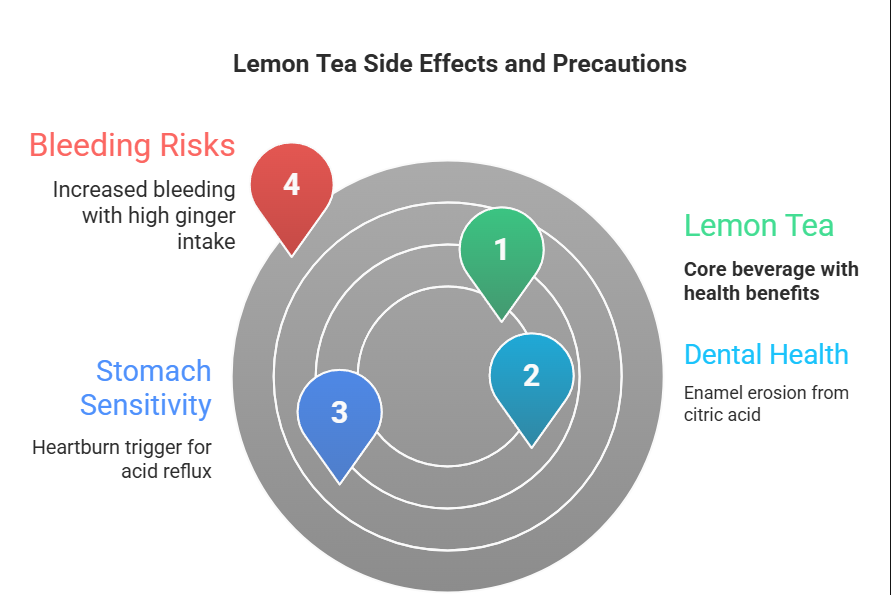
While tea—especially when infused with lemon and ginger—offers many benefits, moderation and awareness are key.
- Dental Health: The citric acid in lemon can erode tooth enamel over time. A simple fix is to rinse your mouth with plain water after drinking lemon tea.
- Stomach Sensitivity: For those prone to acid reflux or GERD, citrus fruits and high-acidity drinks can trigger heartburn. In such cases, it is best to avoid drinking lemon tea on an empty stomach.
- Bleeding Risks: High doses of ginger (more than 2-6 grams per day) may increase the risk of bleeding because it inhibits blood clotting. Individuals on blood-thinning medications should consult a doctor before consuming large amounts of ginger.
Source:
The Economic Times: Sipping hot tea can increase cancer risk? Top doctor shares a surprising link and suggests a simple fix