

Lemon tea is a simple, refreshing, and tasty drink that you can easily make at home. Whether you enjoy it hot to soothe a sore throat or iced to beat the summer heat, it has become one of the most popular healthy beverages around.
In recent years, this zesty drink has taken a starring role in health and wellness routines. It is no longer just a regular beverage; it is now seen as a powerful tool for those looking to improve their digestion, skin health, and immunity.
Many people are turning to this drink to enjoy the numerous benefits of lemon tea, such as increased antioxidant intake and essential vitamin C. It’s a great, low-calorie alternative to sugary sodas that helps you stay hydrated while feeling your best.
In this guide, we will explore everything you need to know about this golden elixir, including:
- The science-backed health benefits for your body.
- The best ways to use and time your tea for maximum impact.
- An easy-to-follow recipe you can make in minutes.
- Important tips and precautions to protect your teeth and stomach.
What Is Lemon Tea?
Lemon tea is a simple and refreshing beverage made by mixing a tea base—like black, green, or herbal tea—with freshly squeezed lemon juice or lemon peel. It is a popular wellness drink because the lemon adds a boost of Vitamin C and a tangy flavor to the tea’s already potent antioxidants.
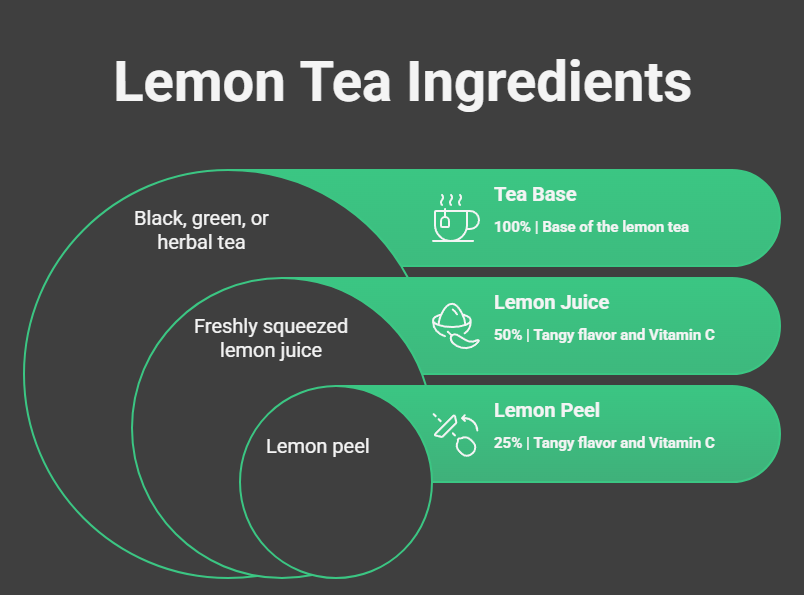
While the basic recipe is just tea and lemon, many people like to customize it with healthy add-ins. Common optional ingredients include:
- Honey or jaggery for natural sweetness.
- Fresh Ginger or Mint to help with digestion and flavor.
- Cinnamon or Cardamom for a warm, spicy kick.
Types of Lemon Tea
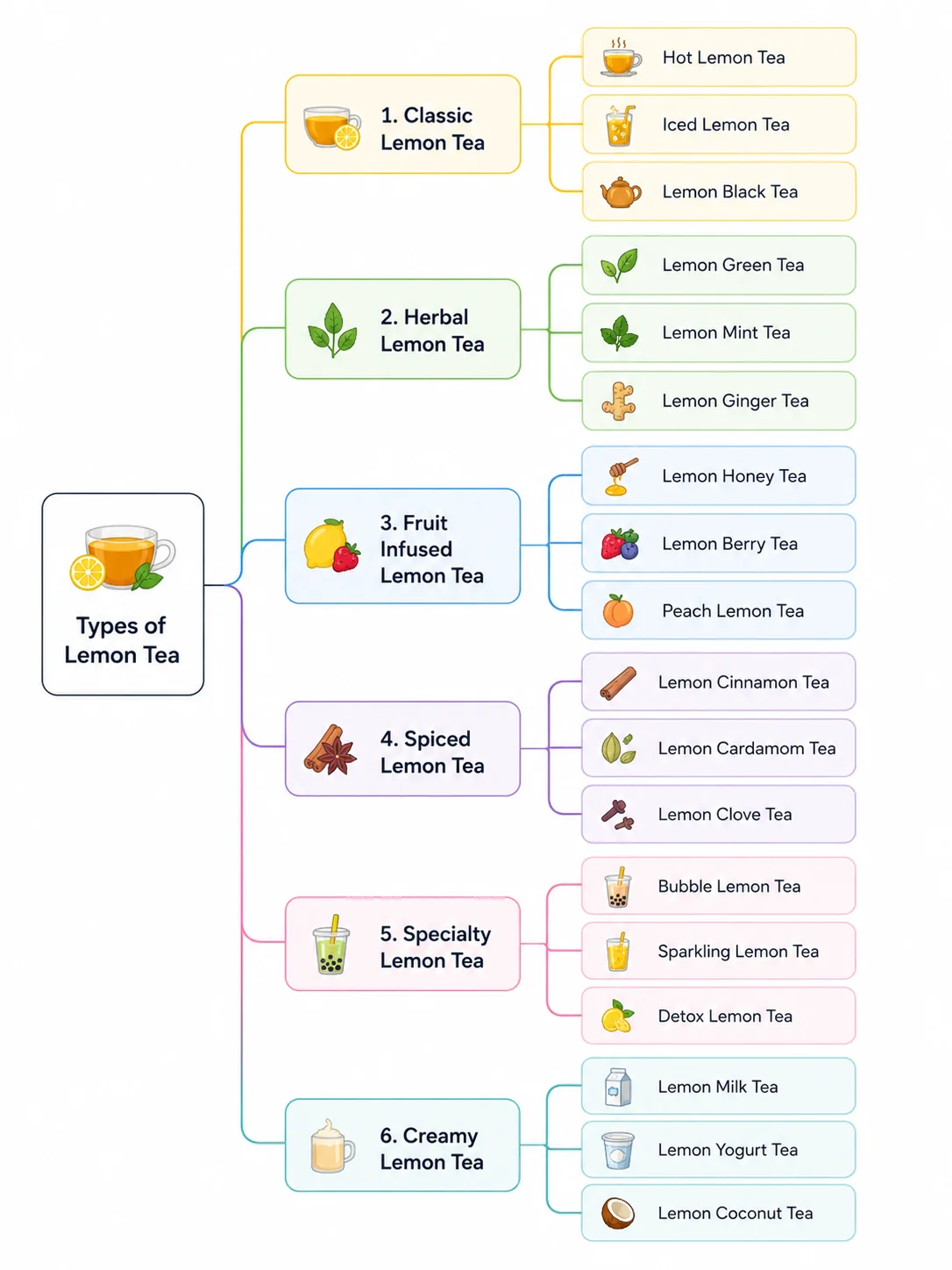
You can enjoy this drink in many ways depending on your mood and the weather:
- Hot vs. Iced: Hot lemon tea is perfect for soothing a sore throat or warming up in winter. Iced lemon tea is a great low-calorie choice to stay hydrated during a hot summer day.
- Green Tea vs. Black Tea: Using a green tea base maximizes “catechins” (powerful antioxidants), while black tea offers a bolder, fuller flavor.
- Herbal Caffeine-Free Options: For a relaxing evening drink, you can use caffeine-free bases like Chamomile or Peppermint.
3. Nutritional Profile of Lemon Tea
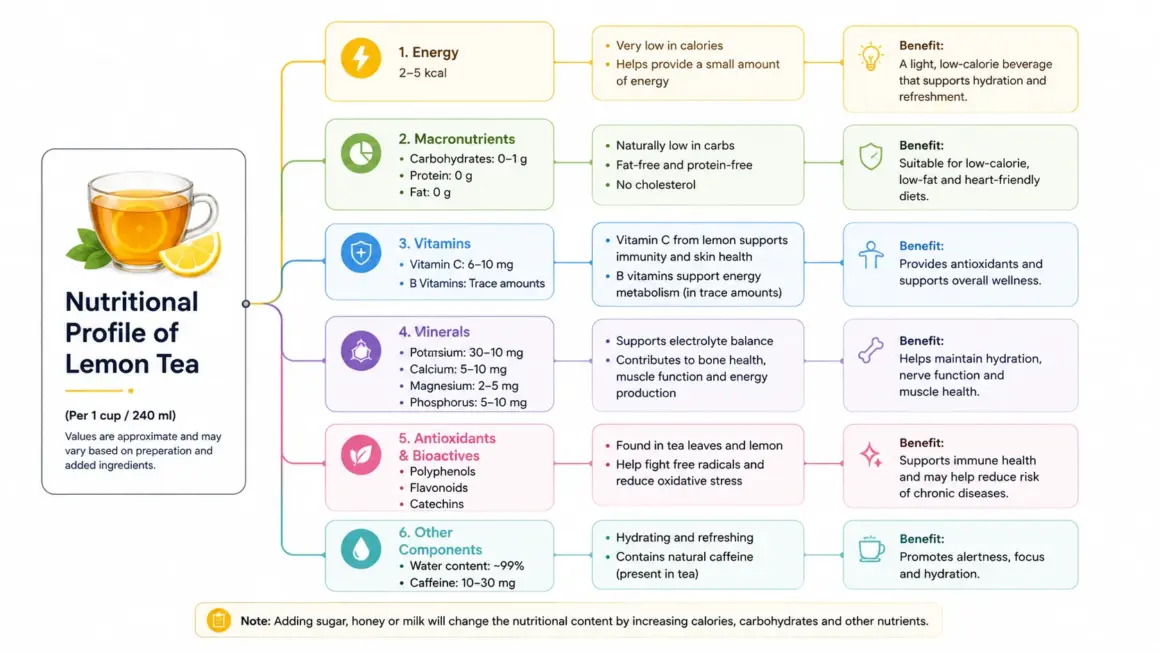
Lemon tea is a low-calorie beverage, usually containing only 5 to 10 calories per cup if you don’t add sugar. It is packed with flavonoids and polyphenols, which are antioxidants that help reduce inflammation in the body.
The most important health-boosting compounds in this drink are:
- Vitamin C (Ascorbic Acid): Supports your immune system and skin health.
- Citric Acid: Found in lemons, it helps produce digestive juices and may prevent kidney stones.
- Potassium: Helps control blood pressure and supports heart health.
Lemon Tea Nutrition Table (Per 200ml Cup)
| Nutrient | Amount |
|---|---|
| Calories | 5-10 kcal (unsweetened) |
| Vitamin C | 20-30 mg (33% of daily need) |
| Potassium | 10-15 mg |
| Carbohydrates | 1-3 grams |
| Antioxidants | High (Flavonoids & Polyphenols) |
4. Top Lemon Tea Benefits for Health
One of the most famous lemon tea benefits is its ability to strengthen your immune system. The high amount of Vitamin C helps your body fight off infections like the common cold. Regular intake can help your body’s natural defense mechanisms stay strong.
If you are looking to manage your weight, lemon tea is a great partner. It helps boost your metabolism, which is how your body burns energy. The polyphenols in the tea may also help reduce fat storage and improve how your body handles sugar.
Drinking warm lemon tea after a heavy meal can provide quick relief from bloating and gas. The citric acid in the lemon helps your stomach break down food more effectively. It is often used as a natural remedy to prevent constipation and keep your system moving.
Lemon is a natural detoxifier that helps flush unwanted toxins out of your system. It acts as a gentle “diuretic,” which means it increases urine production to help your kidneys eliminate waste. This cleansing process can lead to better overall health and more energy.
The antioxidants and Vitamin C in lemon tea are excellent for your skin. They help stimulate collagen production, which keeps your skin elastic and prevents early wrinkles. Regular hydration with lemon tea can result in a clearer, more glowing complexion.
5. Lemon Tea Benefits for Specific Health Goals
If your goal is to shed a few pounds, lemon tea is a perfect addition to your routine. One of the best lemon tea benefits is its ability to boost your metabolism and improve insulin sensitivity. It helps reduce the amount of fat your body stores, especially when you drink it consistently.
To get the best fat-loss results, many people enjoy a cup of warm lemon tea first thing in the morning. This morning detox drink cleanses your digestive tract and sets a healthy tone for the day. For maximum impact, avoid adding sugar or too much honey, as these add extra calories that can slow down your progress.
When you feel a cold coming on, a warm cup of lemon tea is a time-tested natural remedy. The high amount of Vitamin C helps your body’s defense system fight off the infection more quickly. It provides an immediate soothing effect on a scratchy or painful throat.
Adding a bit of honey to your tea can make it even more effective for a sore throat. Studies show that a mix of lemon and honey can reduce coughing and help you sleep better when you’re under the weather. It is a comforting, caffeine-free way to feel better without relying solely on medicine.
Staying hydrated is key to feeling energetic, and lemon tea makes drinking water much more exciting. It is a refreshing and energizing alternative to sugary sodas or heavy energy drinks. It helps you meet your daily fluid goals while providing a natural “lift” from its zesty aroma.
Because it is low in calories, you can enjoy it throughout the day to keep your brain and body fueled. Choosing lemon tea over coffee can also help you avoid the “crash” that often comes with too much caffeine.
6. Best Time to Drink Lemon Tea
Drinking lemon tea in the morning is a popular wellness habit for good reason. On an empty stomach, it acts as a gentle internal cleanser that flushes out toxins from the previous day. It also “wakes up” your metabolism early, helping you burn energy more efficiently throughout the morning.
For a relaxing end to your day, a cup of herbal lemon tea (like chamomile or ginger) can help you unwind. However, if you are sensitive to caffeine, you should avoid using black or green tea bases late at night. A mild, caffeine-free version can promote a sense of calm and better sleep quality.
Drinking warm lemon tea after a heavy meal can provide quick relief from that “stuffed” feeling. The warmth and acidity help relax your digestive tract and stimulate the juices needed to break down food.
However, if you suffer from acid reflux or stomach ulcers, you should be careful about drinking it on an empty stomach. To get the most lemon tea benefits for your blood health, it is actually best to drink it between meals. This helps your body absorb iron better while preventing the tea’s natural compounds from interfering with your meal’s nutrients.
Morning vs. Evening Benefits
| Feature | Morning Consumption | Evening Consumption |
|---|---|---|
| Primary Goal | Detox and Metabolism Boost | Relaxation and Digestion |
| Energy Level | Provides a fresh, energizing start | Calms the mind for sleep |
| Digestion | Cleanses the digestive tract | Eases fullness after dinner |
| Tea Base Tip | Best with Green or Black tea | Best with Herbal (Caffeine-free) |
7. How to Make Lemon Tea at Home
Making a perfect cup of lemon tea is easy and only takes a few minutes. By following these simple steps, you can ensure you get the best flavor and all the health-boosting nutrients.
To get started, gather these basic items from your kitchen:
- Water: 1 cup of fresh drinking water.
- Tea Base: 1 teaspoon of tea leaves or one tea bag (Black or Green tea).
- Fresh Lemon: Juice of half a lemon (about 1 spoonful).
- Sweetener (Optional): Honey, jaggery, or a little sugar.
- Flavor Boosters: You can also add fresh ginger, mint leaves, or a pinch of cinnamon for extra benefits.
Step-by-Step Preparation
- Boil the Water: Start by heating one cup of water in a pot until it reaches a rolling boil.
- Brew the Tea: Turn off the heat and add your tea leaves or tea bag. Let it steep for 3 to 5 minutes, depending on how strong you like it.
- Strain and Cool: Strain the tea into your favorite cup. Wait for a few minutes until the tea is warm rather than boiling hot.
- Add Lemon correctly: Squeeze in the fresh lemon juice and stir well.
- Sweeten: If desired, stir in your honey or jaggery last.
Pro Tips for Best Taste
- Avoid Boiling the Lemon: Never boil the lemon juice with the tea, as this can make the drink taste bitter and destroy the Vitamin C.
- Honey Safety: Only add honey when the tea is warm, never boiling hot, as high heat can turn honey into a “slow poison” according to traditional wisdom.
- Balance the Flavors: If the tea tastes too strong, add a little extra warm water to thin it out.

8. Common Mistakes to Avoid When Drinking Lemon Tea
One of the biggest mistakes is adding lemon juice while the water is still boiling. High temperatures destroy Vitamin C and other delicate, healthy compounds. Always wait until the tea cools slightly before adding your citrus.
While it is healthy, drinking too many cups a day can lead to acid reflux or stomach irritation. It is best to enjoy this drink in moderation to avoid digestive discomfort.
Adding lots of refined sugar significantly reduces the health benefits, especially for weight loss and detoxing. If you need sweetness, try using a small amount of raw honey or jaggery instead.
If you have a sensitive stomach, avoid drinking lemon tea on an empty stomach early in the morning. It can sometimes cause heartburn or a burning sensation in the chest.
9. Side Effects and Precautions
- Tooth Enamel Erosion: The citric acid in lemons can wear down your tooth enamel over time. To prevent this, rinse your mouth with plain water after drinking your tea.
- Acid Reflux: Because lemon tea is acidic, it may trigger symptoms like heartburn or a scratchy throat in some people.
- Dehydration: Lemon acts as a natural “diuretic,” which means it increases urination and could lead to mild dehydration if you don’t drink enough plain water.
Who Should Avoid Lemon Tea?
People suffering from stomach ulcers or GERD should be very careful with acidic drinks. If you feel abdominal cramping or nausea after drinking it, you should reduce your intake or stop using it.
For most healthy adults, drinking 1 to 2 cups per day is considered safe and effective. This allows you to get all the lemon tea benefits without overloading your system with acidity.
10. Lemon Tea vs. Other Teas

When you add lemon to green tea, you create a powerhouse of health. The Vitamin C in lemon actually helps your body absorb the antioxidants (catechins) in green tea much better. While pure green tea is slightly bitter, lemon makes it much more refreshing and tangy.
Lemon can be added to many caffeine-free herbal bases like ginger, mint, or chamomile. Unlike black or green tea, these herbal versions won’t keep you awake at night and are excellent for soothing nausea or bloating. Choose herbal lemon tea if you want a relaxing evening drink.