
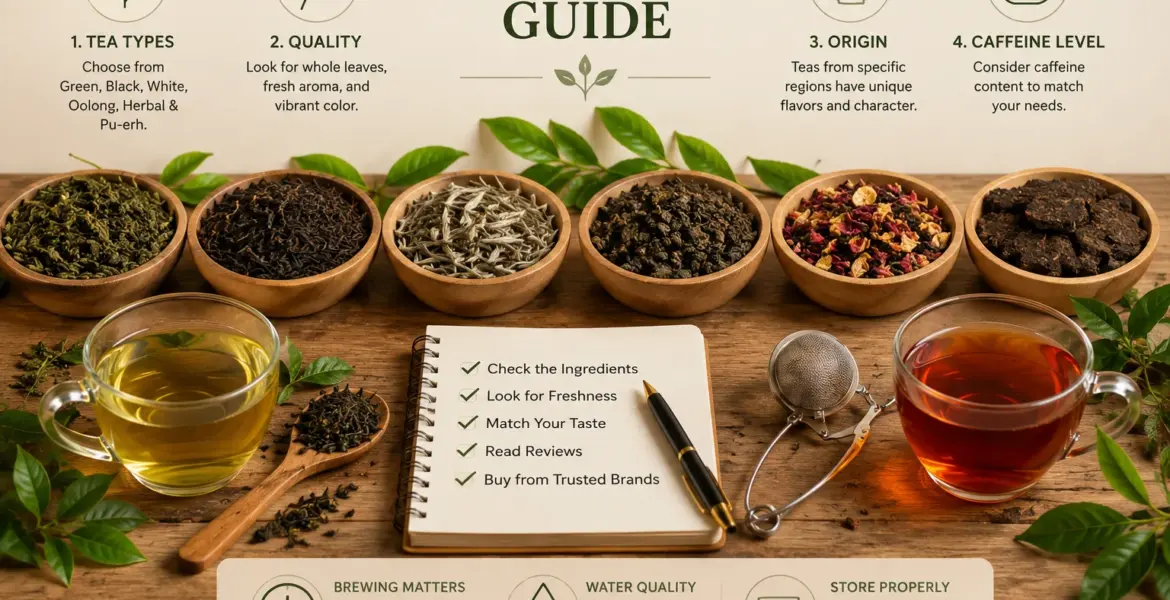
Are you feeling—at this very moment—lost in a “maze” of tea options: loose-leaf or bagged, fruity or roasted, and raw or fermented? Choosing the right tea should be as calming as sipping it; however, the sheer variety of colors, forms, and price ranges can feel totally overwhelming! Whether you are a curious beginner or a budding connoisseur, this guide is your ultimate roadmap to selecting high-quality teas with total confidence.
Table of Contents
The Great Debate: Loose Leaf vs. Tea Bags
First things first: what is the real difference—really—between loose-leaf and those convenient little bags? Loose-leaf tea consists of whole (or very large) pieces of leaves that are sold without being trapped in a bag. This “freedom” allows the leaves to fully expand and unfurl during brewing—releasing more flavor compounds and a much more nuanced aroma.
On the flip side, most commercial tea bags contain “fannings” or “dust,” which are tiny, broken pieces of lower-quality leaves. While tea bags are quick (and great for travel!), they often have a “paper” aftertaste; conversely, loose-leaf offers superior complexity and can even be reused for multiple steepings! If you are new to the hobby, try buying small 25–50g packs—this lets you explore diversity without wasting money.
Decoding the Tea Label: What Are You Actually Buying?
A tea label only becomes “interesting” when it stops being a marketing story—and starts being a source of information! When you look at a package, check for transparency—specifically the origin, cultivar, and harvest season. A high-quality label should provide: a clear product name (pure tea or blend), an easy-to-read ingredient list, and specific brewing instructions.
Be wary of terms that sound mysterious! For example, “Orange Pekoe” does not mean the tea tastes like oranges; instead, it is just a technical term for leaf grading in black teas. Also—look for official marks of authenticity, such as the “Lion Logo” for pure Ceylon tea or the “Darjeeling seal” from the Tea Board of India. These symbols help you distinguish verifiable facts from vague marketing claims.
The Black Tea Grading Table
| Grade | Full Name | Description |
|---|---|---|
| OP | Orange Pekoe | Large, whole leaves that do not contain the young buds (tips); this is the foundational whole-leaf grade. |
| FOP | Flowery Orange Pekoe | High-quality whole leaves that include some young “tips” from the “two leaves and a bud” harvest. |
| TFOP | Tippy Flowery Orange Pekoe | Exceptional whole leaves containing an even higher concentration of those delicate, flavorful buds. |
| BOP | Broken Orange Pekoe | Leaves that have been crushed or broken; they infuse faster and produce a much stronger, darker brew. |
| BP | Broken Pekoe | A technical grade for broken leaves—focusing on specific size and cut for consistency. |
| F | Fannings | Small leaf pieces—slightly larger than dust—that are the standard filling for commercial tea bags. |
| D | Dust | The smallest particles (colloquially called “floor sweepings”) that offer instant color and strength in basic tea bags. |
Important Things to Remember!
- It’s not about Oranges: “Orange Pekoe” is a technical term for leaf size; it does not mean the tea will taste like fruit!
- Surface Area Matters: Smaller grades like Fannings and Dust have more surface area—meaning they brew very fast—but they often lose the complex essential oils found in whole leaves.
- The “Tips” Secret: When you see “Flowery” or “Tippy,” you are paying for the buds of the plant, which add a natural sweetness and aroma to the tea.
- Choose your Vibe: If you want a mindful, slow experience, go for whole-leaf grades (OP, FOP); if you want a quick, strong “kick” with milk, look for broken grades (BOP).
By checking these labels, you can move past the “seductive” marketing stories—and make an informed choice based on actual leaf quality.
The Matcha Checklist: Spotting the “Green Gold”
Matcha is everywhere—in lattes, smoothies, and even skincare—but not all powders are created equal! Authentic matcha is grown and processed in Japan—especially in regions like Uji, Shizuoka, and Kagoshima. Here are five things to check before you buy:
- Color: Look for a vibrant, “electric” green hue; if the powder looks yellow or brownish, it likely wasn’t shade-grown or has oxidized.
- Texture: High-quality matcha is silky and ultra-fine—it should almost “cling” to the air when scooped.
- Taste: It should be naturally sweet and creamy with an “umami” (earthy) note—avoid powders that taste harsh or chalky.
- Packaging: Matcha is delicate! Always buy it in airtight, opaque tins—never clear glass—to protect it from light and air.
- Price: If it is “too good to be true,” it probably is; real ceremonial grade matcha reflects the labor-intensive craftsmanship of the farmers.
Matcha Quality Checklist
High-quality matcha is determined by its origin and the traditional shade-growing process.
| Quality Indicator | High-Quality (Ceremonial) | Lower-Quality (Culinary) |
|---|---|---|
| Origin | Specific Japanese regions (Uji, Shizuoka, etc.). | Vague sourcing (“Product of Asia”). |
| Color | Vibrant, “electric” green. | Dull green, yellow, or brownish. |
| Texture | Silky/velvety; ultra-fine powder. | Grainy or coarse. |
| Taste | Naturally sweet, creamy, and umami. | Harsh, bitter, or astringent. |
| Packaging | Airtight, opaque tins or pouches. | Clear glass or non-airtight containers. |
Darjeeling’s Seasonal Showdown: First Flush vs. Second Flush
Darjeeling tea—often called the “Champagne of Teas”—changes its “personality” depending on when it is harvested!
- First Flush (March to April): These are the very first leaves plucked after winter; they are light, floral, and crisp. They are often minimally oxidized—behaving almost like a green tea—and should be enjoyed without milk.
- Second Flush (May to June): As the weather warms—the leaves mature and develop a famous “muscatel” flavor. This taste is sweet and fruity—reminiscent of muscat grapes—and the brew is much more robust and full-bodied.
Which one should you choose? Pick the First Flush if you love refreshing, springtime vibes; choose the Second Flush if you prefer a richer, more luxurious cup.
Exploring the “Spectrum” of Oolong Tea
Oolong tea—which translates to “black dragon”—is perhaps the most diverse category because of oxidation! Think of oxidation as a “spectrum”: green tea has almost none—black tea is fully oxidized—and oolongs claim the fascinating middle ground.
- Lightly Oxidized (10-30%): These teas (like Tie Guan Yin) are bright, buttery, and floral—very similar to green tea.
- Heavily Oxidized (60-80%): These (like Da Hong Pao) are roasted and robust, offering notes of dark fruit, cocoa, and minerals.
When buying oolong: look at the dry leaves—lightly oxidized ones are usually tightly rolled and green, while heavily oxidized ones look darker and more open.
Tea Format Comparison
Choosing a format depends on your lifestyle and the time available for brewing.
| Format | Best For | Characteristics | Watch Out For |
|---|---|---|---|
| Loose Leaf | Full flavor and mindful moments. | Whole/large leaves that unfurl; superior complexity; reusable. | Requires specific tools and more time. |
| Tea Bags | Travel and busy days. | Convenient and quick. | Often contains low-grade “fannings” or dust; paper aftertaste. |
| Freeze-Dried Powder | Quick hydration and cold brewing. | Highly portable and instant. | Ensure single-origin to avoid fillers or blends. |
Sourcing with a Conscience: Is Your Tea Ethical?
Ethical sourcing is about more than just a “feel-good” label; it involves environmental responsibility, social fairness, and economic stability. Look for certifications like Fair Trade, USDA Organic, or Rainforest Alliance. However—be careful—as some small, truly ethical farms cannot afford the expensive certification fees!
The best sign of trust is supply chain transparency: does the brand name the specific farm? Do they provide reports on worker welfare? Do they have clear policies on pesticide use? If a brand uses vague words like “natural” or “eco-friendly” without providing any details—it might be “greenwashing”—and you should probably skip it.
Storage: Keeping the “Melody” Alive
Once you have bought your premium leaves, don’t let them go stale! You should store your tea in a cool, dark, and dry place—away from strong odors like spices or coffee.
- Standard Tea: Use airtight tins or ceramic jars.
- Puerh Tea: This is a “living” organism that needs to breathe slightly; store it in a Zisha (purple clay) caddy to allow for slow natural fermentation.
- Green Tea/Matcha: These are the most fragile; try to use them within 12 months (or even one month for opened matcha!) and keep them in the fridge if possible.
Oolong Oxidation Spectrum
Oolong tea occupies the middle ground between green and black teas, with oxidation levels varying widely.
| Oxidation Level | Visual Cue (Dry Leaf) | Flavor Notes | Example Tea |
|---|---|---|---|
| Light (10–30%) | Tightly rolled; vibrant green. | Bright, buttery, floral; creamy texture. | Tie Guan Yin (Iron Goddess). |
| Medium (30–60%) | Partially darkened. | Richer, honeyed, stone fruit, and toasted nuts. | Dong Ding (Frozen Summit). |
| Heavy (60–80%) | Darker; more open leaves. | Dark fruit, cocoa, minerals, and robust roasting. | Da Hong Pao (Big Red Robe). |
Ethical Tea Certifications
Certifications are a tool to verify environmental and social responsibility.
| Certification | Focus Area | Verification Body |
|---|---|---|
| Fair Trade | Fair wages, safe conditions, and community funds. | Fair Trade International. |
| USDA Organic | Prohibition of synthetic pesticides and fertilizers. | USDA National Organic Program. |
| Rainforest Alliance | Biodiversity conservation and worker welfare. | Rainforest Alliance. |
| B Corp | Holistic social and environmental performance. | B Lab. |
Summary
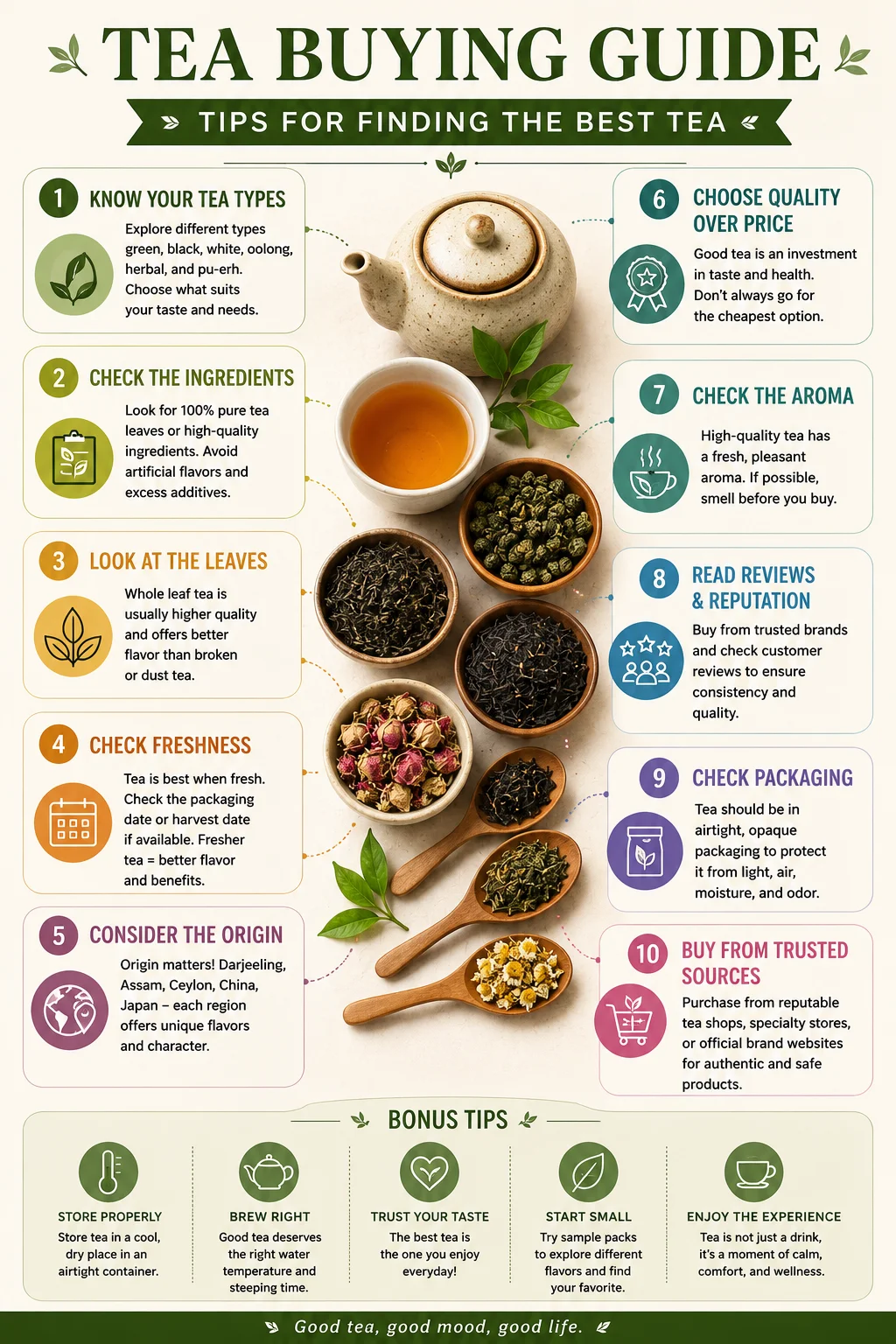
- Follow your nose: If you can—always smell the dry leaves—they should be fresh and clean, never musty or chemically strong.
- Check the date: Try to buy tea packaged within the last 12 months—freshness is key for green and white teas.
- Avoid “perfumed” blends: Intense perfumes often hide low-grade or stale leaves.
- Whole is better: Avoid tea that looks like dust or powder—unless it is high-quality matcha!
Choosing tea is a personal journey: it is about finding the rhythm, taste, and lifestyle that fits you. So—go ahead—buy a few small samples, grab your favorite mug, and start exploring the incredible world of the leaf! Every cup is a chance to connect with history, culture, and a little bit of quiet peace.