
What really happens when you drink lemon water for 7 days? You may have seen videos promising clearer skin, effortless weight loss, better digestion, or a complete body detox after just one week.
The idea is appealing. After all, lemons are inexpensive, easy to find, and full of fresh citrus flavor. Adding a little lemon juice to your morning water seems like a simple way to start a healthier routine.
But how much can one drink actually change in seven days?
The answer is less dramatic—and more useful—than most online challenges suggest. Lemon water can support hydration, provide a modest amount of vitamin C, and make plain water more enjoyable. However, its effects depend largely on your existing habits.
Here is what the scientific evidence says, what you might notice during a seven-day routine, and how to drink lemon water safely.
A post shared by Saurabh Sethi MD MPH | Gastroenterologist (@doctor.sethi)
Quick Answer: What Happens After 7 Days of Lemon Water?
If you drink lemon water daily for a week, you may notice:
- Better hydration: Especially if lemon flavor encourages you to drink more water than usual.
- More regular bowel movements: Improved fluid intake may help if inadequate hydration has contributed to constipation.
- A little extra vitamin C: Lemon juice contributes to your daily vitamin C intake, although one glass is not enough to meet all your nutritional needs.
- Less added sugar: Replacing soda or sweetened beverages with unsweetened lemon water can reduce sugar and calorie intake.
You may also experience tooth sensitivity or heartburn if you drink highly acidic lemon water frequently.
The important distinction: There is no convincing clinical evidence that seven days of lemon water alone causes rapid fat loss, clears your skin, or removes toxins from your body.
What Happens When You Drink Lemon Water for 7 Days? A Realistic Timeline
There is no established scientific timeline showing that lemon water produces specific changes on particular days.
Still, understanding what might happen during your first week can help you set realistic expectations.
| Time | What you might notice | What the evidence suggests |
|---|---|---|
| Days 1–2 | Drinking water feels easier or more enjoyable. | Lemon adds flavor, while water provides hydration. |
| Days 3–4 | Your bowel habits may improve if you previously drank too little fluid. | Adequate hydration supports normal bowel function. |
| Days 5–6 | You may find yourself choosing fewer sugary drinks. | Replacing sweetened beverages with water reduces added sugar intake. |
| Day 7 | Drinking water may start feeling like a regular part of your routine. | Habit formation varies; seven days does not guarantee a lasting habit. |
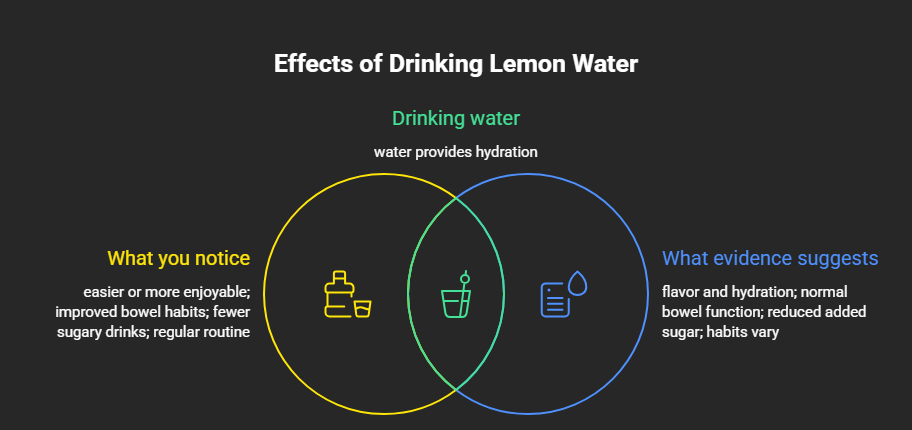
These are possibilities, not guaranteed day-by-day changes.
Someone who already drinks enough water and follows a balanced diet may notice very little difference.
Days 1–2: You May Start Drinking More Water
The first potential benefit is also the simplest: hydration.
Some people struggle to drink plain water because they find it boring. Adding lemon gives it a refreshing, slightly sour taste without requiring added sugar.
If that encourages you to drink more fluids, you may feel less thirsty and experience fewer symptoms associated with inadequate hydration.
According to the Centers for Disease Control and Prevention, water helps regulate body temperature, protect tissues, and support normal bodily functions.
However, these benefits come primarily from the water—not a special property of lemons.
If you are already well hydrated, adding lemon is unlikely to create a noticeable energy boost.
Days 3–4: Your Digestion May Feel More Comfortable
Some people say lemon water helps them feel less bloated or more regular.
There is a reasonable explanation for part of this experience, but it is not that lemon juice magically stimulates digestion.
Drinking adequate fluids helps prevent hard, dry stools and supports the effects of dietary fiber.
The National Institute of Diabetes and Digestive and Kidney Diseases recommends sufficient fluids alongside fiber for preventing and managing constipation.
If you were not drinking enough water before, increasing your fluid intake could make a difference.
But if bloating comes from food intolerances, digestive disorders, or other medical conditions, lemon water is not a reliable treatment.
Days 5–6: You May Be Drinking Less Sugar
A useful benefit of lemon water has nothing to do with detoxification.
It comes from what you drink instead.
Imagine you normally have a sweetened soft drink or bottled iced tea every afternoon. Replacing that drink with unsweetened lemon water reduces the added sugar you consume.
Over time, consistently choosing lower-calorie beverages can support weight-management efforts.
The CDC specifically recommends choosing water instead of sugary drinks to help reduce calorie intake.
However, the effect depends on the beverages you replace and your overall eating habits.
Adding several teaspoons of sugar or large amounts of honey to lemon water can reduce this advantage.
Day 7: You May Have Started a Useful Hydration Habit
By the end of the week, the most valuable outcome may be behavioral rather than physical.
You might remember to drink water more consistently, find a preferred citrus flavor, or discover that you enjoy a warm drink without caffeine.
Seven days is not a scientifically established amount of time needed to form a habit. But it can be a practical period for observing how a new routine fits into your life.
If you feel no different after one week, that does not mean you have done anything wrong. It may simply mean your hydration and vitamin C intake were already adequate.
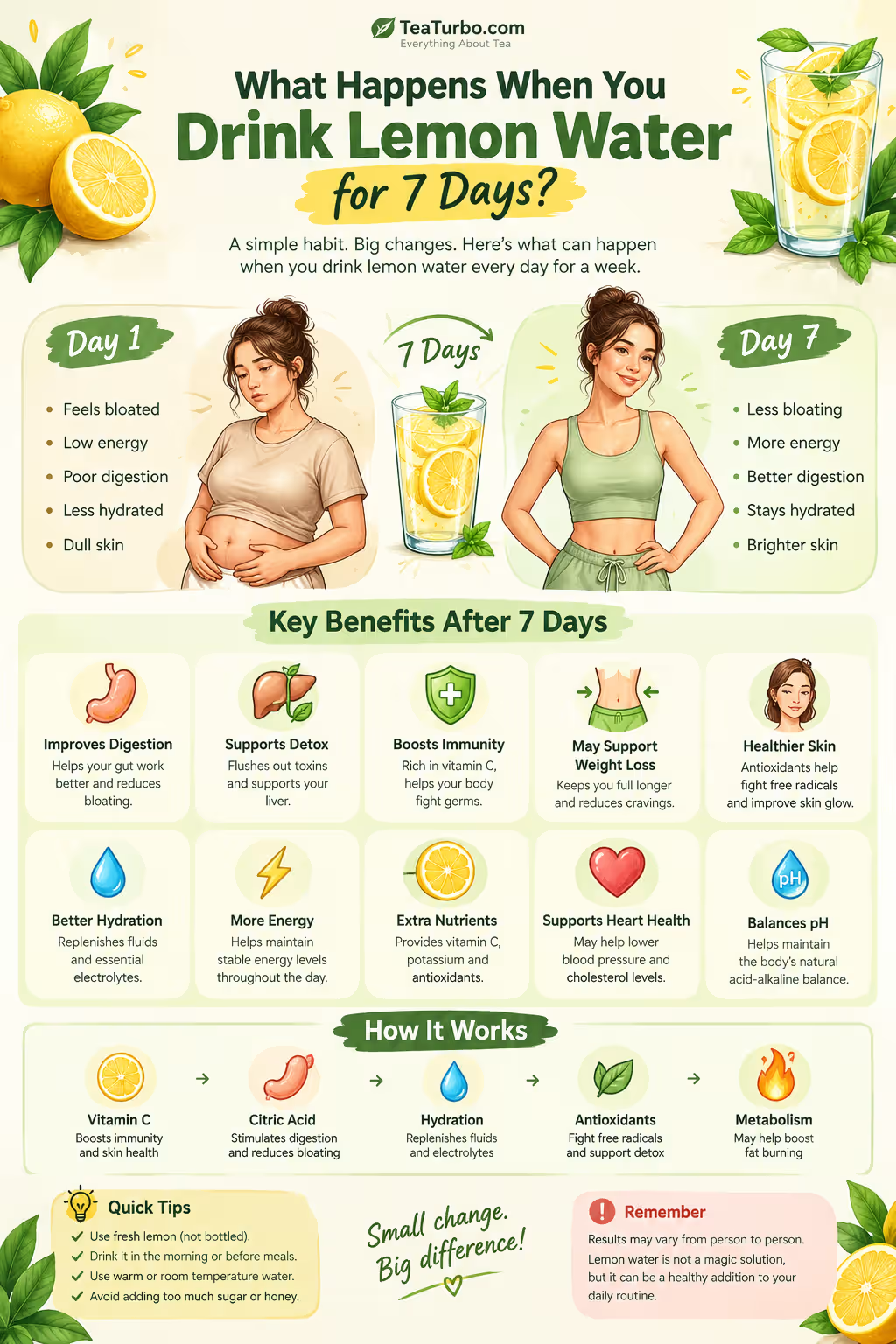
5 Potential Benefits of Drinking Lemon Water Daily
1. It Helps You Stay Hydrated
Lemon water is mostly water, making hydration its clearest benefit.
Adequate hydration supports normal temperature regulation, circulation, and waste removal.
When you drink too little water, you may experience thirst, fatigue, or difficulty concentrating.
Adding lemon can make water more appealing, especially if you are trying to reduce sweetened beverages.
Remember that plain water, unsweetened tea, and other suitable beverages also contribute to daily hydration.
2. It Provides Vitamin C
Lemons contain vitamin C, an essential nutrient involved in immune function, collagen formation, and antioxidant protection.
Collagen is a protein that helps maintain the structure of skin and other body tissues.
According to the NIH Office of Dietary Supplements, the recommended daily vitamin C intake for most adults is:
- 90 mg for men
- 75 mg for women
A small squeeze of lemon adds some vitamin C, but the amount depends on how much juice you use.
A lightly flavored glass should not be treated as a replacement for vitamin C-rich fruits and vegetables.
And while adequate vitamin C is important for healthy immune function, drinking lemon water for seven days has not been shown to give the immune system a special boost or prevent infections.
3. It May Support Regular Bowel Movements
Water plays an important role in keeping stools soft.
If your fluid intake is low, increasing it may help prevent constipation, particularly when you also consume enough fiber.
However, there is insufficient clinical evidence showing that lemon water works better than plain water for regular bowel movements.
For persistent constipation, consider your overall intake of fiber, fluids, and physical activity instead of relying on lemon juice alone.
4. It Can Be a Low-Calorie Alternative to Sweet Drinks
Unsweetened lemon water contains relatively few calories when prepared with a small amount of lemon juice.
That makes it an appealing alternative to soda, sweetened coffee, or sugary bottled tea.
The benefit becomes more meaningful when the replacement is consistent.
However, lemon water does not directly burn body fat. A lower-calorie drink may support an overall eating plan, but it cannot independently guarantee weight loss.
5. Lemon Contains Citrate, Which May Matter for Some Kidney Stones
Lemons contain citric acid, and citrate in urine can help reduce the formation of certain kidney stones.
The NIDDK explains that adequate fluid intake is one of the most important measures for reducing kidney stone risk. Some citrus drinks may also help because of their citrate content.
A randomized clinical trial published in EClinicalMedicine studied 203 people with recurrent calcium oxalate kidney stones.
Participants assigned to lemon juice supplementation drank substantially more lemon juice than a typical glass of flavored water—60 mL twice daily.
Although the lemon juice group had fewer stone recurrences over two years, the difference did not reach conventional statistical significance for the trial’s primary outcome. Exploratory one-year results were more encouraging, but adherence declined and gastrointestinal symptoms were more frequent.
You can read the full clinical study here.
This research does not show that a seven-day lemon water challenge prevents kidney stones.
If you have a history of kidney stones, seek individualized medical advice about fluid intake, stone type, and citrate treatment.
What Lemon Water Will Not Do in 7 Days
Understanding the limits of lemon water is just as important as knowing its potential benefits.
It Will Not Detox Your Liver
The claim that lemon water flushes harmful toxins from your body is not supported by reliable clinical evidence.
Your liver and kidneys already carry out essential processes for handling and removing waste substances.
Water supports normal kidney function, but lemon juice does not act as a special cleansing agent.
The NIH National Center for Complementary and Integrative Health reports that convincing research supporting popular detox diets and cleanses is lacking.
It Will Not Melt Belly Fat
Lemon water contains no established fat-burning ingredient that causes rapid belly-fat loss.
If replacing sugary beverages lowers your calorie intake, that may support weight management over time.
But any change should not be attributed to lemon juice alone.
It Will Not Guarantee Clearer Skin
Vitamin C contributes to normal collagen production, and adequate hydration is important for general health.
However, no reliable evidence establishes that drinking lemon water for seven days clears acne, removes dark spots, or creates visibly glowing skin.
Skin appearance is influenced by many factors, including genetics, hormones, sun exposure, sleep, and underlying skin conditions.
It Will Not Make Your Blood Alkaline
Lemon is acidic, even though some wellness discussions describe it as an alkalizing food.
Your body regulates blood pH within a narrow range through normal physiological processes.
Drinking lemon water does not meaningfully change blood pH in a healthy person.
How to Make Lemon Water for a 7-Day Routine
You do not need expensive powders, supplements, or special equipment.
Ingredients
Preparation time: 2–3 minutes
Servings: 1 glass
- 1 cup (240 mL / 8 US fl oz) drinking water
- 1–2 teaspoons (5–10 mL) fresh lemon juice, or less to taste
- Ice cubes, optional
- A small sprig of mint, optional
These quantities are a gentle flavor starting point, not a medically established dose.
Instructions
- Wash the lemon thoroughly under running water before cutting it.
- Squeeze a small amount of juice into a clean glass.
- Add cool, room-temperature, or comfortably warm water.
- Stir, taste, and adjust the lemon quantity if needed.
- Drink it with or around a meal rather than sipping acidic water continuously throughout the day.
For variety, try a few mint leaves or a thin slice of cucumber.
Warm lemon water and cold lemon water can both provide hydration. There is no convincing evidence that warm lemon water produces greater detox or weight-loss benefits.
You can follow the routine for seven days, but there is no need to force yourself to drink it if you dislike the taste or develop discomfort.
Food safety tip: Prepare fresh when convenient. Refrigerate prepared lemon water promptly if making it ahead, especially when it contains cut fruit.
Are There Side Effects of Drinking Lemon Water Every Day?
For many healthy adults, a modest amount of diluted lemon juice is generally well tolerated. But daily exposure is not entirely risk-free.
Tooth Enamel Erosion
Lemon juice is acidic.
Repeated exposure to acidic beverages can gradually wear away tooth enamel, increasing the risk of tooth sensitivity.
The American Dental Association recommends limiting acidic drinks and taking precautions to protect your teeth.
To reduce exposure:
- Avoid swishing lemon water around your mouth.
- Do not sip it continuously for hours.
- Rinse your mouth with plain water afterward.
- Consider using a straw.
- Wait about one hour after acidic drinks before brushing your teeth.
Heartburn and Acid Reflux
For some people, citrus drinks can worsen heartburn.
The NIDDK lists citrus fruits among the foods that may trigger symptoms in people with gastroesophageal reflux disease (GERD).
If lemon water causes burning, nausea, or stomach discomfort, reduce the amount or stop drinking it.
You do not need to consume lemon water on an empty stomach to receive hydration benefits.
Other Considerations
Avoid lemon water if you have a citrus allergy. People with medical conditions requiring restricted fluid intake should follow their clinician’s instructions instead of starting a hydration challenge.
During pregnancy, diluted lemon water can be a beverage option if tolerated, but it does not replace nutritional or medical care.
Frequently Asked Questions
1. Is it good to drink lemon water every morning?
It can be a pleasant way to hydrate after waking. However, there is no established advantage to drinking lemon water in the morning compared with another time of day. The best time is one that fits your routine and does not trigger reflux.
2. Can you lose weight by drinking lemon water for 7 days?
Lemon water does not directly cause fat loss. Replacing higher-calorie beverages with unsweetened lemon water may reduce your daily calorie intake, but noticeable weight loss is not guaranteed.
3. Does lemon water help with bloating?
If low fluid intake is contributing to constipation, increasing hydration may help. However, lemon water is not a clinically established treatment for bloating, and citrus may irritate some people’s digestive systems.
4. Can drinking lemon water every day damage your teeth?
Frequent exposure to lemon’s acidity can contribute to enamel erosion over time. Drinking it with meals, limiting exposure, and rinsing with plain water afterward can help reduce risk.
5. Is lemon water better than plain water?
Not necessarily. Both provide hydration. Lemon contributes flavor and a modest amount of vitamin C, while plain water avoids citrus acidity. Choose whichever helps you maintain adequate hydration without unwanted side effects.
6. Should you drink lemon water on an empty stomach?
No convincing evidence suggests that drinking lemon water on an empty stomach makes it more effective. People who experience heartburn or stomach discomfort may prefer drinking it with food—or choosing plain water instead.
Final Thoughts: Is Drinking Lemon Water for 7 Days Worth Trying?
Drinking lemon water for seven days can make hydration more enjoyable, especially if it replaces sugary beverages.
It provides some vitamin C and may help you establish a more consistent drinking routine.
But it is not a shortcut to weight loss, flawless skin, improved immunity, or detoxification.
If you decide to try it, use a modest amount of lemon, protect your teeth from repeated acid exposure, and pay attention to how your body responds.
The most useful goal is not to transform your body in seven days. It is to find a healthy hydration habit you can comfortably maintain.
Medical note: This article is for general educational purposes and does not replace personalized medical or dental advice.
