Black pepper chai puts the sharp warmth of whole peppercorns at the front of a small pan of Indian-style milk tea. This measured recipe makes two modest cups with black tea, water and milk, using a short pepper simmer before the tea goes in. You will learn when to strain it, how to soften an overly hot cup, and why whole pepper is easier to control than ground pepper. It is a practical home variation, not a claim that India has one fixed pepper-chai formula.
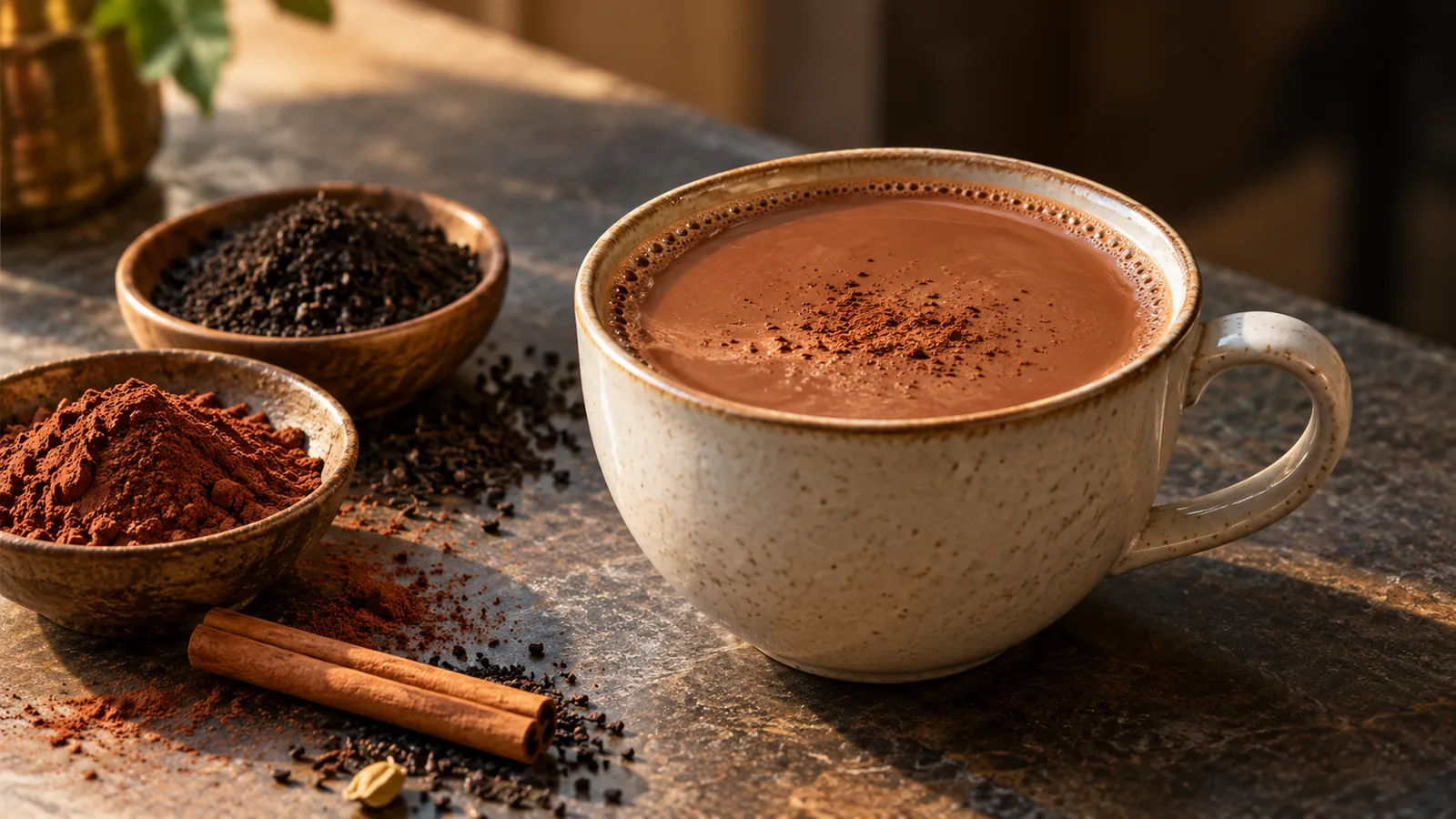
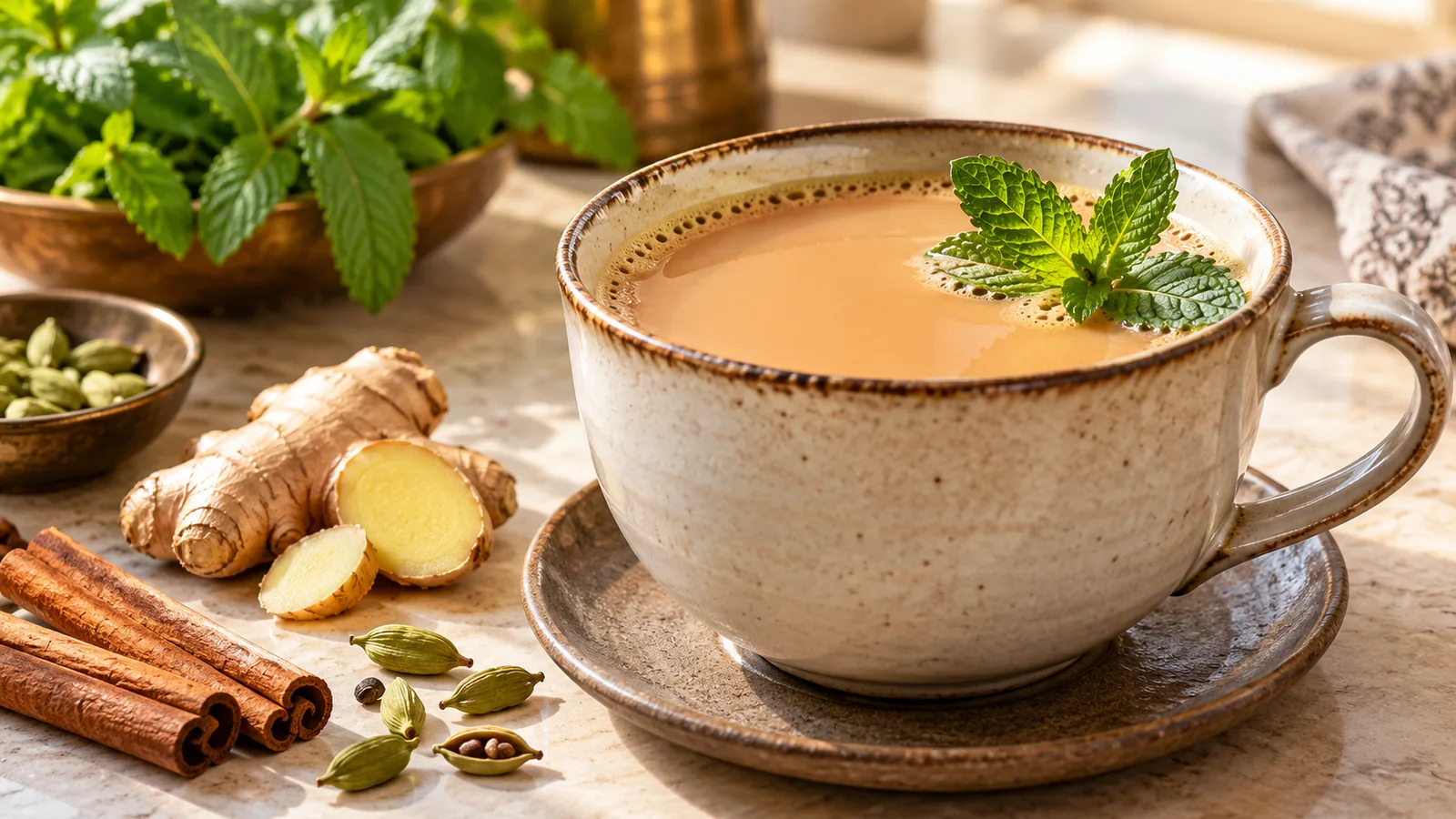
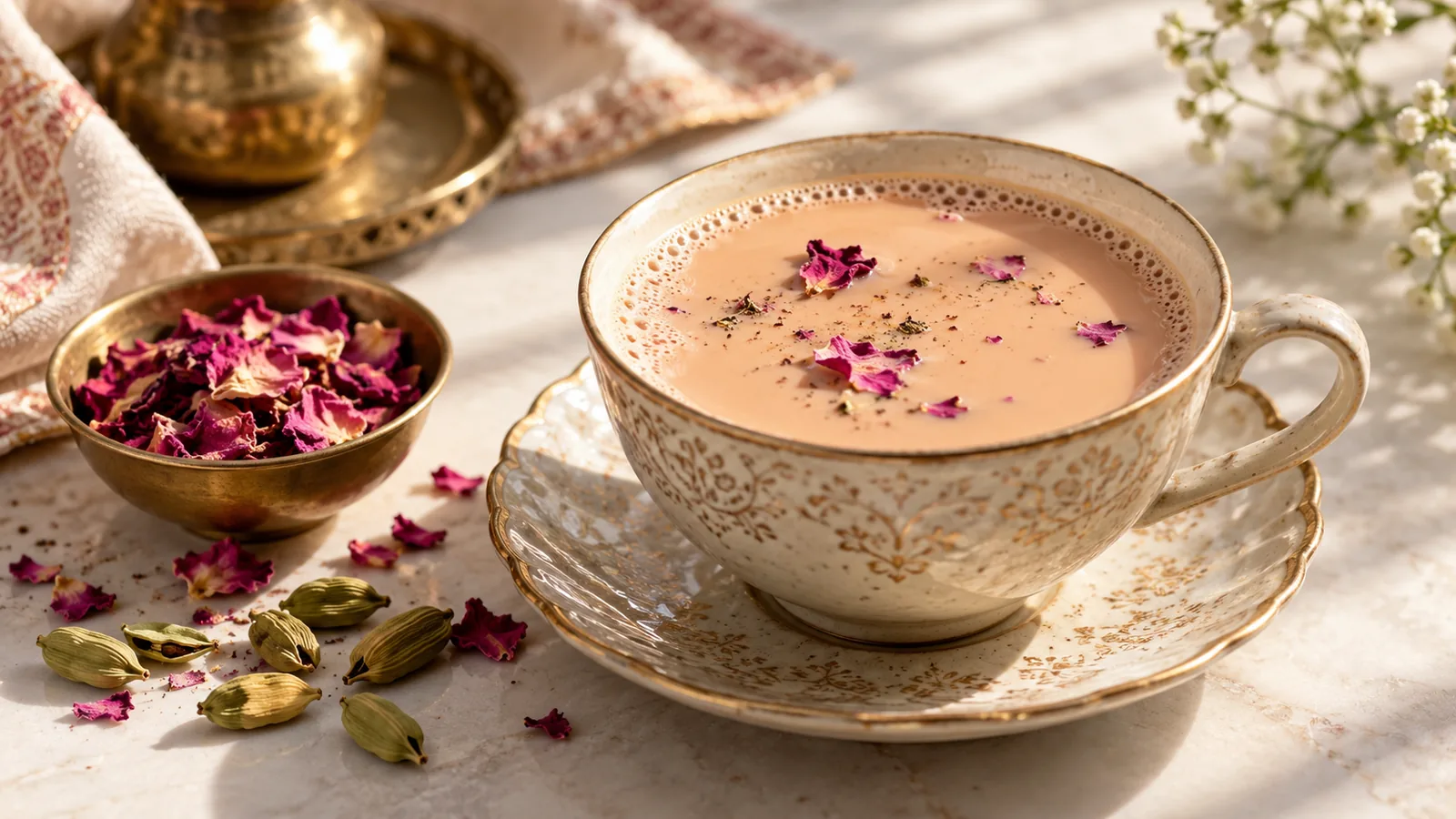
The images are AI-generated illustrations of the intended drink, not photographs of a kitchen test.
Quick answer: black pepper chai at a glance
Lightly crack 6 whole black peppercorns. Simmer them in 300 ml water for 3 minutes; add 6 g Assam CTC black tea for 2 minutes. Add 200 ml milk, bring just to a rise, then simmer gently for 2 minutes. Strain immediately. Optional sugar: 8 g. Allow about 12 minutes total and expect roughly 350–420 ml for two small cups. The water starts near 100°C / 212°F at sea level; keep the milk at a gentle simmer. Pepper size and freshness change the heat, so six is a beginner starting point.
Black Pepper Chai
Pepper-forward black milk tea made from whole peppercorns, Assam CTC tea, water and milk.
By Krishna Sahani
No ratings yet · Be the first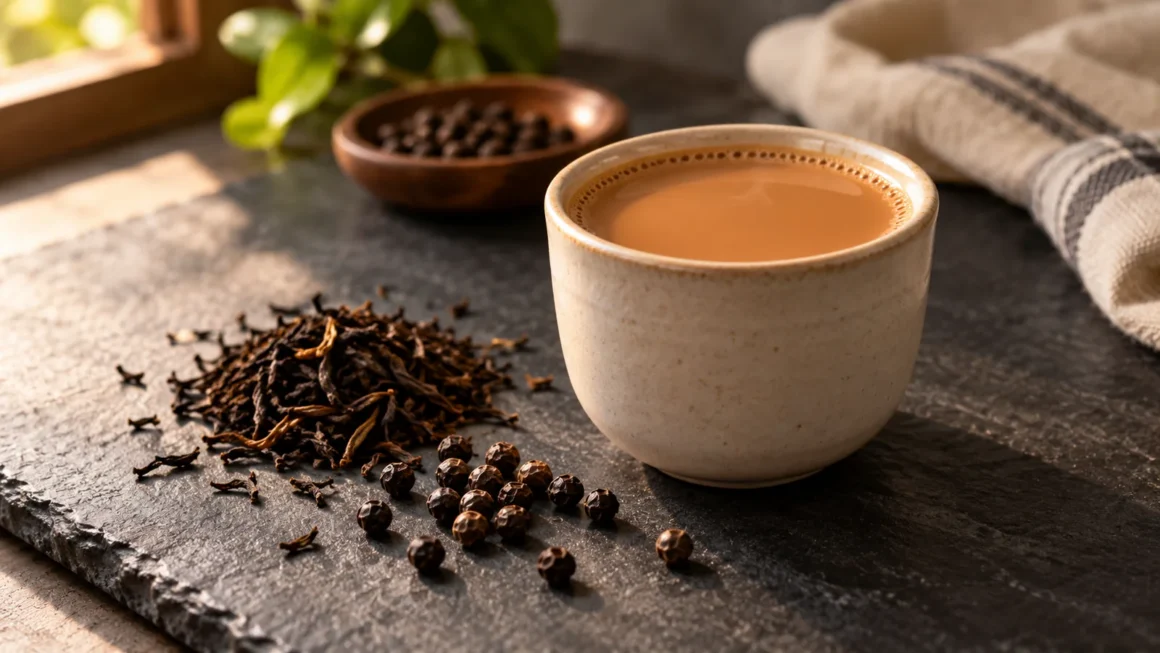
Equipment: Small deep saucepan
Fine strainer
Mortar or flat side of a knife
Two heat-safe cups
Ingredients
Instructions
-
Crack and infuse pepper
Lightly crack 6 whole black peppercorns. Bring 300 ml water and the pepper to a boil (about 100°C / 212°F at sea level), then simmer for 3 minutes.100°C / 212°F
Step timer
-
Brew black tea
Add 6 g Assam CTC black tea, stir once and keep at a gentle boil for 2 minutes.Gentle boil
Step timer
-
Add milk
Add 200 ml milk and optional 8 g sugar. Let the liquid rise once, reduce the heat and simmer gently for 2 minutes; watch for foaming.Gentle simmer
Step timer
-
Strain and serve
Turn off the heat. Strain immediately into two heat-safe cups; cool before drinking. One cooked infusion only; discard the used tea and pepper.
Storage
Best served fresh. Strain leftovers and refrigerate in a covered container within two hours; reheat gently.
Ratings
Rate this recipe
What makes this black pepper chai?
The High Commission of India in Georgetown's masala chai recipe uses black tea, milk, whole spices and optional peppercorns. The Tea Board of India describes Indian black tea as the base of masala chai and allows variation in spices. This version isolates pepper as the leading spice; it should be understood as an editorial home formula within that broader spiced-chai family. The finished drink should be opaque tan to caramel brown with no pepper grains left in the cup.
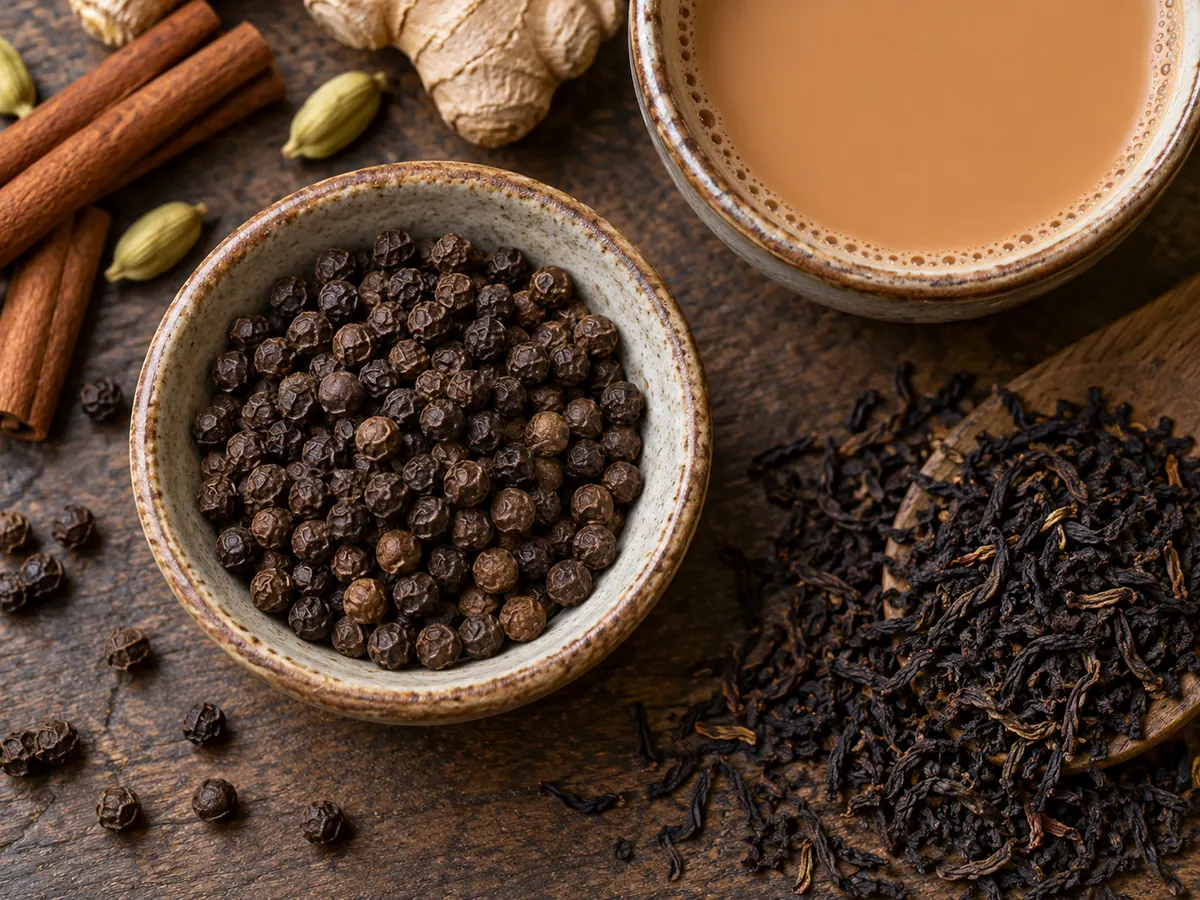
Ingredients and equipment
Use 300 ml water (about 1¼ US cups), 200 ml whole milk (about ¾ cup plus 1 tablespoon), 6 g Assam CTC black tea, 6 whole black peppercorns (about 0.3 g, measured by count because sizes vary), and optionally 8 g sugar (about 2 teaspoons). A small deep saucepan, spoon, mortar or the flat side of a knife, fine strainer and two heat-safe cups are enough. This contains milk and caffeine. Do not substitute a heaped spoon of ground pepper for six peppercorns; powder passes through many strainers and can feel gritty.
Step-by-step method
- Crack each peppercorn once, keeping it in coarse pieces. Put the pepper and 300 ml water in the pan. Bring to a boil, then simmer for 3 minutes.
- Add the black tea. Keep a gentle boil for 2 minutes, stirring once so the leaves wet evenly.
- Add milk and optional sugar. Watch the pan closely as it heats. When the liquid rises, reduce the heat and simmer gently for 2 minutes without letting it overflow.
- Turn off the heat and strain into two cups. Let it cool to a comfortable drinking temperature. This is one cooked infusion; discard the spent tea and pepper.
Why this sequence works
Whole pepper needs time in water, while CTC tea quickly gives a strong base that stands up to milk. The Georgetown government recipe simmers spices first, then briefly boils tea before milk is added; its spice mix and amounts differ from this single-spice adaptation. A longer tea boil makes a darker, more assertive cup, but can also make it drying. Start with these short stages, then change one variable after a real brew test.
Troubleshooting
- Too sharp or peppery: Use four peppercorns next time, or crack them less. Do not add more tea to conceal excess pepper.
- Weak under the milk: Keep the pepper amount but add 1 g tea, or shorten the milk stage so the water does not evaporate too far.
- Bitter or drying: Reduce the tea boil to 90 seconds and strain promptly.
- Gritty: Choose whole peppercorns and a fine strainer; avoid ground pepper.
Variations, serving and storage
For a broader masala profile, add a lightly crushed cardamom pod, but call it a different blend. For a lighter serving, replace 50 ml milk with 50 ml water; the drink will be less creamy. Serve hot in small cups, with sugar added only if wanted. Milk chai is best fresh. Strain any remainder, refrigerate in a covered container within two hours, and reheat gently. Do not keep the cooked leaves for another day.
FAQs
Can I use ground black pepper?
Whole pepper is easier to dose and strain. If ground pepper is all you have, use only a tiny pinch and expect sediment; the card's peppercorn count no longer applies.
Is pepper chai the same as masala chai?
It is a pepper-led variation of spiced milk tea. Masala chai often combines several spices, and recipes vary between households.
Can I use tea bags?
You can, but bag size and leaf grade differ. Use a strong black tea and adjust after tasting; the 6 g CTC measurement is the reliable starting point here.
Does black pepper make this a medicinal tea?
No health treatment is claimed. It is a beverage with pepper for flavor.
References and further reading
- High Commission of India, Georgetown: Masala Chai Recipe — government example of peppercorns in a cooked black milk tea.
- Tea Board of India: Masala Tea — Indian black tea and flexible spice choices.
Related TeaTurbo articles
Editorial method: research-based preparation awaiting TeaTurbo hands-on verification. Author: Krishna Sahani.