
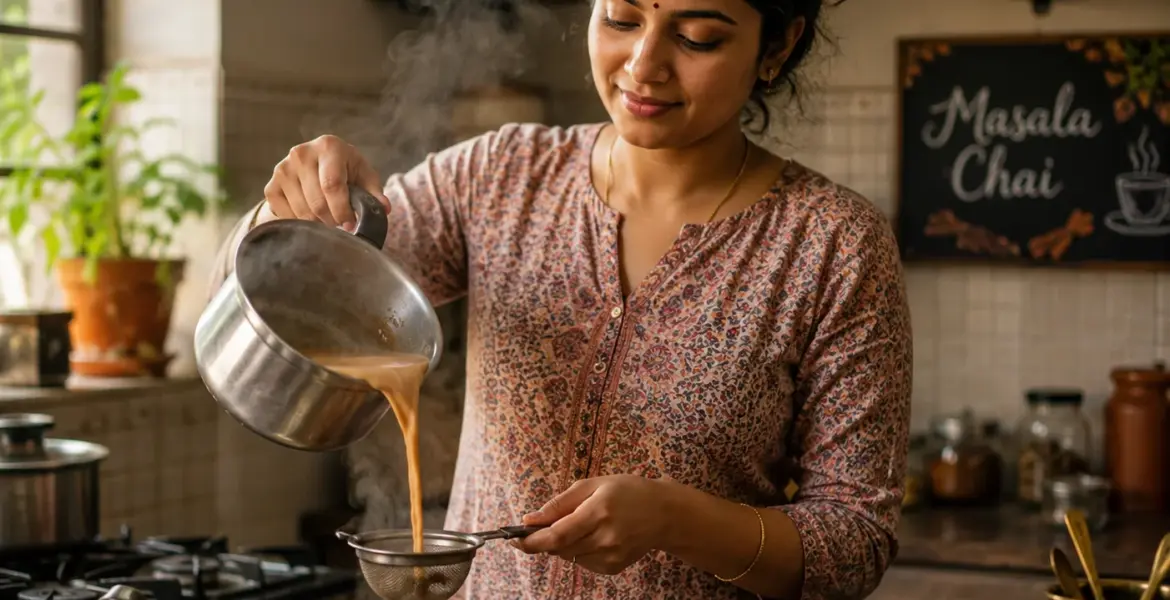
Yes, Masala Chai does have caffeine—but the caffeine comes from the black tea leaves, not the spices. A typical cup contains around 30–60 mg of caffeine, depending on how it’s prepared. For most people, that’s noticeably less than a regular cup of coffee, making Indian masala chai a moderate-caffeine beverage that offers both flavor and gentle stimulation.
“The caffeine in Masala Chai comes almost entirely from the black tea leaves, while traditional spices like cinnamon, ginger, and cardamom naturally contain no caffeine.”
Does Masala Chai Have Caffeine?
The simple answer is yes. The caffeine in masala chai comes from black tea, which is made from the Camellia sinensis plant. Traditional chai spices—including cardamom, cinnamon, cloves, ginger, and black pepper—are naturally caffeine-free.
Several factors influence how much caffeine in chai ends up in your cup:
- Type of black tea: Assam usually contains more caffeine than lighter black teas.
- Amount of tea leaves: More tea equals higher caffeine content.
- Brewing time: Longer steeping extracts more caffeine.
- Water-to-milk ratio: More water generally extracts more caffeine before milk is added.
Unlike coffee, chai combines tea with milk and spices, which can make its stimulating effect feel smoother for some people.
How Much Caffeine Is in One Cup?
The exact chai caffeine level varies by recipe, but most homemade or café-style masala chai contains 30–60 mg of caffeine per 8-ounce (240 ml) serving. According to the U.S. Food and Drug Administration (FDA), an average 8-ounce brewed black tea contains about 47 mg of caffeine, while brewed coffee averages about 95 mg.
| Drink | Average Caffeine (8 oz / 240 ml) |
|---|---|
| Masala Chai | 30–60 mg |
| Green Tea | 20–45 mg |
| Black Tea | ~47 mg |
| Brewed Coffee | ~95 mg |
| Espresso (1 oz shot) | ~63 mg |
Why caffeine content varies:
- Tea leaf variety
- Brewing duration
- Water temperature
- Tea-to-milk ratio
- Brand or café recipe
Important: Tea caffeine levels are naturally variable, so no single number applies to every cup.
Where Does the Caffeine Come From?
Many people assume the warming spices create the stimulating effect, but that’s a common misconception.
All caffeine in traditional Indian masala chai comes from black tea leaves, harvested from the Camellia sinensis plant. During processing, black tea undergoes full oxidation, which develops its rich flavor and dark color. Oxidation changes flavor compounds—not the caffeine itself.
The classic chai spices are naturally caffeine-free:
- Cardamom
- Cinnamon
- Cloves
- Ginger
- Black pepper
These spices contribute aroma, warmth, and flavor rather than caffeine. Some studies suggest certain spices may contain beneficial plant compounds with antioxidant activity, but research is ongoing and they should not be viewed as medical treatments.
Is Masala Chai Healthier Than Coffee?
Neither drink is universally healthier. The better choice depends on your caffeine tolerance, diet, and preparation method.
Potential advantages of masala chai:
- Lower caffeine content than coffee.
- Contains tea polyphenols and antioxidants.
- Naturally provides L-theanine, an amino acid associated with calm alertness.
- Traditional spices may support enjoyable digestion and flavor without adding caffeine.
Potential drawbacks:
- Sweetened café versions can contain significant added sugar.
- Whole milk increases calories and saturated fat.
- Multiple cups daily can still contribute substantial caffeine intake.
Coffee generally contains more caffeine, making it more effective for rapid alertness but also more likely to cause jitteriness in sensitive individuals. Some people report a milder energy experience with chai, although individual responses vary.
The FDA states that up to 400 mg of caffeine per day is generally not associated with dangerous effects for most healthy adults. Individual sensitivity, however, differs considerably.
Can You Make Masala Chai Without Caffeine?
Absolutely. If you enjoy the spices but want to avoid caffeine, several options are available.
- Decaffeinated black tea – Keeps the closest traditional flavor while greatly reducing caffeine.
- Rooibos chai – Naturally caffeine-free with a slightly sweet, earthy taste.
- Herbal chai – Uses herbs instead of tea leaves for a completely caffeine-free drink.
- Spice-only chai – Simmers cinnamon, ginger, cloves, cardamom, and black pepper in milk or water without tea leaves.
These alternatives preserve much of masala chai’s signature aroma, although they won’t have the same depth or slight bitterness that black tea provides.
Frequently Asked Questions
Does homemade masala chai contain caffeine?
Yes, if it contains black tea leaves. Homemade recipes using Assam or other black teas naturally contain caffeine. If you prepare it with rooibos or herbal blends instead, it can be virtually caffeine-free.
Is masala chai good before bed?
Traditional masala chai contains caffeine, so it may interfere with sleep in caffeine-sensitive people. A caffeine-free herbal or rooibos chai is generally a better evening option.
Can pregnant women drink masala chai?
Many healthcare organizations recommend limiting total daily caffeine intake during pregnancy. Since caffeine levels vary by recipe, discuss appropriate intake with your healthcare professional rather than relying on general advice.
Is chai stronger than coffee?
Usually not. Standard brewed coffee contains roughly twice as much caffeine as a typical cup of masala chai, although preparation methods can change the exact comparison.
Which chai has the least caffeine?
Herbal chai and rooibos chai contain virtually no caffeine. Decaffeinated black tea chai is another good option for those wanting a traditional taste with much less caffeine.
Conclusion
So, does masala chai have caffeine? Yes—but the caffeine comes entirely from black tea, not the spices. Most cups provide 30–60 mg, making chai a moderate-caffeine choice compared with coffee. If you’re sensitive to caffeine, consider decaffeinated or herbal versions while still enjoying the comforting spice blend.
References
- U.S. Food and Drug Administration (FDA). Spilling the Beans: How Much Caffeine is Too Much?
- USDA FoodData Central. Tea, brewed, black; nutritional composition.
- National Institutes of Health (NIH) – PubMed. Research on tea polyphenols, L-theanine, and health effects.
- Harvard T.H. Chan School of Public Health. The Nutrition Source: Tea.
