If your stomach feels off, your nose is stuffy, or you want a cozy drink that isn’t loaded with sugar, there’s a good chance someone has told you to “just drink ginger and lemon tea.” It sounds like simple advice, but there’s real science behind it.
This humble cup — hot water, a few slices of fresh ginger, a squeeze of lemon — has been used in kitchens and traditional medicine cabinets for centuries. And if you brew it with a base of oolong tea instead of plain water, you get an extra layer of antioxidants on top of everything ginger and lemon already bring to the table.
In this guide, we’ll break down the benefits of ginger and lemon tea in plain, easy-to-understand language, show you how the oolong version works, and give you a simple recipe you can start using today.
What Makes Ginger and Lemon Tea So Powerful?
Before we get to the list, it helps to know what’s actually inside your cup.
- Ginger contains a compound called gingerol, which gives ginger its spicy kick and is known for calming the stomach and fighting inflammation.
- Lemon is loaded with vitamin C, plant compounds called flavonoids, and citric acid, all of which support your immune system and digestion.
- Oolong tea (if you choose to use it as your base instead of plain water) adds polyphenol antioxidants and a small amount of natural caffeine, giving the drink a gentle energy boost along with its calming properties.
Put these three together, and you get a warm, tangy, slightly spicy drink that does a lot more than just taste good.
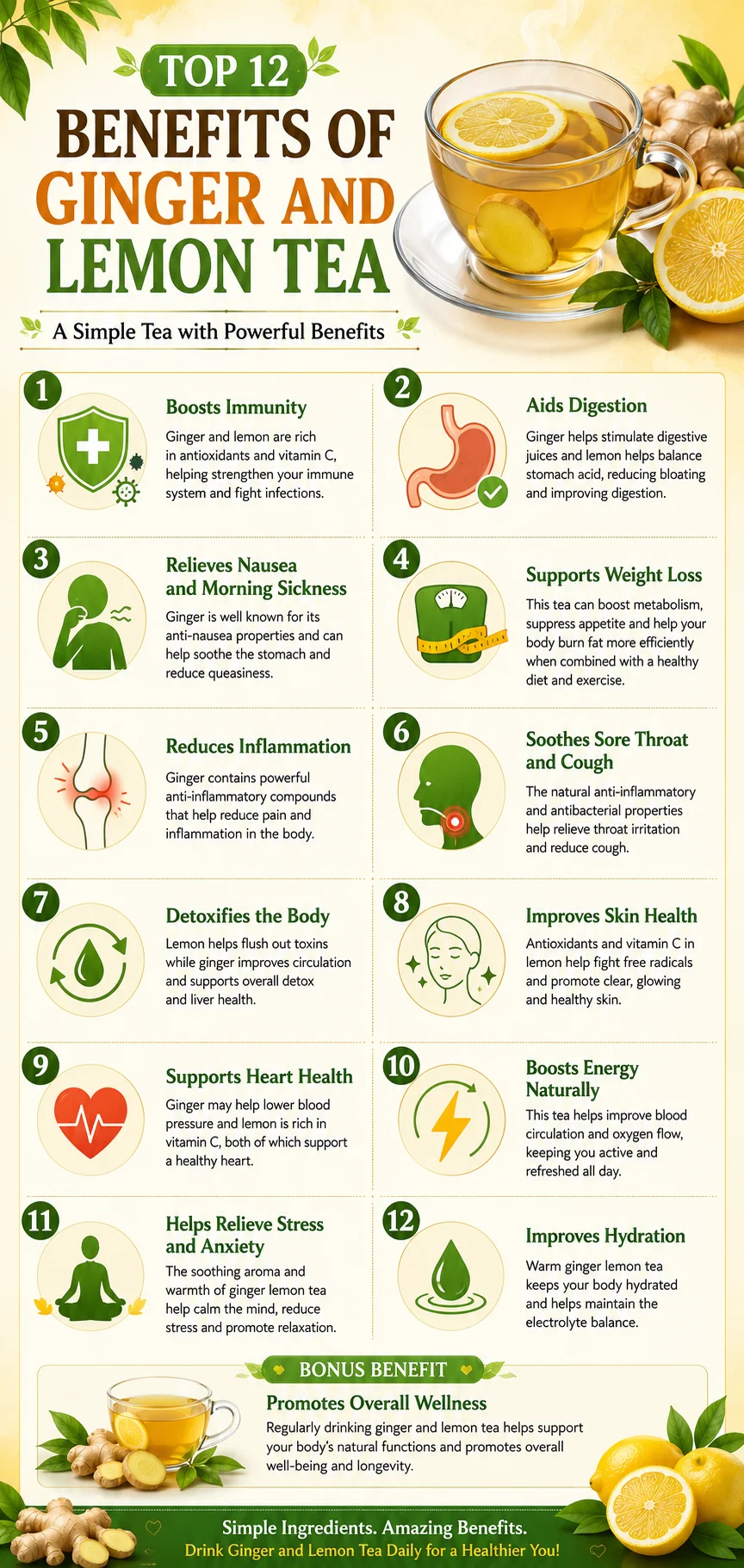
Top 12 Benefits of Ginger and Lemon Tea
1. Eases Nausea and an Upset Stomach
Ginger has long been used to settle queasy stomachs, whether it’s from motion sickness, a stomach bug, or morning sickness. It works by calming the muscles of the digestive tract, and the lemon’s mild acidity helps too. Sipping it slowly, rather than gulping it down, tends to work best.
2. Supports Smooth Digestion
Feeling heavy or bloated after a big meal? Ginger encourages your stomach to empty at a healthy pace, while lemon helps your body produce bile, which is key for breaking down fats. Together, they can make digestion feel a lot less sluggish.
3. Reduces Bloating and Gas
Trapped gas is uncomfortable, but ginger’s warming effect helps relax the intestines so gas can move along naturally. A warm cup after dinner is a simple, low-effort way to feel less puffy.
4. Gives Your Immune System a Boost
Lemon is well known for its vitamin C content, an essential nutrient for a healthy immune system. Ginger adds its own layer of protection thanks to gingerol’s antioxidant and anti-inflammatory properties. Drinking this tea regularly, especially during cold and flu season, gives your body extra tools to fight off illness.
5. May Help Shorten Colds and Ease Congestion
When you’re stuffed up, the steam alone from a hot cup can help loosen mucus. Add in ginger’s warming properties and lemon’s vitamin C, and you have a comforting drink that many people reach for at the first sign of a sniffle.
6. Fights Inflammation
Chronic, low-level inflammation is linked to all kinds of health issues, from joint pain to heart disease. Ginger is one of the most studied natural anti-inflammatory ingredients out there, and pairing it with lemon’s antioxidants may help your body manage inflammation more effectively over time.
7. Supports Heart Health
Some research points to ginger helping manage cholesterol and blood lipid levels, while lemon’s vitamin C and flavonoids support healthy blood vessels. Neither ingredient is a substitute for medication or a doctor’s advice, but as part of a balanced diet, this tea can be a heart-friendly habit.
8. May Help Manage Blood Sugar
Both lemon juice and ginger have a low glycemic index, meaning they don’t cause sharp spikes in blood sugar. Some studies suggest ginger may also help improve how your body responds to insulin. If you’re watching your blood sugar, an unsweetened cup of this tea is a smart swap for sugary drinks.
9. Can Support Healthy Weight Management
Ginger has been shown to help reduce feelings of hunger, and lemon may help the body process stored fat more efficiently. On its own, ginger and lemon tea won’t melt away weight, but as a low-calorie replacement for soda or sweetened coffee drinks, it’s a small change that adds up.
10. Helps Relieve Headaches and Muscle Soreness
Because of its anti-inflammatory properties, ginger is sometimes used as a natural way to ease tension headaches and sore muscles after a workout. Lemon’s hydrating effect adds to the relief, since dehydration is a common headache trigger.
11. Keeps You Hydrated
This one is simple but easy to overlook: most of this “tea” is just water. Sipping a warm mug throughout the day is an enjoyable way to hit your hydration goals, especially for people who find plain water boring.
12. Adds Antioxidants When You Brew It with Oolong Tea
Here’s where the oolong twist comes in. Oolong tea sits between green and black tea in terms of processing, and it holds onto a rich mix of polyphenol antioxidants. Brewing your ginger and lemon tea with oolong as the base — instead of just hot water — stacks oolong’s antioxidants on top of ginger and lemon’s benefits, plus gives you a light, natural caffeine lift that’s gentler than coffee.
How to Brew Ginger and Lemon Tea (Classic and Oolong Versions)
Classic Version
- Slice 4–5 thin pieces of fresh ginger root.
- Add them to a cup or teapot with hot (not boiling) water.
- Steep for 8–10 minutes to let the ginger’s flavor and compounds fully release.
- Squeeze in fresh lemon juice, about half a lemon per cup.
- Add honey if you’d like a touch of sweetness.
Oolong Ginger-Lemon Version
- Steep 1 teaspoon of loose-leaf oolong tea (or one tea bag) in hot water just off the boil, around 90°C (194°F), for 3–4 minutes.
- Strain out the oolong leaves.
- Add fresh ginger slices back into the hot tea and let them steep for another 5 minutes.
- Finish with fresh lemon juice and honey to taste.
Steeping the oolong separately keeps it from turning bitter, while still giving the ginger enough time to release its full flavor.
When to Drink It
- Morning: A great alternative to coffee if you use the oolong version, since it offers a gentle caffeine boost.
- After meals: Helps with digestion and bloating.
- Before bed: The caffeine-free classic version (skip the oolong) can be a soothing way to wind down.
- When you’re sick: The warmth, vitamin C, and anti-inflammatory compounds make it a comforting go-to.
A Few Things to Keep in Mind
- Ginger can interact with blood-thinning medication, so check with your doctor if you’re on any blood thinners.
- Pregnant or breastfeeding individuals should talk to a healthcare provider before adding herbal teas to their routine.
- Lemon’s acidity can affect tooth enamel over time, so rinsing your mouth with plain water afterward is a good habit.
- This tea is a helpful addition to a healthy lifestyle, not a replacement for medical treatment.
Frequently Asked Questions
Is it okay to drink ginger and lemon tea every day?
For most healthy adults, yes. Just keep an eye on how much ginger you’re using, since large amounts can occasionally cause heartburn in sensitive people.
Does ginger and lemon tea have caffeine?
The classic version made with just water is naturally caffeine-free. If you brew it with oolong tea, you’ll get a small amount of natural caffeine, less than a cup of coffee.
Can I drink it cold?
Yes. Let it cool and pour it over ice for a refreshing version, especially nice in warmer months.
Will it help me lose weight on its own?
No single drink causes weight loss by itself, but replacing sugary beverages with this tea, alongside a balanced diet, can support your overall goals.
Final Thoughts
Ginger and lemon tea is proof that some of the best wellness habits are also the simplest. A few slices of root, a splash of citrus, and hot water (or a base of oolong tea if you want an antioxidant and caffeine boost) can support your digestion, immunity, heart health, and more. Best of all, it takes just minutes to make and fits easily into almost any routine.
Try brewing a cup tonight and see how this small, centuries-old habit fits into your day.