Tea is one of the most loved drinks in the world. From a refreshing cup of green tea in the morning to a relaxing evening brew, tea has become a part of daily life for millions of people. Among all tea varieties, oolong tea stands out because it offers a unique balance of flavor, aroma, and health benefits.
But what exactly makes oolong tea so special?
Unlike black tea or green tea, oolong tea goes through a special processing method that gives it a taste somewhere between the two. It can be light and floral or rich and roasted, depending on how it is made. This versatility has made it a favorite among tea lovers for centuries.
In this guide, you’ll learn everything you need to know about oolong tea, including its history, health benefits, brewing methods, caffeine content, and how it compares with green tea.
Table of Contents
The History of Oolong Tea
Oolong tea has a rich history that dates back several hundred years. It is believed to have originated in China’s Fujian Province during the Ming Dynasty.
Over time, tea farmers perfected processing methods that created unique flavors and aromas. Today, China and Taiwan are the world’s most famous producers of premium oolong tea.
Many traditional tea ceremonies also feature oolong because of its ability to produce multiple flavorful infusions from the same leaves.
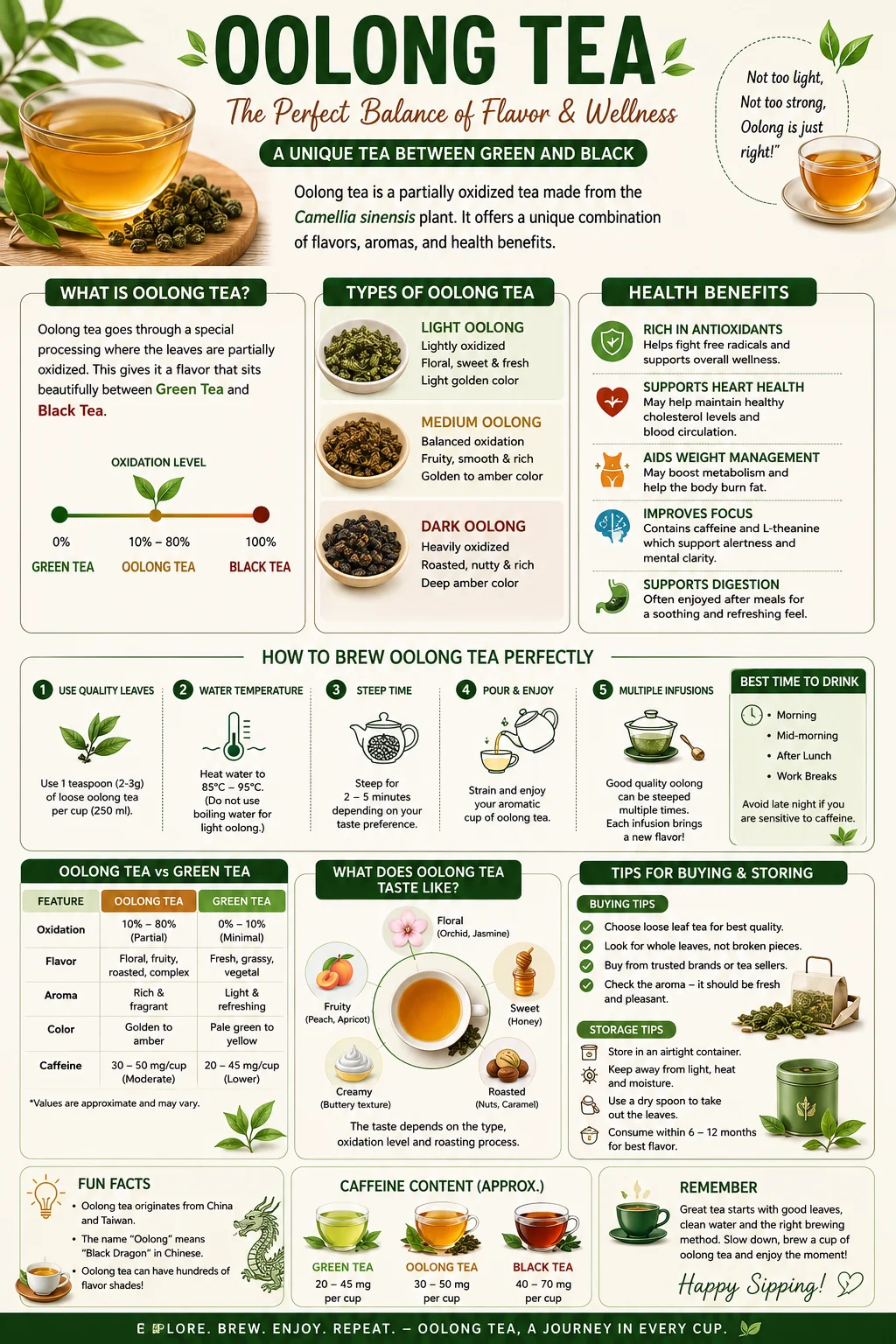
What Makes Oolong Tea Different from Green Tea?
Although both come from the same tea plant, there are several important differences.
| Feature | Oolong Tea | Green Tea |
|---|---|---|
| Oxidation | Partially oxidized | Very lightly oxidized |
| Flavor | Floral, fruity, roasted | Fresh, grassy, vegetal |
| Aroma | Rich and complex | Light and refreshing |
| Color | Golden to amber | Pale green to yellow |
| Brewing Time | 2–5 minutes | 2–3 minutes |
If you enjoy the freshness of green tea but want something with more depth and complexity, oolong tea is worth trying.
Types of Oolong Tea
Not all oolong teas taste the same. Processing methods create a wide variety of products.
1. Light Oolong
- Floral aroma
- Sweet taste
- Light golden color
- Similar to green tea
2. Medium Oolong
- Fruity flavor
- Balanced sweetness
- Smooth finish
3. Dark Oolong
- Roasted aroma
- Rich body
- Nutty notes
- Dark amber color
Each type offers a different tea-drinking experience.
Health Benefits of Oolong Tea
Oolong tea contains natural plant compounds that may support overall health when enjoyed as part of a balanced lifestyle.
Rich in Antioxidants
Like green tea, oolong tea contains polyphenols that help protect the body from oxidative stress.
Antioxidants may help support healthy cells and overall wellness.
May Support Heart Health
Some research suggests that regularly drinking tea may help maintain healthy cholesterol levels and support normal blood circulation.
Combined with healthy eating and exercise, oolong tea can be part of a heart-friendly lifestyle.
May Help with Weight Management
Many people choose oolong tea because it may slightly increase calorie burning and support fat metabolism.
However, tea alone is not a magic solution. The best results come from combining it with:
- Regular exercise
- Balanced nutrition
- Good sleep
- Healthy daily habits
Supports Mental Alertness
Oolong tea contains caffeine along with L-theanine.
This combination may help improve:
- Focus
- Concentration
- Alertness
Unlike coffee, many people find the energy from tea smoother and more balanced.
May Support Digestion
Many tea drinkers enjoy a warm cup of oolong after meals because it feels soothing and refreshing.
While individual experiences vary, many people find it a pleasant addition to their daily routine.
Does Oolong Tea Contain Caffeine?
Yes.
Oolong tea naturally contains caffeine, but the amount usually falls between green tea and black tea.
An average cup contains approximately:
- Green tea: 20–45 mg
- Oolong tea: 30–50 mg
- Black tea: 40–70 mg
The exact amount depends on:
- Tea variety
- Leaf quality
- Brewing time
- Water temperature
If you’re sensitive to caffeine, avoid drinking it late in the evening.
How to Brew Oolong Tea Perfectly
Making a great cup is simple.
You’ll Need
- 1 teaspoon loose oolong tea
- 250 ml hot water
- Tea infuser or teapot
Water Temperature
85°C–95°C
Avoid boiling water for delicate oolong varieties.
Brewing Steps
- Heat fresh water.
- Add tea leaves.
- Pour hot water over the leaves.
- Steep for 2–5 minutes.
- Strain and enjoy.
High-quality loose leaves can often be brewed multiple times, with each infusion offering slightly different flavors.
What Does Oolong Tea Taste Like?
One reason tea lovers enjoy oolong is its incredible variety of flavors.
Depending on the processing method, you may notice:
- Floral notes
- Honey sweetness
- Peach flavors
- Orchid aroma
- Creamy texture
- Toasted nuts
- Caramel hints
- Roasted finish
Every cup can be slightly different, making it an exciting tea to explore.
Is Oolong Tea Better Than Green Tea?
There isn’t a single “better” tea. It depends on your personal preference.
Choose green tea if you like:
- Fresh flavors
- Light taste
- Grassy notes
Choose oolong tea if you enjoy:
- Rich aroma
- Complex flavors
- Multiple infusions
- A balance between green and black tea
Both are excellent choices and provide beneficial plant compounds.
Best Time to Drink Oolong Tea
Many people enjoy oolong tea:
- In the morning
- Mid-morning
- After lunch
- During work breaks
Because it contains caffeine, it’s often best to avoid drinking it just before bedtime if you’re sensitive to stimulants.
Tips for Buying Good Oolong Tea
When shopping for quality tea, look for:
- Whole loose leaves
- Fresh aroma
- Trusted tea brands
- Proper packaging
- Harvest information if available
Avoid tea that smells stale or contains excessive broken leaves.
Common Mistakes When Brewing Oolong Tea
Many beginners accidentally reduce the quality of their tea.
Avoid these mistakes:
- Using boiling water for delicate oolong
- Steeping for too long
- Using too few tea leaves
- Reusing leaves too many times
- Storing tea in sunlight or humid places
Proper storage helps preserve freshness and flavor.
Conclusion
Oolong tea truly earns its reputation as one of the world’s most fascinating teas. Its unique partial oxidation process creates flavors that beautifully bridge the gap between green tea and black tea. Whether you prefer floral, fruity, creamy, or roasted notes, there is an oolong tea for almost every taste.
Key Takeaways
- Oolong tea is partially oxidized, giving it a unique flavor between green tea and black tea.
- It comes from the same Camellia sinensis plant used for other true teas.
- Oolong tea is available in light, medium, and dark varieties.
- It contains antioxidants that may support overall wellness.
- Its caffeine level is generally moderate—higher than green tea but lower than black tea.
- Proper brewing enhances its rich aroma and flavor.
- High-quality oolong tea leaves can usually be brewed multiple times.
- If you enjoy green tea but want a more complex taste, oolong tea is an excellent choice.