
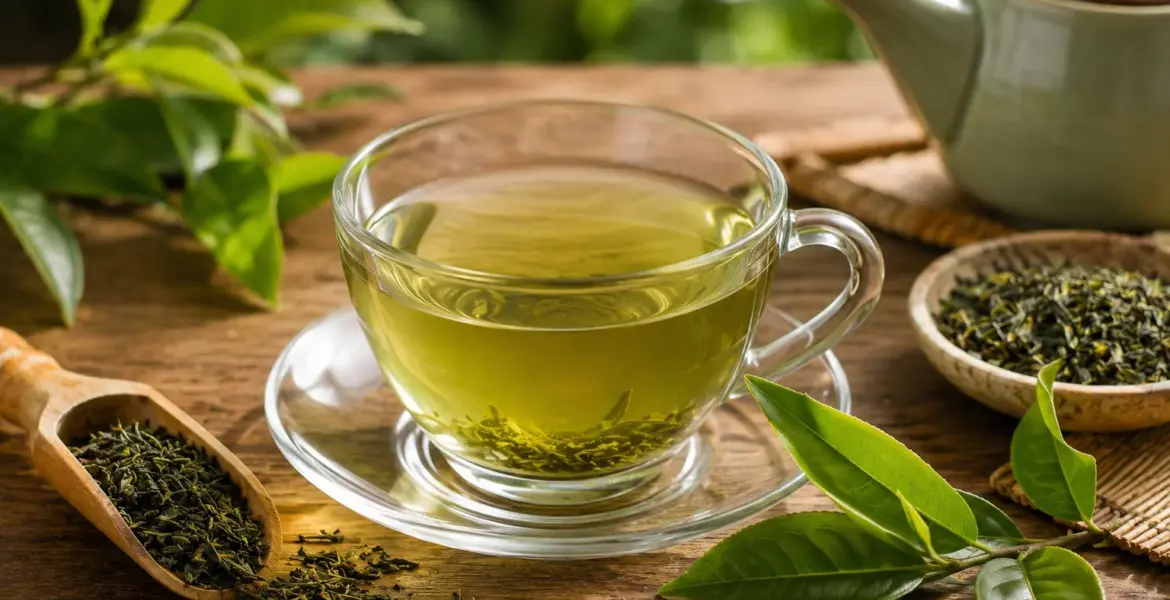
Green tea is one of the healthiest and most popular drinks in the world. Millions of people enjoy it every day because of its fresh taste, natural antioxidants, and many health benefits. Whether you want to improve your overall health, lose weight, boost your energy, or simply enjoy a relaxing cup of tea, green tea is an excellent choice.
If you’re completely new to green tea, don’t worry. This beginner-friendly guide explains everything you need to know in simple language.
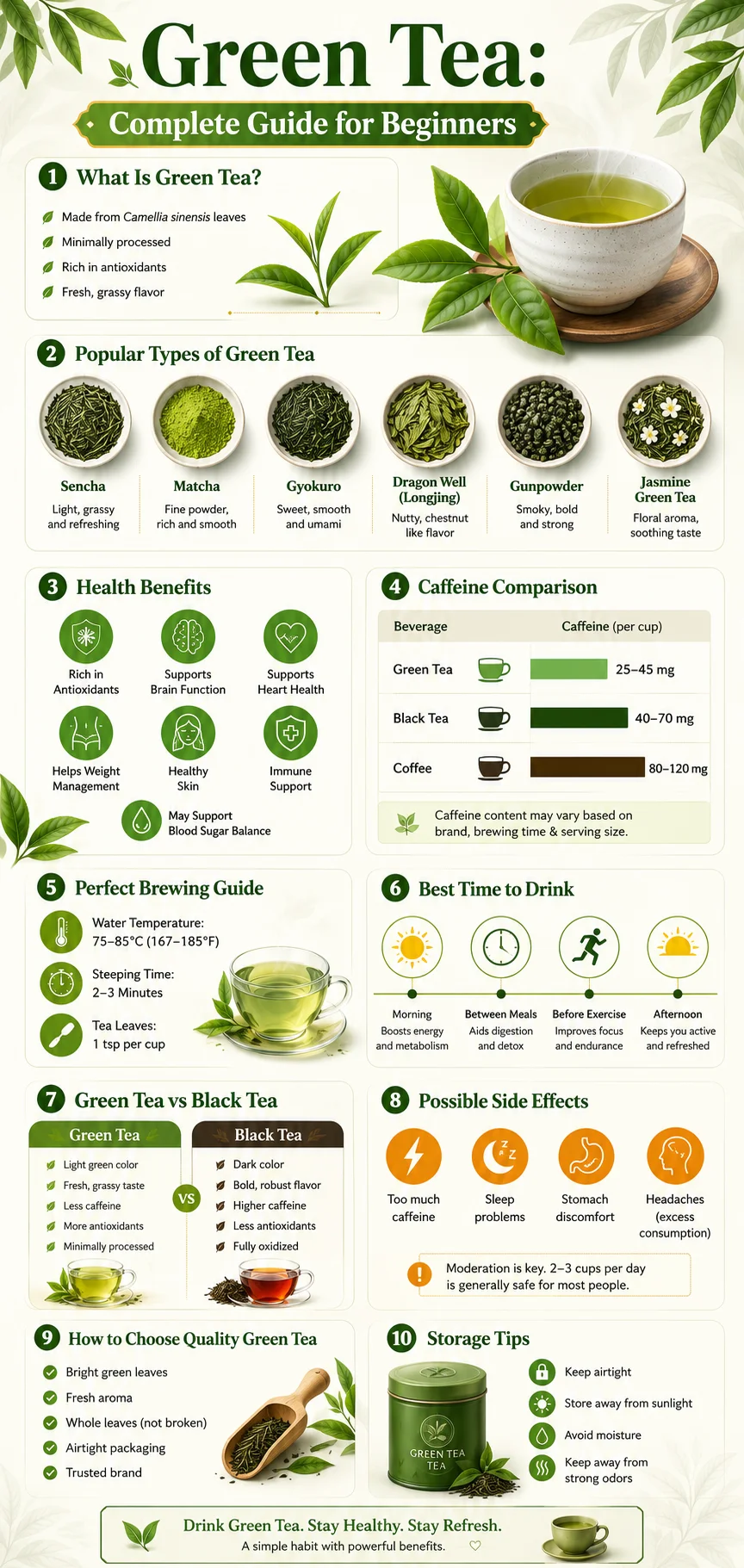
What Is Green Tea?
Green tea is a type of tea made from the leaves of the Camellia sinensis plant. Unlike black tea or oolong tea, green tea leaves are heated soon after harvesting. This prevents oxidation and helps the leaves keep their natural green color.
Because it undergoes very little processing, green tea retains more natural antioxidants, vitamins, and plant compounds.
It has a light, fresh, grassy flavor that varies depending on where it is grown and how it is processed.
History of Green Tea
Green tea has a history that goes back over 4,000 years.
It first became popular in China, where it was used both as a daily beverage and in traditional medicine. Buddhist monks later introduced green tea to Japan, where it became an important part of Japanese culture and tea ceremonies.
Today, green tea is enjoyed around the world and is grown in countries including:
- China
- Japan
- South Korea
- India
- Sri Lanka
- Vietnam
Also Read | Top 10 Best Teas for Headaches and Migraines
How Green Tea Is Made
The process of making green tea is simple but requires careful handling.
Step 1: Harvesting
Young tea leaves are picked by hand or machine.
Step 2: Heating
The leaves are quickly steamed or pan-fired to stop oxidation.
Step 3: Rolling
Leaves are rolled into different shapes depending on the tea style.
Step 4: Drying
The leaves are dried to remove moisture and preserve freshness.
This gentle processing helps green tea maintain its natural nutrients.
Popular Types of Green Tea
There are many varieties of green tea, each with its own flavor and characteristics.
Sencha
- Most popular Japanese green tea
- Fresh grassy flavor
- Bright green color
Matcha
- Finely ground green tea powder
- Rich in antioxidants
- Used in tea ceremonies and recipes
Gyokuro
- Shade-grown before harvest
- Sweet and smooth taste
- Premium Japanese tea
Dragon Well (Longjing)
- Famous Chinese green tea
- Nutty flavor
- Flat leaves
Gunpowder Tea
- Leaves rolled into small pellets
- Bold taste
- Often used in Moroccan mint tea
Jasmine Green Tea
- Green tea scented with jasmine flowers
- Floral aroma
- Very refreshing
Green Tea Nutrition Facts
One cup of plain green tea contains:
- Calories: 0–2
- Sugar: 0 grams
- Fat: 0 grams
- Protein: 0 grams
- Carbohydrates: 0 grams
It also contains beneficial compounds such as:
- Catechins
- EGCG (Epigallocatechin Gallate)
- Polyphenols
- L-theanine
- Small amounts of caffeine
Health Benefits of Green Tea
Green tea is packed with natural plant compounds that may support overall wellness.
Rich in Antioxidants
Green tea contains powerful antioxidants that help protect the body’s cells from damage caused by free radicals.
Supports Brain Function
The combination of caffeine and L-theanine may improve:
- Focus
- Alertness
- Memory
- Mental performance
May Support Heart Health
Regular green tea consumption may help support healthy cholesterol levels and normal blood circulation as part of a balanced lifestyle.
Can Support Weight Management
Green tea may slightly increase calorie burning and fat oxidation when combined with regular exercise and a healthy diet.
Does Green Tea Contain Caffeine?
Yes.
Green tea naturally contains caffeine, but much less than coffee.
Approximate caffeine content per cup:
- Green tea: 25–45 mg
- Black tea: 40–70 mg
- Coffee: 80–120 mg
This makes green tea a good option for people who want gentle energy without the stronger effects of coffee.
How to Brew Green Tea Perfectly
Making green tea correctly makes a big difference in taste.
Ingredients
- 1 teaspoon green tea leaves
- 1 cup water
Instructions
- Heat water to about 75–85°C (167–185°F).
- Do not use boiling water.
- Add tea leaves.
- Steep for 2–3 minutes.
- Strain and enjoy.
Over-steeping or using boiling water can make green tea taste bitter.
Best Time to Drink Green Tea
Many people enjoy green tea:
- In the morning
- Between meals
- Before exercise
- During the afternoon
Avoid drinking it immediately before bedtime if you’re sensitive to caffeine.
Green Tea vs Black Tea
| Feature | Green Tea | Black Tea |
|---|---|---|
| Processing | Minimal | Fully oxidized |
| Flavor | Fresh and grassy | Rich and bold |
| Color | Light green | Dark brown |
| Antioxidants | Very high | High |
| Caffeine | Lower | Higher |
Possible Side Effects
Green tea is generally safe for most people.
However, drinking too much may cause:
- Difficulty sleeping
- Stomach discomfort
- Increased heart rate in sensitive individuals
- Headaches from excess caffeine
People who are pregnant, nursing, or taking medications should consult a healthcare professional before consuming large amounts.
How to Choose High-Quality Green Tea
Look for:
- Bright green leaves
- Fresh aroma
- Whole leaves instead of broken dust
- Airtight packaging
- Trusted tea brands
Loose-leaf green tea often provides better flavor than tea bags.
How to Store Green Tea
Store green tea in:
- An airtight container
- A cool place
- Away from sunlight
- Away from moisture
- Away from strong odors
Proper storage helps preserve freshness and flavor.
Frequently Asked Questions
Is green tea good for beginners?
Yes. Green tea is one of the easiest teas to start with because it is widely available and simple to prepare.
Can I drink green tea every day?
Most healthy adults can enjoy 2–4 cups daily as part of a balanced diet.
Does green tea help with weight loss?
Green tea may slightly support metabolism and fat burning, but it works best alongside healthy eating and regular exercise.
Can I add milk?
You can, but most people drink green tea without milk to enjoy its natural flavor.
Should I add sugar?
Green tea is healthiest when enjoyed without added sugar.
Is green tea better than coffee?
They serve different purposes. Green tea offers less caffeine and contains L-theanine, which may promote calm focus, while coffee generally provides a stronger energy boost.
Final Thoughts
Green tea is one of the healthiest beverages you can add to your daily routine. It is refreshing, rich in antioxidants, and offers a wide range of potential health benefits. From supporting brain function to promoting heart health and overall wellness, green tea has earned its reputation as a healthy everyday drink.
For beginners, start with a mild variety like Sencha or Jasmine Green Tea. Learn the correct brewing method, avoid using boiling water, and enjoy experimenting with different types until you find your favorite.
A simple cup of green tea each day can become a relaxing habit that supports a healthy lifestyle.
