
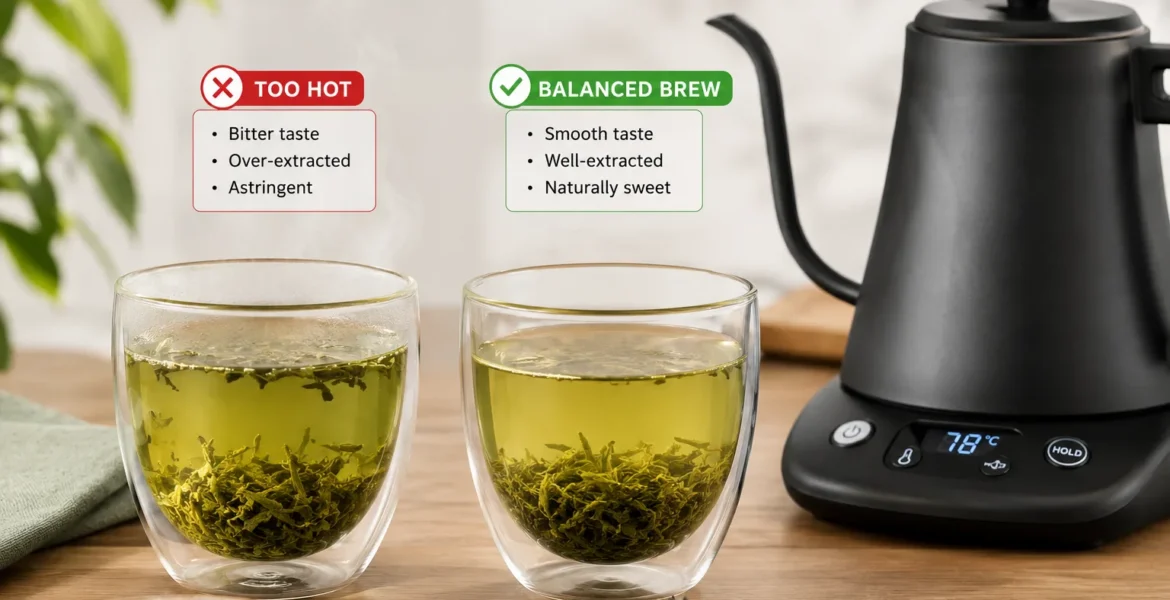
Green tea tastes bitter mainly because too many bitter and astringent compounds are being extracted into the water. The most common reasons are water that is too hot, steeping too long, or using too much tea.
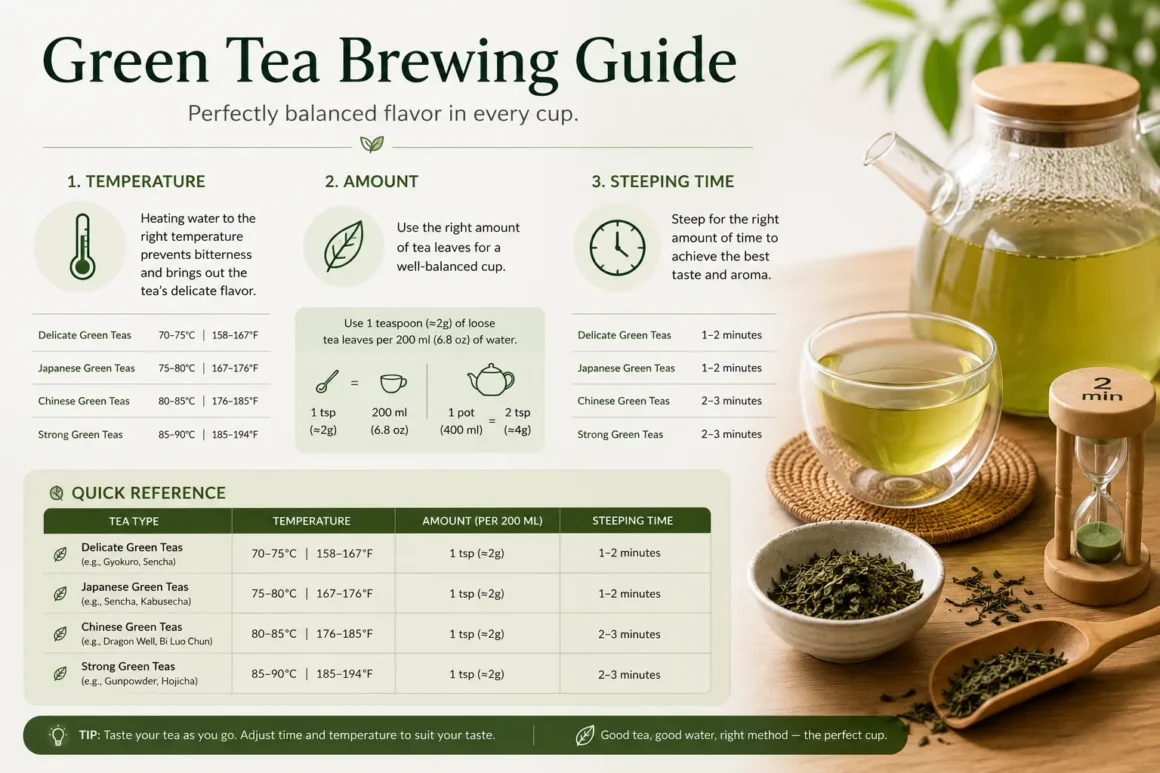
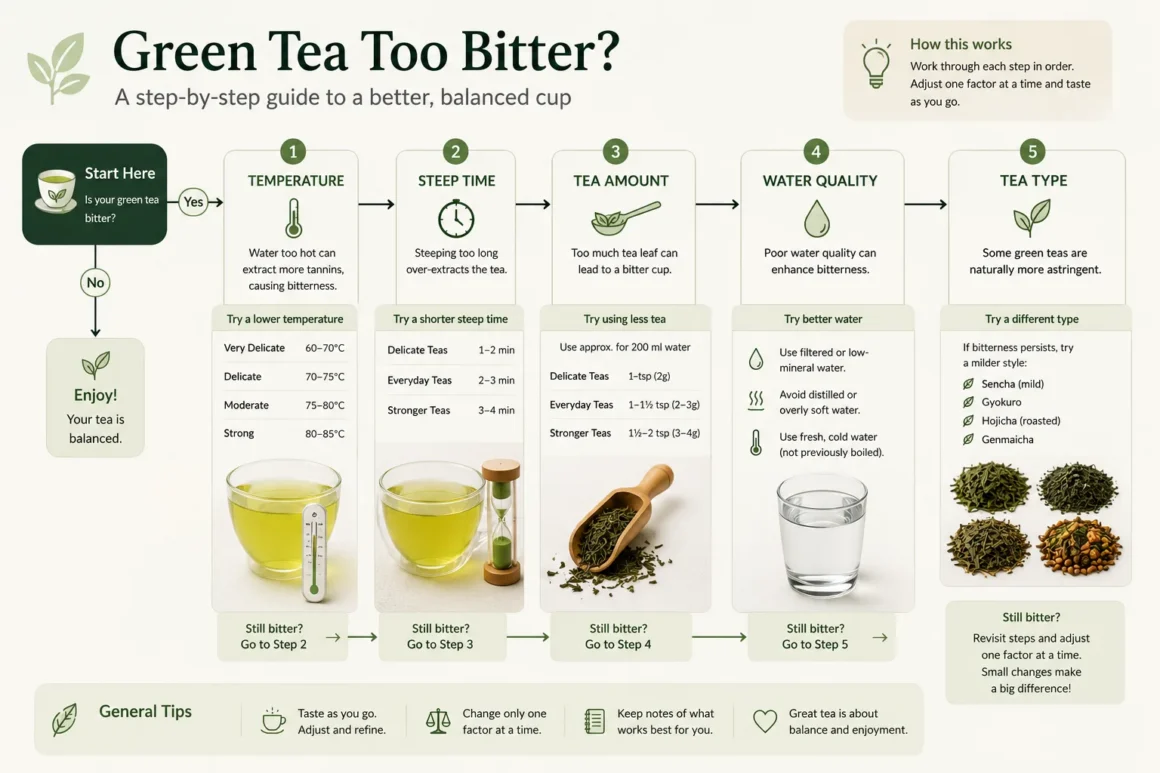
For an unfamiliar everyday green tea, a practical starting point is 2–2.5 grams of tea per 8 fl oz (240 ml) of water, around 175°F (80°C), for about 2 minutes. This is a starting point rather than a rule because different green teas require different brewing methods.
| What Happens | Likely Cause | First Fix |
|---|---|---|
| Bitter almost immediately | Water too hot | Lower temperature |
| Gets harsher while sitting | Steeped too long | Remove leaves sooner |
| Very strong and bitter | Too much tea | Use less leaf |
| Tea bag turns harsh quickly | Fine leaf particles | Shorten steep time |
| Same tea tastes different at home | Brewing water | Try filtered or softer water |
| Still bitter after careful brewing | Natural tea character | Try another green tea |
| One green tastes good, another does not | Same recipe used for every tea | Follow tea-specific instructions |
Why Green Tea Has a Bitter Taste
Green tea naturally contains compounds that can taste bitter or create a dry, puckering sensation.
Caffeine contributes bitterness, while catechins and other polyphenols contribute substantially to bitterness and astringency. Astringency is technically different from bitterness: bitterness is a taste, while astringency is the dry or rough feeling left in your mouth.
Brewing controls how strongly you notice these compounds. Increasing water temperature, steeping time, or concentration can change how much is extracted into the cup. Research on green tea has found clear relationships between brewing conditions, chemical extraction, bitterness, astringency, and sensory acceptance.
Read Also | Green tea guide for beginners
1. Your Water Is Too Hot
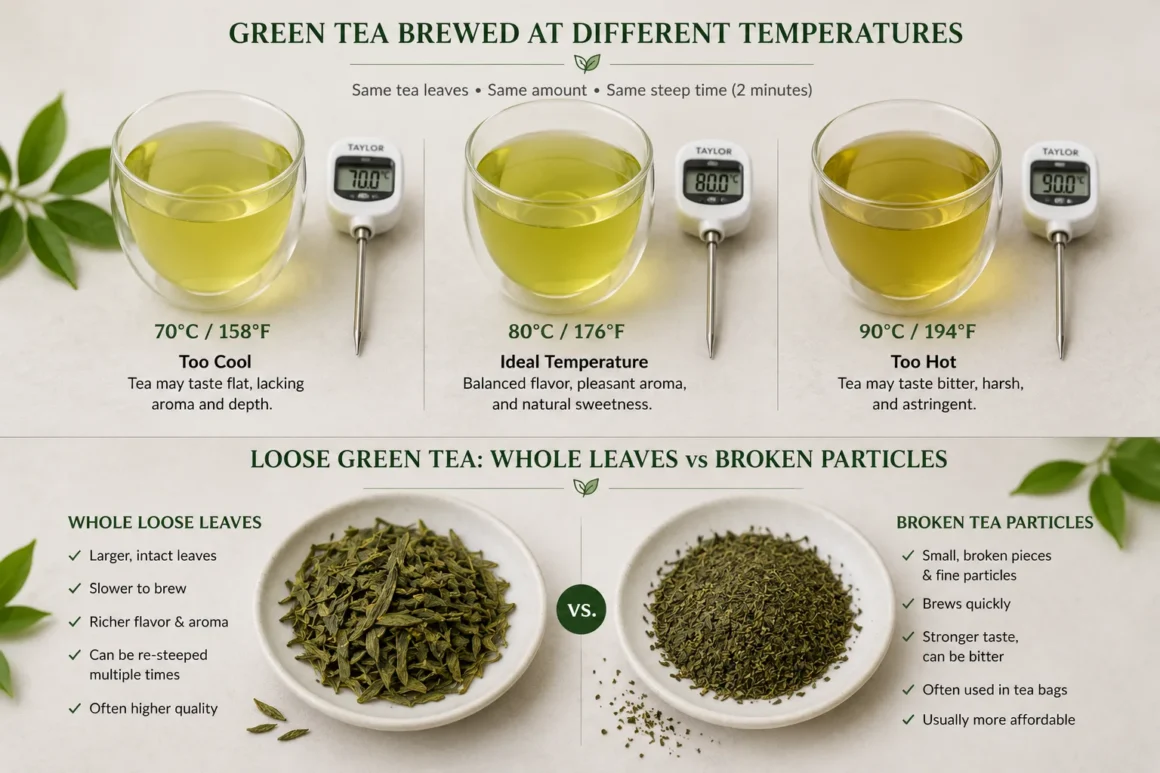
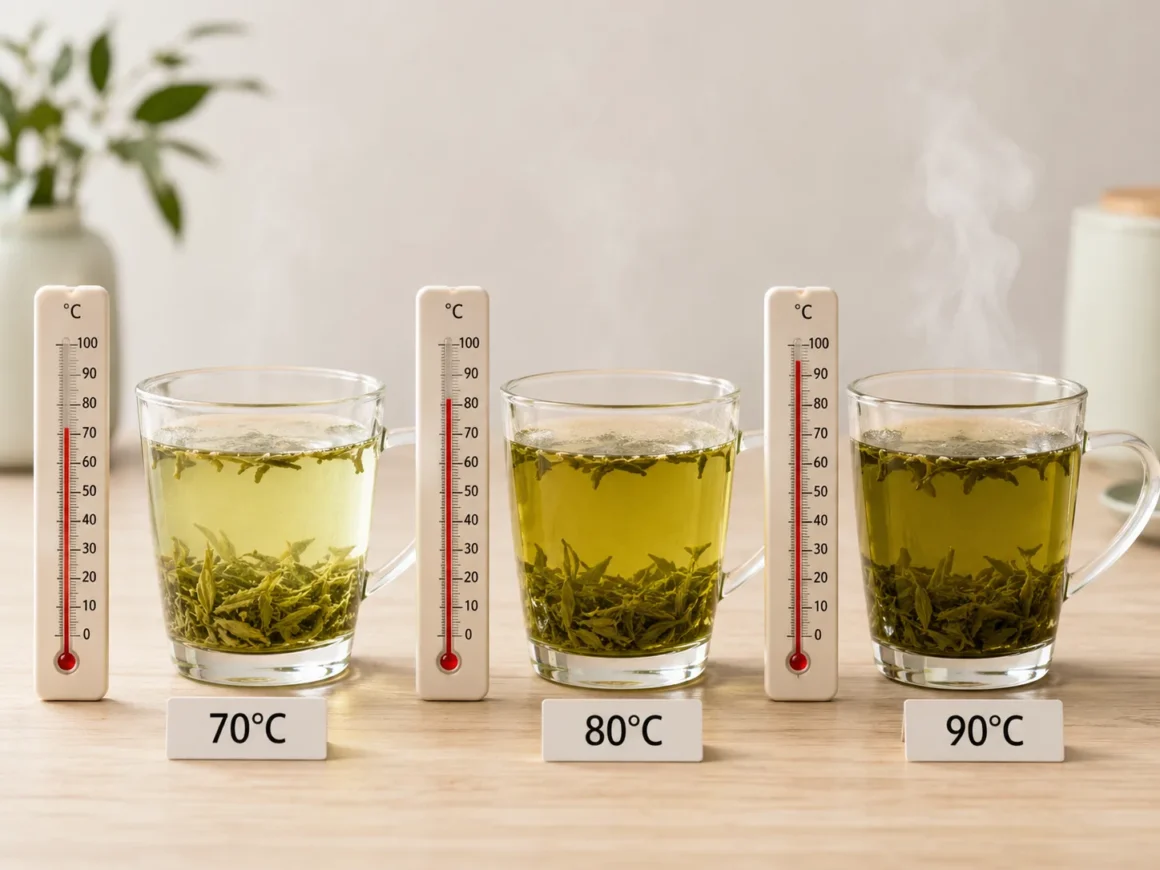
Using very hot water is one of the first things to check when green tea tastes bitter.
Higher brewing temperatures generally increase the extraction of caffeine and catechins. Cooler brewing can therefore produce a softer, sweeter, or more umami-forward cup, depending on the tea.
For an everyday green tea with no specific instructions, start around:
170–180°F (77–82°C)
A useful middle point is 175°F (80°C).
Do not think of boiling water as literally “burning” the leaves. The more accurate explanation is that hotter water changes the speed and balance of extraction.
Some teas are exceptions. The Global Japanese Tea Association recommends temperatures as low as 140–156°F (60–70°C) for warm-brewing higher-grade Japanese teas, while some casual Japanese teas can be brewed much hotter for only a short time.
Fix: Lower your water temperature by about 10–15°F and compare the result.
2. You Steeped the Green Tea Too Long
The longer tea stays in water, the longer extraction continues.
Studies examining green tea at different brewing temperatures and times have found substantial changes in catechin extraction and sensory quality. Very long, hot infusions can become especially unpleasant and bitter.
For a normal mug-style brew, try about 2 minutes first.
If it is still bitter, try 90 seconds.
Most importantly, remove the tea bag or infuser when the steep is finished. Leaving it in the mug while you drink means the tea is still brewing.
Fix: Use a timer and reduce the steep by 30–60 seconds.
3. You Are Using Too Much Green Tea
More tea leaves in the same amount of water produce a more concentrated infusion.
A practical starting point for Western-style brewing is:
2–2.5 grams of green tea per 8 fl oz (240 ml) of water.
The exact ratio can vary widely with tea style and brewing method, so package directions should take priority when available. The Global Japanese Tea Association also notes that tea-to-water ratio strongly changes the strength and character of the finished brew.
A small kitchen scale works better than teaspoons because one teaspoon of tightly rolled tea can weigh very differently from one teaspoon of large loose leaves.
Fix: If the cup tastes both unusually strong and bitter, reduce the amount of tea while keeping the temperature and time unchanged.
4. Your Tea Contains Fine or Broken Leaves
Particle size can change extraction.
Smaller tea particles expose more surface area to the water, which can increase extraction efficiency. Research on green tea catechin extraction has specifically identified particle size as an important extraction variable.
This does not mean all tea bags are poor quality. It means a bag containing small particles or fannings may brew much faster than a large whole-leaf tea.
If your tea bag becomes harsh within a couple of minutes, try:
- 170–175°F (77–80°C) water
- 60–90 seconds initially
- removing the bag completely after brewing
Fix: Shorten the brewing time before assuming you need to replace the tea.
5. Your Water Is Affecting the Flavor
Your tea may not be the only variable. Brewing water can noticeably change green tea.
Research has found that water pH and mineral composition influence the chemistry and sensory quality of green tea infusions. Studies generally find that relatively low-mineral, near-neutral water works well for delicate green tea, although the exact effects depend on the minerals present.
The Global Japanese Tea Association also recommends relatively soft water for Japanese green tea.
Water is worth testing when the same tea tastes good at a café or another home but consistently tastes unpleasant from your kitchen.
Fix: Brew two identical cups—one with your usual water and one with filtered water—and taste them side by side.
6. Some Green Teas Are Naturally More Bitter
A small amount of bitterness does not automatically mean you brewed the tea incorrectly.
Green teas differ in cultivar, leaf maturity, growing conditions, harvest, shading, and processing. These factors affect the chemical compounds that ultimately shape bitterness, astringency, sweetness, freshness, and umami. Research comparing green tea sensory profiles confirms that the balance of these characteristics varies between teas.
If cooler water, a shorter steep, less leaf, and different water still produce a bitter cup, you may simply dislike that tea’s flavor profile.
Fix: Try a different green tea rather than continually weakening one you do not enjoy.
7. You Are Using the Same Recipe for Every Green Tea
“Green tea” covers many different styles. There is no single perfect temperature and steeping time for all of them.
Sencha, gyokuro, Longjing, gunpowder, genmaicha, hojicha, and jasmine green tea can respond differently to the same brewing method.
For example, professional Japanese tea guidance includes cooler, longer brewing for some premium teas and much hotter, shorter brewing for casual teas.
That is why 175°F for 2 minutes should be treated as a troubleshooting baseline, not a universal green tea law.
Fix: Follow the tea producer’s instructions first. If none are provided, start with a neutral recipe and adjust one variable at a time.
Simple Brewing Setup for Less-Bitter Green Tea
For an unfamiliar everyday green tea, start here:
| Brewing Variable | Starting Point |
| Tea | 2–2.5 g |
| Water | 8 fl oz (240 ml) |
| Temperature | 175°F (80°C) |
| Steep time | 2 minutes |
| After steeping | Remove leaves completely |
If the tea is bitter, lower the temperature first.
If that does not help enough, shorten the steeping time.
Change one variable at a time so you can tell what actually improved the cup.
How to Fix Green Tea That Is Already Bitter
Once bitter compounds have already been extracted, you cannot put them back into the leaves.
You can, however, make the drink less intense.
Add a little plain hot water and taste again. For iced green tea, ice can cool and dilute the brew. A small amount of honey or another sweetener can mask bitterness, although it does not correct the original brewing problem.
For the next cup, correct the temperature, steeping time, or tea-to-water ratio instead.
The Bottom Line
If you are wondering why green tea tastes bitter, check three things first: water temperature, steeping time, and tea quantity.
Try about 175°F (80°C), 2–2.5 grams of tea per 8 fl oz (240 ml), and a 2-minute steep. Then adjust one variable at a time.
Green tea can have some natural bitterness, but it should not automatically taste aggressively harsh. The right brewing method depends on the individual tea, so use the package instructions whenever they are available.
4. FAQ
Is green tea supposed to taste bitter?
Green tea can have mild natural bitterness, but it does not have to taste harsh. Excessive bitterness commonly comes from hotter water, longer brewing, a concentrated tea-to-water ratio, or the characteristics of the tea itself.
What is the best temperature for green tea that tastes bitter?
For an unfamiliar everyday green tea, try around 170–180°F (77–82°C), with 175°F (80°C) as a useful starting point. Some delicate Japanese teas are traditionally brewed considerably cooler.
Why is my green tea bitter even at 175°F?
Temperature is only one variable. Your steep may be too long, you may be using too much tea, your tea may contain fine particles, your water may be affecting flavor, or the tea itself may have a naturally stronger bitter character.
Are green tea bags more bitter than loose-leaf tea?
Not automatically. However, tea bags may contain smaller leaf particles that extract faster than larger whole leaves. Particle size is known to affect extraction, so some bagged green teas need shorter brewing times.
Is more bitter green tea healthier?
Bitterness alone is not a useful measure of how “healthy” a cup is. It tells you more about the tea’s composition and how it was extracted than about the overall health value of the drink.
