
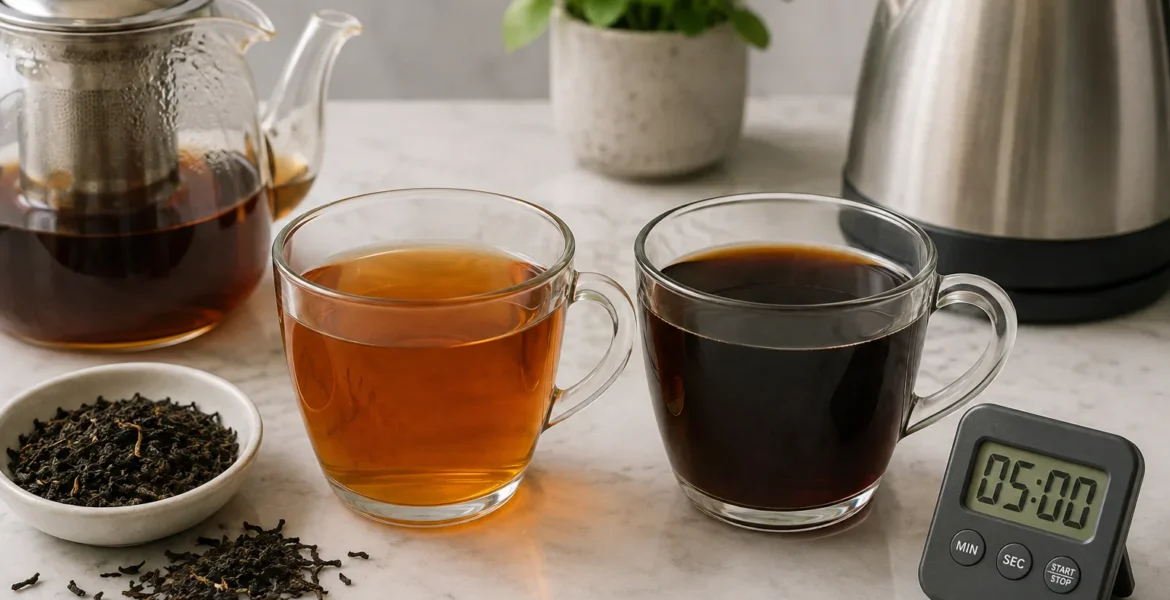
Black tea usually tastes too bitter because too many bitter and astringent compounds have been extracted into the water. The most common reasons are steeping too long, using too much tea, or brewing a particular black tea hotter than it can comfortably handle.
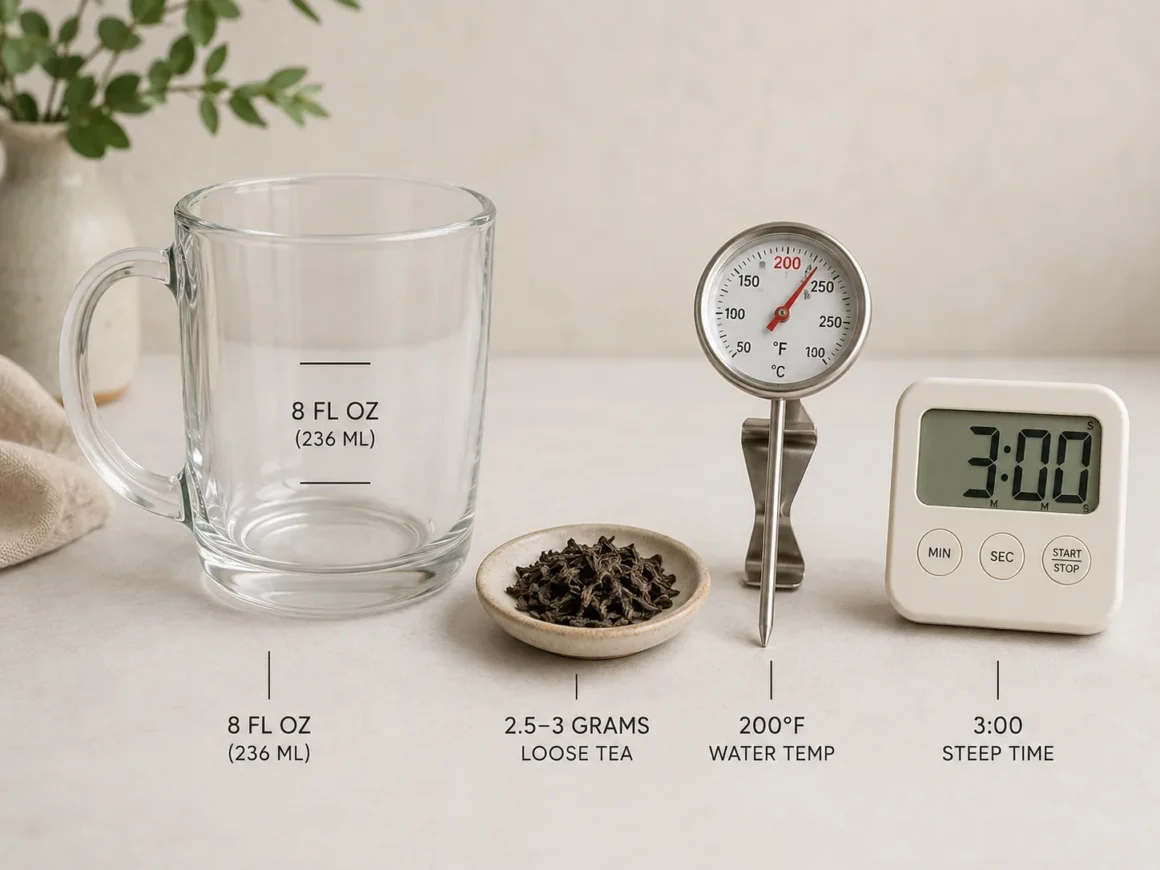
A good starting point is 2.5–3 grams of tea per 8 fl oz (240 ml) of water, about 194–205°F (90–96°C), for roughly 3 minutes. Then adjust one variable at a time according to taste. Black tea is normally brewed hotter than green or white tea, so boiling water itself is not automatically a mistake.
Quick Fixes for Bitter Black Tea
| What You Notice | Most Likely Cause | What to Try Next |
|---|---|---|
| Tea becomes harsh after sitting 5+ minutes | Steeped too long | Start tasting around 3 minutes |
| Tea is intensely bitter almost immediately | Too much tea or fast-extracting fine leaves | Reduce the tea amount or shorten the steep |
| Tea feels dry and puckering | Excessive astringency | Shorten the steep or lower temperature slightly |
| Tea bag produces an aggressive cup | Small tea particles extract quickly | Try a 2–3 minute steep |
| Whole-leaf tea tastes harsh | Temperature or time is too aggressive for that tea | Drop the water temperature 5–10°F |
| Tea tastes strong but not especially bitter | High tea concentration | Use slightly less tea |
| Tea tastes odd, flat, or mineral-heavy | Water may be affecting the cup | Compare with filtered water |
| The cup is already bitter | Over-extraction has already happened | Remove the leaves and dilute with hot water |
The most useful rule is simple: do not change every brewing variable at once. If you shorten the steep, lower the temperature, and reduce the tea amount simultaneously, you will not know which adjustment solved the problem.
Read Also | black tea guide for beginners
Why Does Black Tea Taste Bitter in the First Place?
Black tea naturally contains compounds capable of producing bitterness and astringency. Research on the sensory chemistry of black tea has identified caffeine and several groups of phenolic compounds as important contributors to its taste. Some compounds contribute directly to bitterness, while others contribute more strongly to an astringent or drying sensation.
Brewing is an extraction process. Hot water moves soluble compounds from the leaves into your cup.
Extraction is useful—you need it to obtain the tea’s aroma, color, body, caffeine, and characteristic flavor. The problem begins when your particular combination of tea amount, temperature, time, leaf size, and water produces a cup that is more extracted than you enjoy.
That is why the same black tea can taste balanced in one kitchen and unpleasantly harsh in another.
Bitter vs. Astringent: They Are Not the Same Thing
People often describe any unpleasantly strong tea as “bitter,” but two different sensations may be involved.
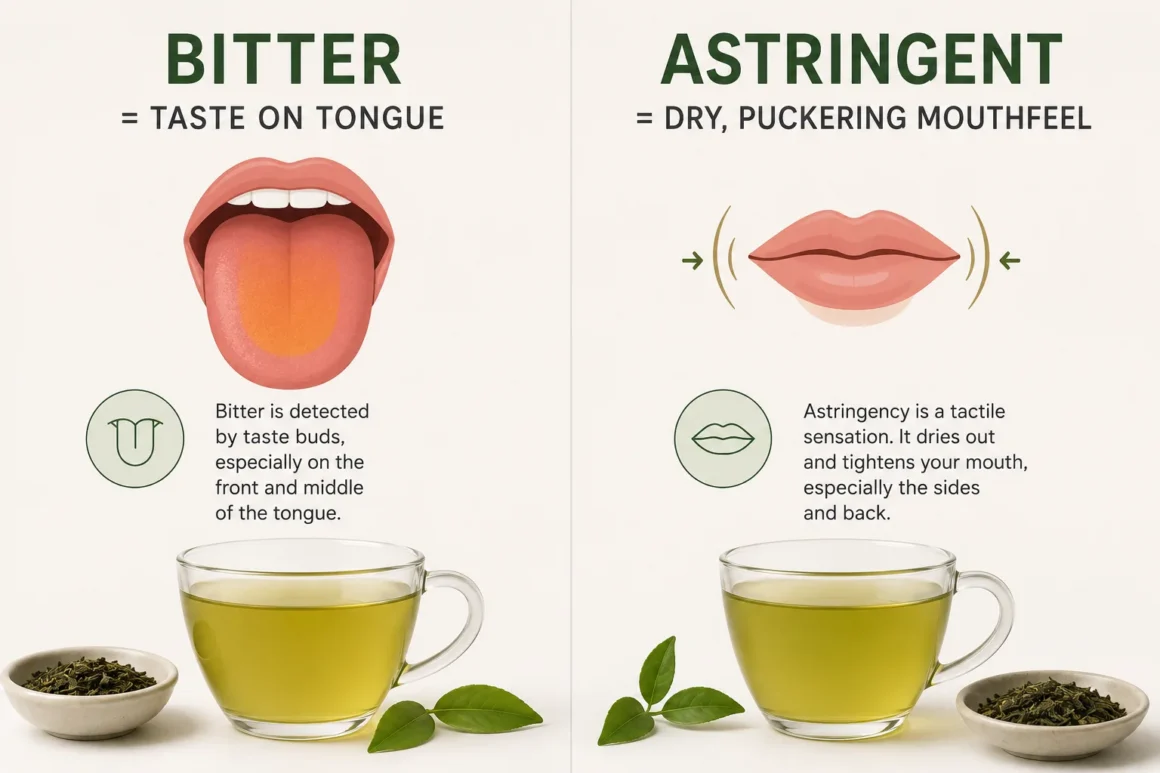
Bitterness is a taste. Caffeine and certain tea phenolics can contribute to it.
Astringency is mainly a mouthfeel. It creates a drying, rough, tightening, or puckering sensation in the mouth. Research links tea astringency strongly with interactions involving polyphenolic compounds and proteins in saliva.
This distinction matters when troubleshooting.
If the tea tastes sharply bitter on your tongue, concentrate first on overall extraction.
If your mouth mainly feels dry and rough after swallowing, excessive astringency may be the bigger problem.
In everyday conversation, people frequently call both sensations “bitter tea,” so a good brewing fix often reduces both at the same time.
1. You Steeped the Black Tea Too Long
This is usually the first variable to check.
As tea remains in hot water, extraction continues. A longer infusion can produce more body and strength, but eventually the balance can shift toward compounds that make the cup feel harsher.
The UK Tea & Infusions Association recommends roughly 3–4 minutes for most black teas, while TeaTurbo’s existing black-tea guidance uses a broader 3–5 minute range.
If your tea regularly becomes bitter at five minutes, you do not need to force yourself to brew it for five minutes.
Try this instead:
- Brew the same tea for 3 minutes.
- Remove the tea completely.
- Taste it after it cools enough to drink comfortably.
- If it is too light, add 15–30 seconds next time.
Using a timer is much more reliable than leaving a tea bag in the mug while you work, read, or prepare breakfast.
Stronger Tea Does Not Always Require a Longer Steep
This is an important troubleshooting point.
Suppose a three-minute cup tastes too weak, so you leave the same leaves in for seven minutes. The cup may become stronger, but it can also become disproportionately harsh.
A better approach is often to use slightly more tea while keeping the infusion controlled.
That gives you more concentration without depending entirely on prolonged extraction.
2. The Water Is Too Hot for That Particular Black Tea
“Never use boiling water for black tea” is not a useful universal rule.
Black tea generally tolerates—and often needs—much hotter water than green or white tea. The UK Tea & Infusions Association gives approximately 194–208°F (90–98°C) as a black-tea brewing range.
However, black tea is not one uniform product.
A robust breakfast blend and a delicate, aromatic whole-leaf black tea may respond differently to the same water.
If a tea tastes harsh at 205–212°F (96–100°C), try lowering the temperature instead of assuming you dislike that tea.
A practical test is to reduce the temperature by 5–10°F while keeping the tea amount and steep time unchanged.
Read more | best water temperature for tea
For example:
- First cup: 205°F for 3 minutes
- Second cup: 195°F for 3 minutes
If the second cup keeps its aroma and body while losing the harsh edge, temperature was probably part of the problem.
3. You Are Using Too Much Tea for the Amount of Water
More leaves mean more soluble material is available for extraction.
If you use a large quantity of tea in an ordinary 8-ounce mug and still steep it for a standard Western brewing time, the finished drink can become highly concentrated.
TeaTurbo’s existing loose-leaf measurement guide recommends roughly 2.5–3 grams of black tea per 8 fl oz (240 ml) as a practical starting point, with some room for adjustment based on leaf style and personal preference. read more: how much loose-leaf tea to use per cup.
A small digital kitchen scale is useful because teaspoons can be misleading.
One teaspoon of dense broken black tea may contain considerably more leaf by weight than the same spoonful of a large, twisted whole-leaf tea.
| Recommended Anchor Text | Existing/Future Page | Reason |
| black tea guide for beginners | Existing: Black Tea: Benefits, Types, and Best Brewing Guide | Best parent/hub link for readers who want broader black-tea education |
| best water temperature for tea | Existing: Best Brewing Temperature | Supports the temperature troubleshooting section without duplicating the full temperature guide |
If your cup is both extremely dark and bitter, measure the tea before changing anything else.
4. Your Tea Extracts Very Quickly
Leaf size matters.
Small tea particles have a large amount of surface area exposed to water relative to their size. This allows their soluble compounds to move into the water quickly.
That is one reason some tea bags produce a strong cup in only a few minutes.
This does not mean tea bags are automatically bad or loose-leaf tea is automatically superior. It means you should brew according to the tea in front of you rather than applying the same five-minute recipe to every black tea.
If a tea bag becomes bitter quickly:
- start at 2–3 minutes;
- remove the bag completely;
- keep the water amount consistent;
- increase the time gradually only if the cup is too weak.
With large whole leaves, a slightly longer infusion may be appropriate.
5. You Are Trying to Make Weak Tea Stronger by Oversteeping It
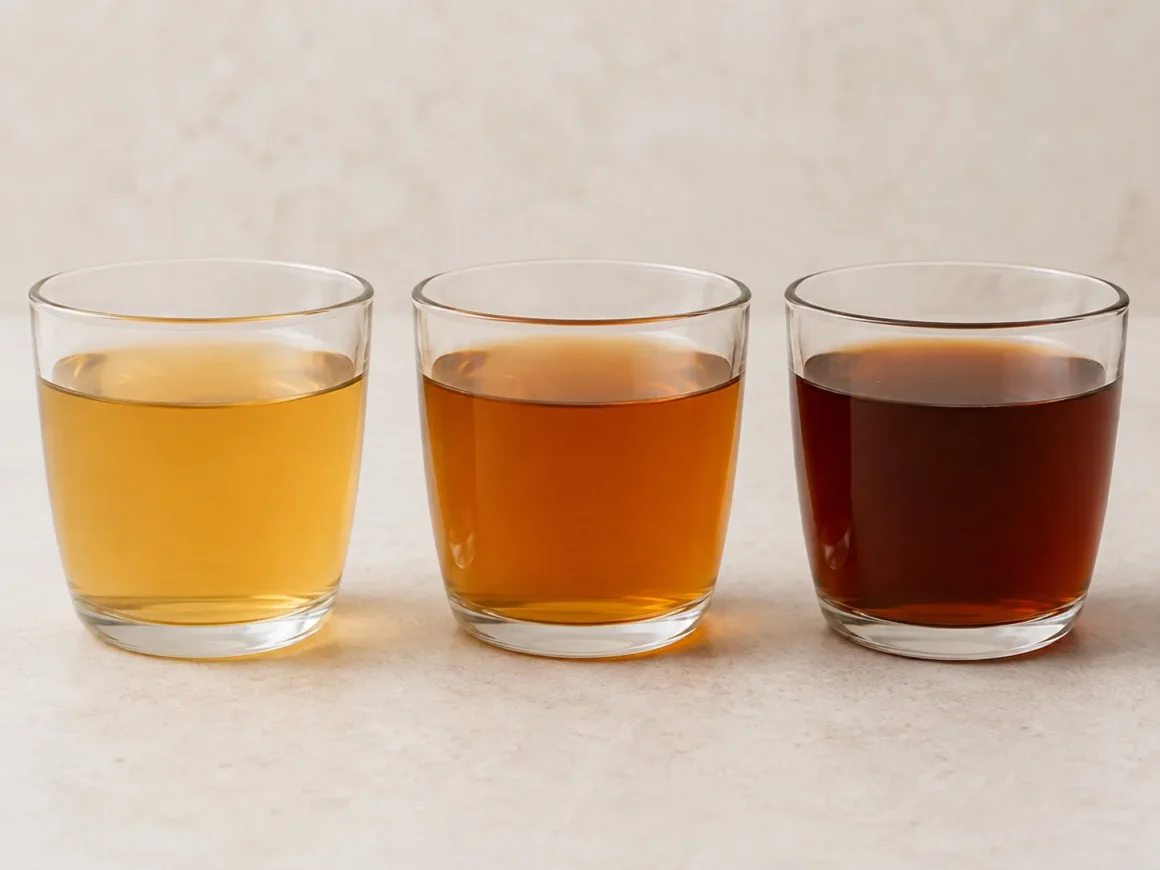
A surprisingly common bitter cup starts as an attempt to fix weak tea.
Imagine using one small tea bag in a large 16 fl oz travel mug.
After three minutes the drink tastes thin, so the bag stays in for another five or ten minutes.
Check: Tea steeping time calculator
The problem may not have been the original steep time. There may simply have been too little tea for that volume of water.
For a larger mug, scale the amount of tea with the water rather than relying on an extremely long infusion.
TeaTurbo’s loose-leaf guide uses approximately 2.5–3 grams per 8 fl oz (240 ml) as a useful black-tea baseline.
For 16 fl oz, that means roughly twice the tea before fine-tuning for taste.
6. The Tea Itself May Naturally Taste More Assertive
Brewing technique is not the only factor controlling flavor.
Black teas vary according to cultivar, growing conditions, harvesting, oxidation, manufacturing, particle size, and final blending. Modern sensory research shows that the concentration and interaction of different taste-active compounds can vary significantly between black teas.
A brisk breakfast blend designed to stand up to milk will not necessarily taste like a lighter aromatic black tea.
If you have adjusted temperature, time, and ratio but the tea remains unpleasantly bitter to you, try a different black tea rather than continuing to fight the same leaves.
Your brewing may be fine. The flavor profile may simply not suit you.
7. Your Water Can Change the Flavor
Tea is mostly water, so its mineral composition can affect extraction and sensory perception.
Cornell researchers found that water composition influenced the chemistry and sensory qualities of tea, although the effect was stronger in green tea than in black tea in that particular study.
For everyday troubleshooting, there is no need to become a water chemist.
Run a simple comparison:
- Brew one cup with your normal tap water.
- Brew another with a neutral-tasting filtered water.
- Keep the tea amount, temperature, and time identical.
If one tastes noticeably cleaner or smoother, water deserves a place in your brewing routine.
A Reliable Starting Recipe for Smoother Black Tea
There is no single perfect recipe for every black tea, but this baseline is easy for beginners to reproduce:
| Variable | Starting Point |
| Tea | 2.5–3 g loose tea or 1 appropriately sized tea bag |
| Water | 8 fl oz (240 ml) |
| Temperature | 194–205°F (90–96°C) |
| Steep time | 3 minutes |
| After steeping | Remove the leaves completely |
These values sit within established black-tea brewing guidance and TeaTurbo’s existing measurement recommendations. Always use the instructions supplied by the tea maker when they differ substantially.
Then diagnose the cup.
Too weak but smooth?
Use a little more tea or add 15–30 seconds.
Strong and bitter?
Shorten the steep first.
Dry and puckering?
Try a shorter steep or slightly cooler water.
Thin but bitter?
Use more tea and a shorter infusion rather than leaving a small amount of tea in the water for a long time.
Good aroma but a harsh finish?
Lower the temperature slightly while keeping the other variables unchanged.
This approach is more useful than searching for one “perfect” temperature because different black teas respond differently.
Can You Fix Black Tea That Is Already Bitter?
You cannot reverse extraction after bitter compounds have entered the cup, but you can make the tea easier to drink.
First, remove the tea bag or leaves immediately.
Then try one of these options:
Dilute It With Hot Water
Add a small amount of hot water, stir, and taste.
This reduces the concentration of everything in the cup, including the compounds contributing to bitterness.
Do not pour in a large amount at once. Add an ounce or two, taste, and adjust.
Add Milk to a Robust Black Tea
If the tea is a breakfast-style blend, Assam-based blend, or another black tea you normally enjoy with milk, a small splash can soften an overly aggressive cup.
It will not undo over-extraction, but it may make the drink more pleasant.
Add a Small Amount of Sweetener
Sweetness can make bitterness less noticeable.
Again, this is a rescue technique rather than the real brewing solution.
If every cup requires large amounts of sugar to hide unpleasant bitterness, fix the brewing recipe instead.
Should You Squeeze the Tea Bag?
Squeezing the bag is much less important than time, temperature, tea quantity, and water volume.
By the time you squeeze an oversteeped tea bag, the liquid trapped inside it is already highly concentrated. Pressing that liquid back into the cup can make an already harsh brew taste a little stronger.
But squeezing should not distract you from the bigger question:
How long was the tea sitting in hot water?
If you remove the bag at the right time, whether you give it a gentle final press is unlikely to be the main factor separating a smooth cup from a bitter one.
Common Black Tea Brewing Mistakes
Leaving the Tea Bag in the Mug
Some people treat the bag almost like a garnish and leave it in until the drink is finished.
That means the tea continues extracting while you drink it.
Remove the bag when the desired steep time ends.
Boiling the Tea Leaves for Everyday Western-Style Tea
Pouring hot water over black tea and steeping it is different from simmering the leaves continuously in a saucepan.
Some tea recipes intentionally boil tea with milk, spices, or other ingredients, but standard black tea does not need to remain at a boil for several minutes.
Guessing the Tea Amount
A heaping spoonful of fine broken leaves can be much stronger than expected.
Weighing the tea removes that uncertainty.
Changing Three Variables at Once
Suppose the tea is bitter and you:
- cut the tea amount in half,
- lower the water temperature by 25°F,
- and shorten the steep by two minutes.
The next cup may taste smoother, but you have learned almost nothing about what caused the original problem.
Change one variable, taste, and record the result.
The Simplest Way to Stop Bitter Black Tea
Start with three controls:
Measure the tea. Time the steep. Control the water temperature.
For an 8 fl oz (240 ml) cup, begin with about 2.5–3 grams of black tea, 194–205°F (90–96°C) water, and a 3-minute steep. Remove the leaves promptly and taste before adjusting anything else.
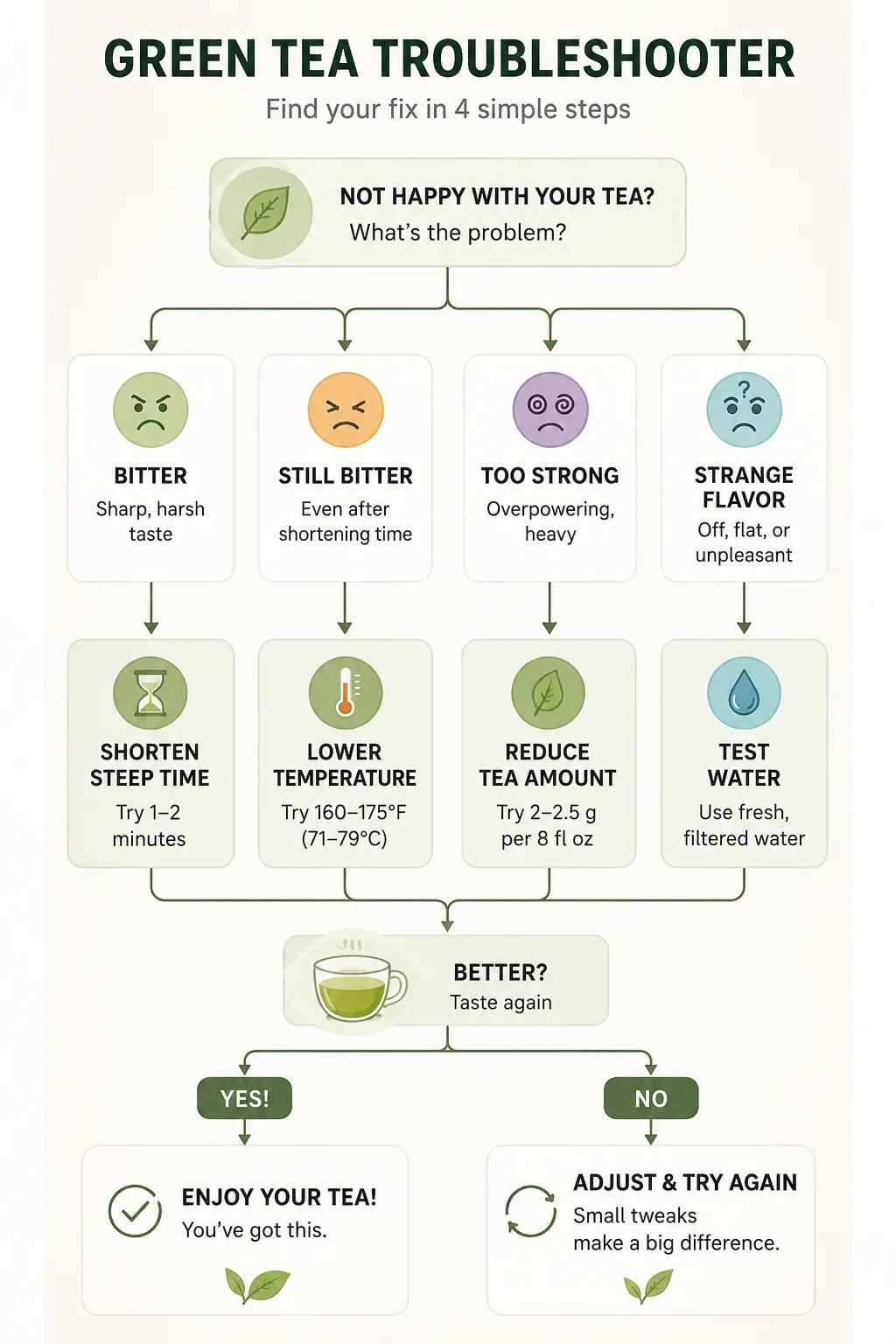
If it is still bitter, reduce the steep time first. If bitterness remains, lower the temperature slightly. If the cup is simply too concentrated, reduce the tea amount.
Once those variables are controlled, black tea becomes much easier to troubleshoot—and much easier to brew consistently.
4. FAQ
Why does black tea taste bitter even when I do not steep it very long?
You may be using too much tea, very fine tea particles, or hotter water than that particular tea needs. Start by measuring the tea and keeping the water volume consistent. Fine broken leaves and some tea bags can extract rapidly, so a shorter steep may work better.
Does steeping black tea too long make it bitter?
It can. Continued steeping increases extraction and may push the cup from balanced to harsh or excessively astringent. For most everyday black teas, approximately 3–4 minutes is a useful starting range, although individual products vary.
Is boiling water bad for black tea?
Not automatically. Black tea normally uses hotter water than green or white tea, and industry guidance places many black teas around 194–208°F (90–98°C). If a particular tea tastes harsh near boiling, reduce the temperature slightly and compare the results.
How do I make strong black tea without making it bitter?
Use a little more tea rather than relying on an extremely long steep. For Western-style brewing, start around 2.5–3 grams per 8 fl oz (240 ml), steep for about 3 minutes, then adjust the quantity gradually until you reach the strength you prefer.
Why does black tea make my mouth feel dry?
That sensation is usually astringency rather than bitterness. Polyphenolic compounds in tea can interact with saliva and create a drying, rough, or puckering mouthfeel. Shortening the steep or lowering the brewing temperature slightly may make the cup feel smoother.
Can I save oversteeped black tea?
You cannot remove compounds that have already been extracted, but you can remove the leaves and dilute the cup with a little hot water. Milk or a small amount of sweetener can also make a harsh cup easier to drink.
