
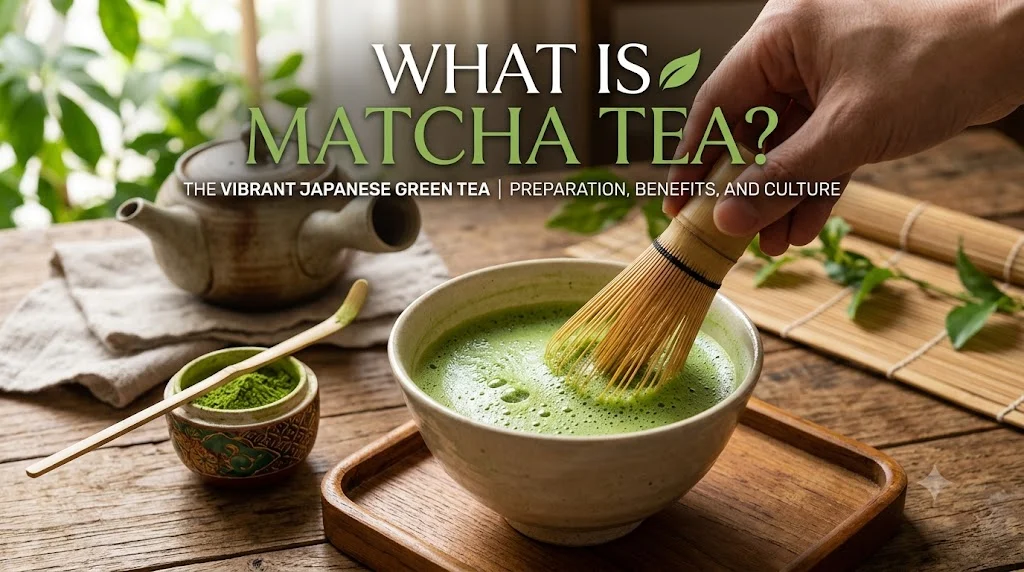
Matcha tea is much more than powdered green tea. It is made from finely ground leaves of the Camellia sinensis plant, allowing you to consume the entire leaf instead of simply steeping it in hot water. That means every cup delivers a concentrated mix of natural plant compounds, including antioxidants, amino acids, caffeine, vitamins, and minerals. Whether you’re curious about matcha’s vibrant green color, its smooth energy boost, or how it compares with regular green tea, understanding what’s actually inside matcha helps explain why this traditional Japanese tea has become popular around the world.
✔ Quick Answer: What Is in Matcha Tea?
Matcha tea is made from finely ground whole green tea leaves and naturally contains catechins (especially EGCG), L-theanine, chlorophyll, caffeine, polyphenols, amino acids, antioxidants, vitamins, minerals, and other beneficial plant compounds. Because you consume the entire leaf, matcha typically provides more of these nutrients than brewed green tea.
What Is Matcha Tea?
Matcha is a finely milled green tea powder produced from specially grown leaves of the Camellia sinensis plant. Unlike regular green tea, where the leaves are steeped and discarded, matcha is whisked directly into water, so the entire leaf is consumed.
Before harvest, tea plants are shaded for about 20–30 days. This traditional growing method increases chlorophyll production, enhances L-theanine levels, and gives matcha its rich green color and naturally sweet, umami flavor.
Matcha has been an important part of the Japanese tea ceremony for centuries. Today, it is enjoyed in traditional tea, lattes, smoothies, desserts, and recipes while remaining valued for its unique nutritional profile.
What Is Actually Inside Matcha Tea?
Matcha’s nutritional value comes from a combination of naturally occurring compounds that work together.
Catechins
Catechins are powerful polyphenols that help protect cells from oxidative stress. They are among the primary antioxidants found in green tea.
EGCG (Epigallocatechin Gallate)
EGCG is the most abundant catechin in matcha and has been widely studied for its antioxidant activity. Research suggests it may support cardiovascular and metabolic health, although more long-term human studies are still needed.
L-Theanine
L-theanine is a unique amino acid that promotes relaxation without causing drowsiness. Combined with caffeine, it may improve attention and mental performance.
Chlorophyll
The shading process increases chlorophyll levels, giving matcha its vivid emerald color. Chlorophyll is a natural plant pigment responsible for photosynthesis.
Caffeine
Matcha naturally contains caffeine. Since you consume the whole leaf, a serving generally provides more caffeine than brewed green tea but less than a typical cup of coffee.
Amino Acids
Besides L-theanine, matcha contains several amino acids that contribute to its smooth taste and nutritional profile.
Antioxidants
Matcha delivers a wide variety of antioxidants that help neutralize free radicals. These compounds are one reason matcha is often considered a nutrient-dense beverage.
Vitamins
Small amounts of vitamins such as vitamin A precursors, vitamin C, vitamin K, and several B vitamins are naturally present, although amounts vary depending on cultivation and preparation.
Minerals
Matcha contains minerals including potassium, calcium, magnesium, and iron in modest quantities.
Polyphenols
Polyphenols include catechins and other beneficial plant compounds that contribute to matcha’s characteristic bitterness and potential health-supporting properties.
| Compound | Purpose | Potential Health Benefit |
|---|---|---|
| Catechins | Natural antioxidants | Help protect cells from oxidative stress |
| EGCG | Major catechin | Supports antioxidant activity and heart health research |
| L-theanine | Amino acid | Promotes calm focus |
| Chlorophyll | Plant pigment | Gives matcha its vibrant green color |
| Caffeine | Natural stimulant | Supports alertness and energy |
| Polyphenols | Plant compounds | Contribute antioxidant effects |
| Vitamins | Essential nutrients | Support normal body functions |
| Minerals | Essential micronutrients | Help maintain overall health |
Nutrition Facts of Matcha Tea
The exact nutrition depends on the grade of matcha and serving size. The values below represent approximately 1 teaspoon (about 2 grams) prepared with water.
| Nutrient | Approximate Amount |
|---|---|
| Calories | 5–10 kcal |
| Protein | 0.5–1 g |
| Carbohydrates | 1 g |
| Fiber | 0.5–1 g |
| Vitamin C | Trace amounts |
| Vitamin A (beta-carotene) | Small amount |
| Potassium | 20–30 mg |
| Iron | 0.3–0.5 mg |
| Caffeine | 38–70 mg |
| L-theanine | Approximately 8–25 mg |
Values are approximate and vary by cultivation, preparation, and serving size.
Key statistics
- Studies estimate that green tea contains over 8,000 different polyphenolic compounds, with catechins being among the most important.
- A typical serving of matcha provides roughly 38–70 mg of caffeine, depending on the powder and serving size.
- Tea is the second most consumed beverage in the world after water, according to the World Health Organization.
- Green tea catechins, particularly EGCG, have been the subject of thousands of peer-reviewed scientific studies, though many findings remain under active investigation.
What Makes Matcha Different From Green Tea?
| Feature | Matcha | Green Tea |
|---|---|---|
| Preparation | Powder whisked into water | Leaves steeped in water |
| Leaf Consumption | Entire leaf consumed | Leaves discarded after brewing |
| Caffeine | Generally higher | Usually lower |
| Antioxidants | More concentrated per serving | Lower concentration |
| Taste | Rich, creamy, umami | Light, refreshing |
| Color | Bright vibrant green | Pale green to yellow |
| Nutrients | Higher intake from whole leaf | Extracted during brewing only |
Because the whole leaf is consumed, matcha typically delivers higher amounts of many naturally occurring nutrients and plant compounds than standard brewed green tea.
Is Matcha Tea Good for Health?
Current research suggests that matcha can be part of a healthy diet, but it is not a miracle drink.
Its high concentration of antioxidants may help protect cells from oxidative damage. The combination of caffeine and L-theanine may improve attention, alertness, and sustained focus while producing a calmer feeling than caffeine alone.
Some studies also suggest potential benefits for heart health, healthy metabolism, and overall wellness. However, many of these findings come from studies on green tea catechins or laboratory research rather than large, long-term clinical trials specifically on matcha.
Expert Insight
“Because matcha uses the entire tea leaf, it provides concentrated amounts of naturally occurring tea compounds such as catechins and L-theanine compared with brewed tea.”
— Summarized from information published by the National Institutes of Health and Harvard T.H. Chan School of Public Health
People who are sensitive to caffeine should enjoy matcha in moderation, especially later in the day.
Final Thoughts
Matcha tea stands out because it delivers the nutrition of the whole tea leaf rather than just an infusion. Its natural combination of catechins, EGCG, L-theanine, chlorophyll, caffeine, vitamins, minerals, and other plant compounds makes it one of the most nutrient-rich forms of green tea.
While research supports several promising health benefits, matcha works best as part of an overall balanced lifestyle—not as a substitute for healthy eating or medical treatment. Choosing high-quality Japanese matcha and preparing it traditionally can help you enjoy both its distinctive flavor and its nutritional advantages.
Frequently Asked Questions
Does matcha contain more caffeine than green tea?
Yes. Because you consume the whole leaf, matcha generally contains more caffeine per serving than brewed green tea.
Why is matcha so green?
Tea plants are shaded before harvest, increasing chlorophyll, which creates matcha’s vibrant green color.
Is matcha healthier than regular green tea?
Matcha usually provides higher concentrations of antioxidants and plant compounds because the whole leaf is consumed.
Can I drink matcha every day?
Most healthy adults can enjoy matcha daily in moderation, while keeping total caffeine intake within recommended limits.
Does matcha contain antioxidants?
Yes. Matcha is naturally rich in antioxidants, especially catechins such as EGCG.
References
- National Institutes of Health (NIH) — https://www.nih.gov/
- Office of Dietary Supplements (NIH) — https://ods.od.nih.gov/
- PubMed — https://pubmed.ncbi.nlm.nih.gov/
- National Center for Biotechnology Information (NCBI) — https://www.ncbi.nlm.nih.gov/
- Harvard T.H. Chan School of Public Health — https://www.hsph.harvard.edu/
- World Health Organization (WHO) — https://www.who.int/
- U.S. Food and Drug Administration (FDA) — https://www.fda.gov/
