Fennel seeds bring a distinctive sweet, seed-like aroma to black milk tea. This fennel chai recipe lightly cracks the seeds, gives them a short water simmer, then adds tea and milk in separate stages. It makes two small cups without requiring a premixed chai masala. You will also see how to keep fennel noticeable when the milk is rich and how to avoid loose seeds in the cup. The method is a measured home starting point, not a claim about one regional standard.
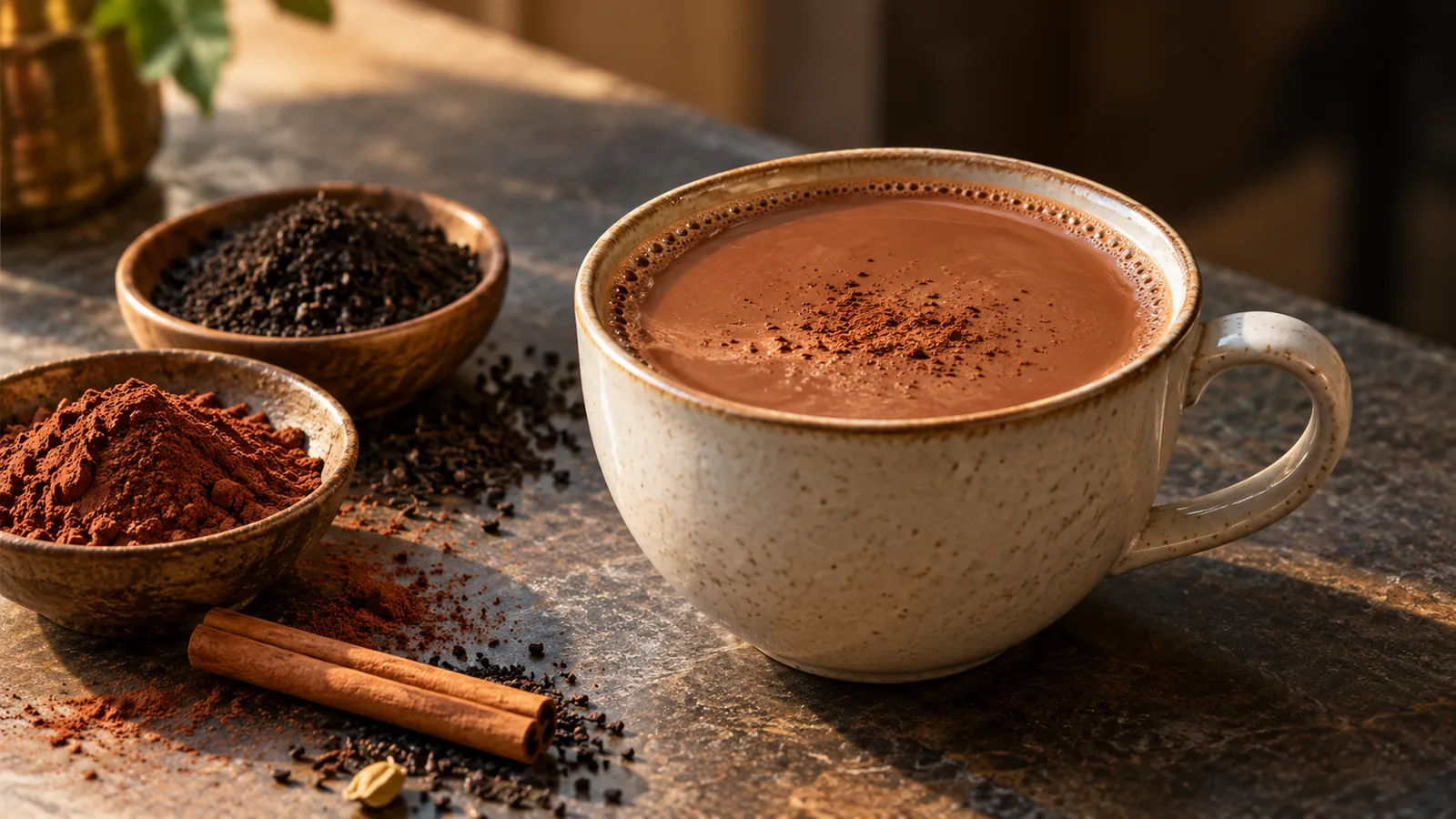
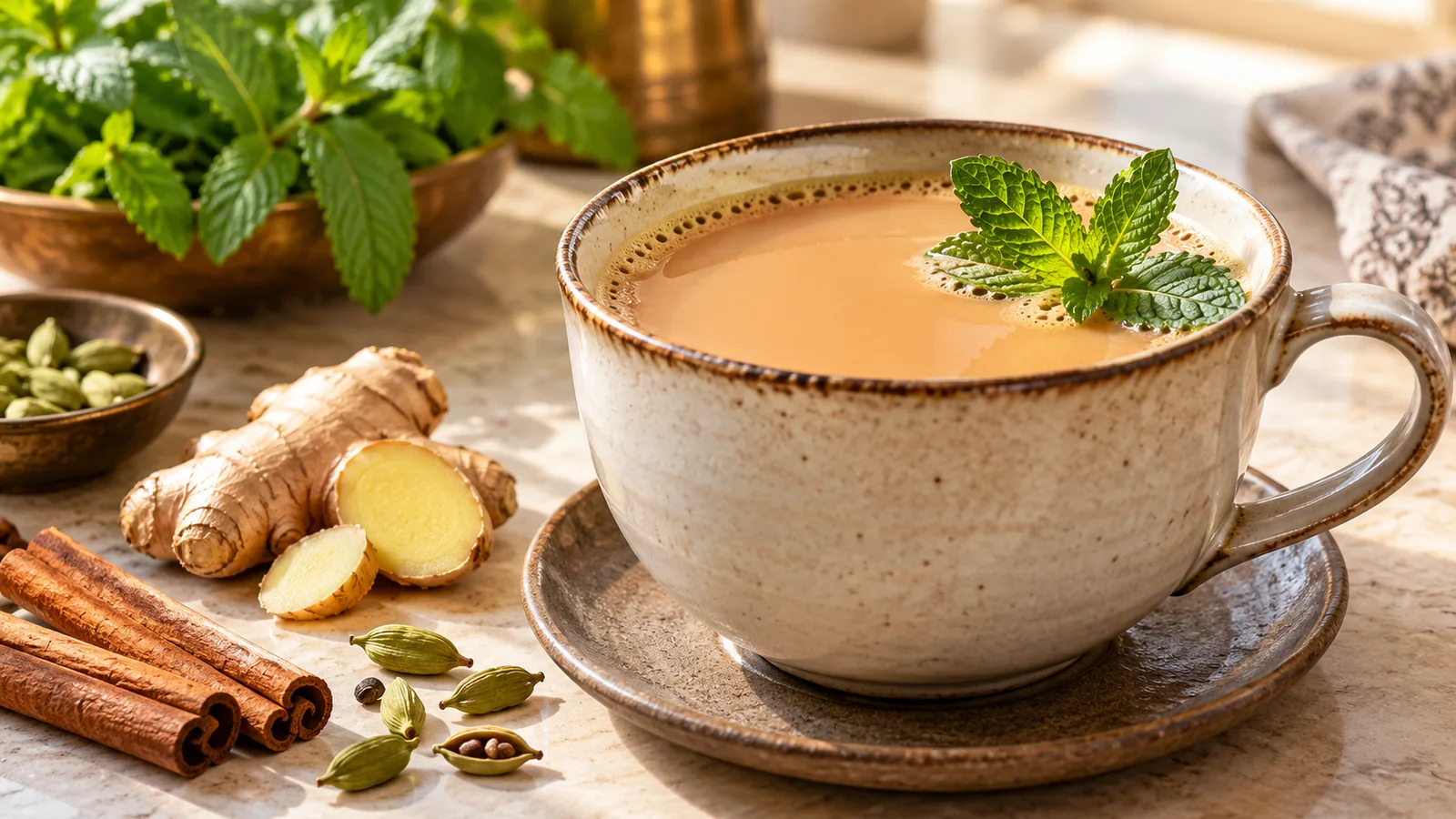
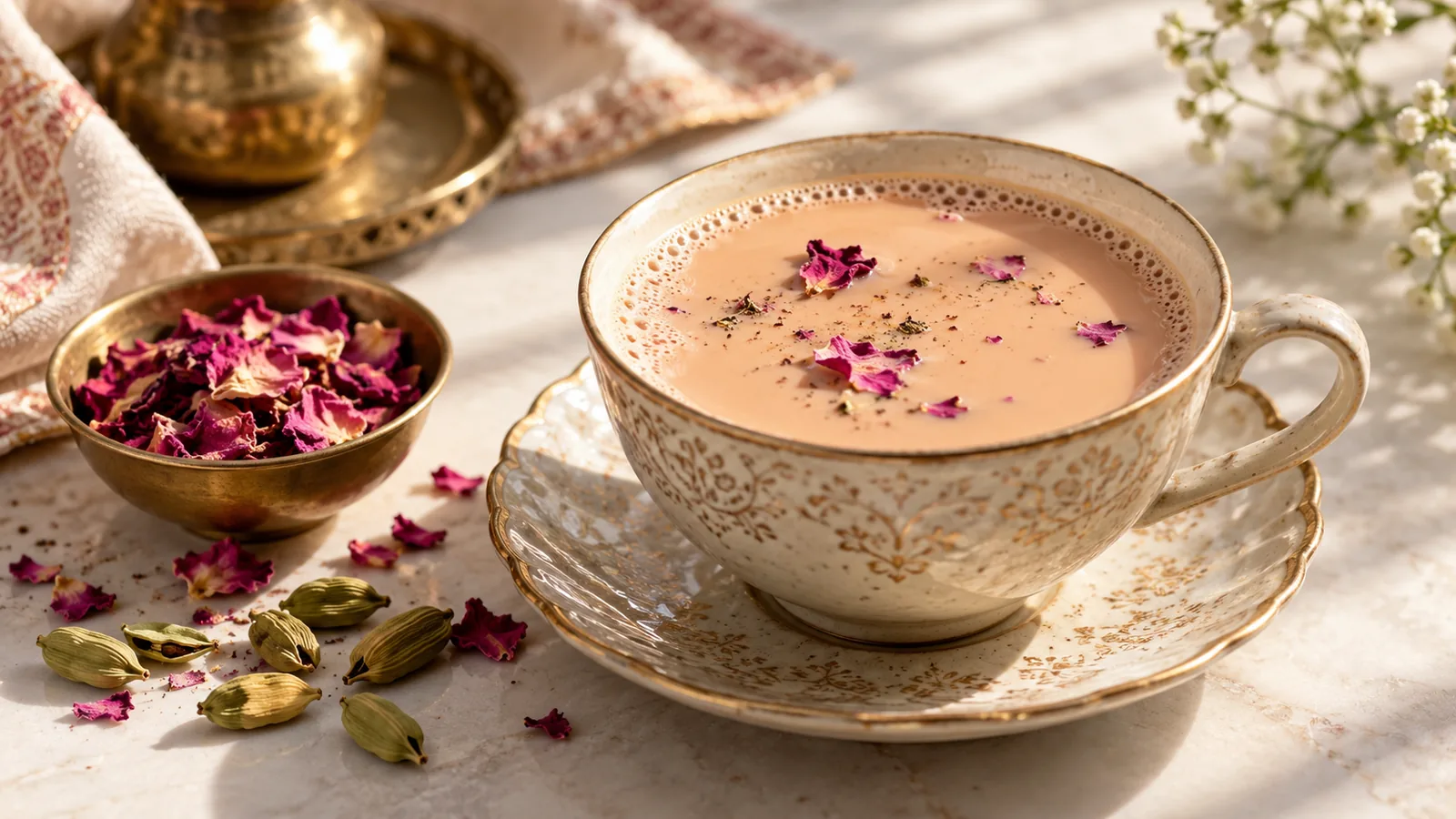
The images are AI-generated illustrations, not photographs of a tested brew.
Quick answer: fennel chai at a glance
Lightly crack 1 g whole fennel seeds (roughly ½ teaspoon, but weigh when possible). Simmer in 300 ml water for 4 minutes. Add 6 g Assam CTC black tea for 90 seconds, then 200 ml milk. Bring to a rise and gently simmer 2 minutes before straining. Optional sugar: 8 g. Total time is about 13 minutes; yield roughly 350–420 ml for two small cups. Water starts near 100°C / 212°F at sea level. Milk should simmer gently, and fresher seeds may need less than 1 g.
Fennel Chai
Fennel-seed black milk tea with an aromatic water stage and two small-cup yield.
By Krishna Sahani
No ratings yet · Be the first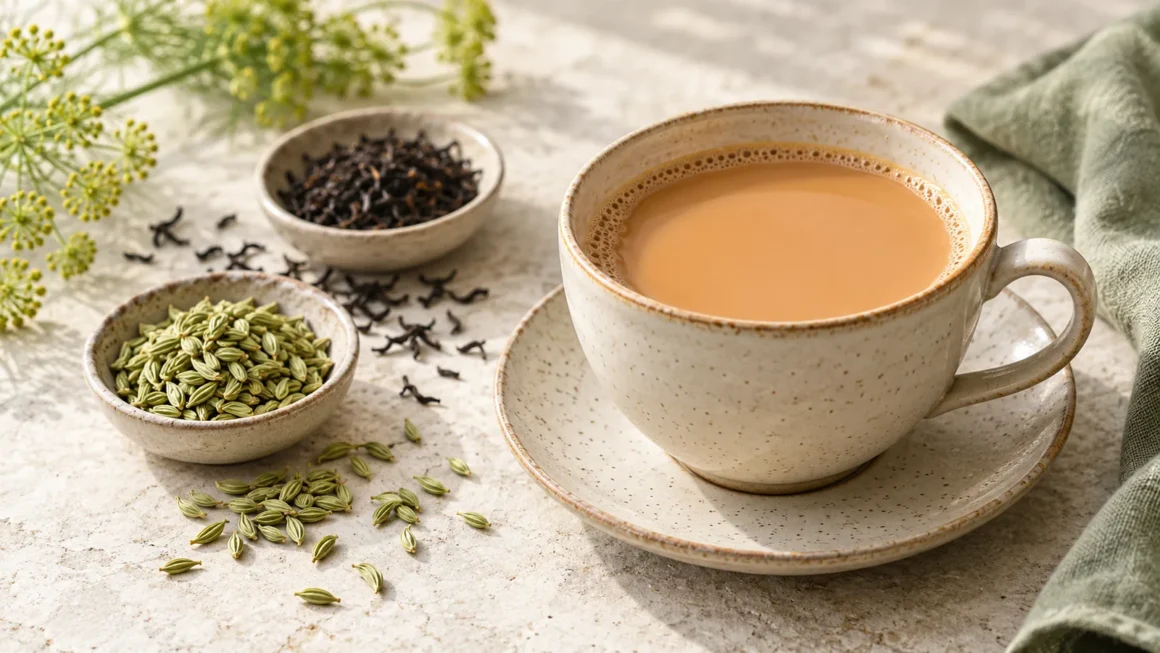
Equipment: Small deep saucepan
Mortar or spoon
Fine strainer
Two heat-safe cups
Ingredients
Instructions
-
Crack and infuse fennel
Lightly crack 1 g fennel seeds. Bring them with 300 ml water to a boil (about 100°C / 212°F at sea level), then simmer 4 minutes. -
Add black tea
Add 6 g Assam CTC black tea and simmer 90 seconds. -
Add milk
Add 200 ml milk and optional 8 g sugar. Bring to a rise, reduce heat and simmer gently for 2 minutes. -
Strain and serve
Strain promptly into two cups and allow to cool before drinking. Discard tea and seeds after this one cooked infusion.
Ratings
Rate this recipe
Fennel in the chai context
The Indian Embassy in Jakarta's masala chai recipe includes fennel seeds in a broader spice mixture. Princeton Campus Dining's Punjabi cha recipe also pairs fennel with black tea, milk and other spices. Both demonstrate that fennel can belong in a cooked milk tea; neither defines this single-spice ratio. This is TeaTurbo's simplified fennel-led interpretation. The tea itself should be opaque beige to caramel brown, with the seeds strained out.
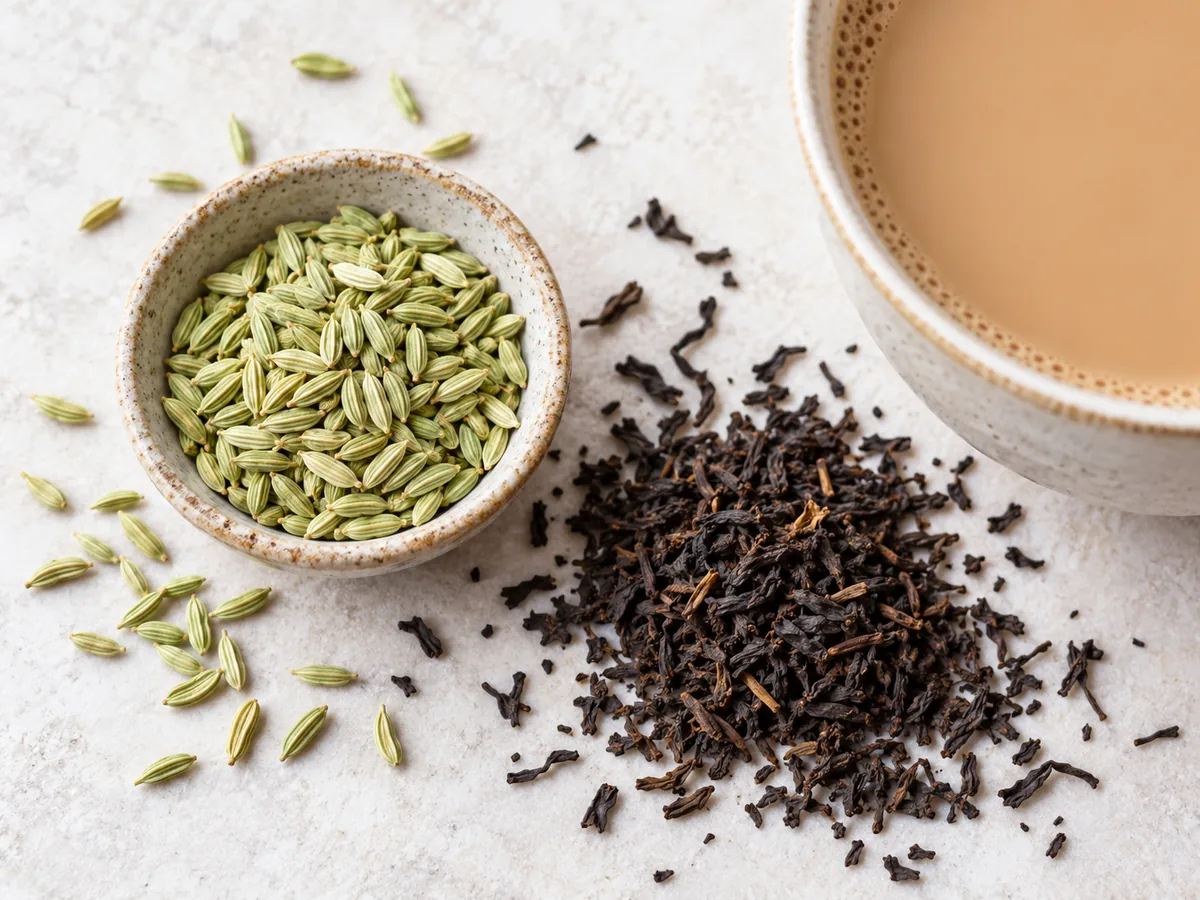
Ingredients and equipment
Use 300 ml water (about 1¼ US cups), 200 ml whole milk (about ¾ cup plus 1 tablespoon), 6 g Assam CTC black tea, 1 g whole fennel seeds and optional 8 g sugar (about 2 teaspoons). You need a small deep saucepan, mortar or spoon to crack the seeds, fine strainer and two heat-safe cups. It contains milk and caffeine. Buy food-grade fennel seeds, not an unidentified garden seed. A teaspoon measure is approximate because seed packing varies.
Step-by-step fennel chai
- Lightly crush the fennel seeds to split some of them, without grinding to powder. Add to the pan with 300 ml water. Bring to a boil and simmer for 4 minutes.
- Add the tea; simmer for 90 seconds. Stir once so no dry tea floats on top.
- Add milk and optional sugar. Bring to a rise, lower the heat and simmer gently for 2 minutes. Watch the pan closely.
- Strain into two cups and serve warm. The cooked tea and seeds are for one infusion only; do not leave them standing in the milk.
Why crack the seeds first?
Princeton's university recipe grinds fennel with other spices before boiling it in water; the embassy recipe likewise grinds its spice mixture. Light cracking exposes the seed interior while leaving pieces large enough for a strainer. This is a practical compromise for a clean, fennel-forward cup. If the fennel is faint, adjust the seed preparation or water simmer first, then consider a slightly larger weighed dose after tasting.
Troubleshooting
- Fennel disappears under milk: Crack the seeds a little more or add one minute to the water stage.
- Too sweet or licorice-like: Reduce fennel to 0.5 g; omit optional sugar first.
- Bitter tea: Shorten the tea stage to 60 seconds, keeping the fennel stage the same.
- Seeds in the cup: Use a finer strainer; do not grind them to powder.
Variations, serving and storage
One lightly cracked green cardamom pod creates a mixed-spice chai; this is optional, not essential to the fennel version. For a less creamy cup, replace 50 ml of milk with water. Serve promptly. If any milk tea remains, strain and refrigerate it in a covered container within two hours, then reheat gently. Do not reuse cooked seeds and tea leaves the next day.
FAQs
Can I use fennel powder?
The recipe is calibrated for whole seeds. Powder strains poorly and may make the cup muddy.
Is fennel chai caffeine-free?
No, this recipe contains black tea. Fennel-only herbal tea is a separate beverage.
Do I need to toast the seeds?
No. Toasting changes the aroma and would require a separate tested method.
Can I use plant milk?
Yes as an optional adaptation, but foaming and richness vary; heat gently and expect a different yield and texture.
References and further reading
- Embassy of India in Jakarta: Flavors of India, Masala Chai — government recipe including fennel in spiced milk tea.
- Princeton Campus Dining: Punjabi Cha — university recipe combining fennel, black tea and milk.
Related TeaTurbo articles
Editorial method: research-based preparation awaiting TeaTurbo hands-on verification. Author: Krishna Sahani.