This guide explains exactly how to make a rose chai recipe with measured ingredients, clear stovetop timing and practical adjustments. The formula is designed for two small cups and separates the slower flavouring stage from black-tea extraction. It is research-based and has not yet been physically tested by TeaTurbo, so the measurements are a careful starting point for editorial review rather than a claim of one perfect or universally authentic method.
The images are AI-generated illustrations of the intended drink, not photographs of a tested recipe.
Quick answer: brewing at a glance
Simmer 1 g food-grade dried rose petals and two lightly crushed green cardamom pods in 300 ml water for 3 minutes. Add 6 g Assam CTC black tea for 90 seconds, then 200 ml whole milk and optional 8 g sugar. Bring to a rise and simmer gently for 2 minutes. Strain into two small cups. Total time is about 12 minutes; expected yield is 350–420 ml. Petal strength varies, so begin with the weighed amount before increasing it.
Rose Chai
Food-grade rose petals, cardamom and Assam black tea simmered into a restrained floral milk chai for two small cups.
By Krishna Sahani
No ratings yet · Be the first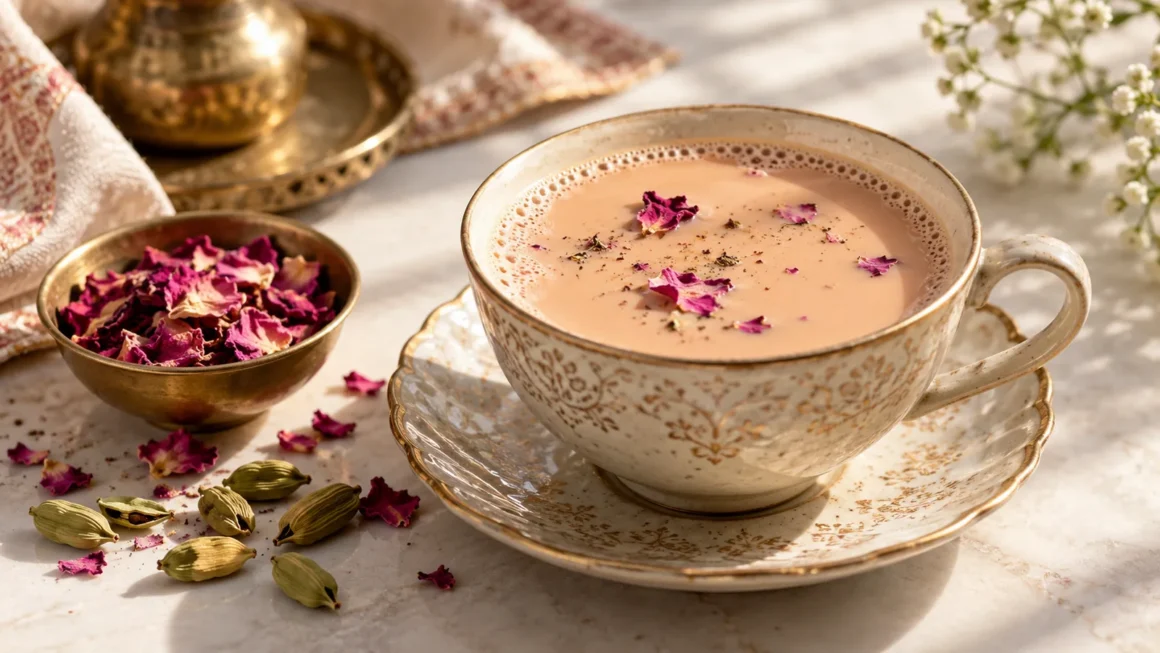
Equipment: Small deep saucepan
Fine strainer
Digital kitchen scale
Two heat-safe cups
Ingredients
Instructions
-
Infuse petals and spice
Simmer 1 g rose petals and 2 crushed cardamom pods in 300 ml water near 100°C / 212°F for 3 minutes. -
Add black tea
Add 6 g Assam CTC black tea and simmer for 90 seconds. -
Add milk
Add 200 ml milk and optional 8 g sugar. Bring to a rise and gently simmer for 2 minutes. -
Strain and serve
Strain into two cups, cool to a safe drinking temperature and discard the cooked ingredients after this single infusion.
Storage
Serve promptly. Strain and refrigerate leftovers in a covered container within 2 hours; reheat gently once.
Ratings
Rate this recipe
What is this tea?
Rose petals are edible, but culinary suitability matters. The University of Alaska Fairbanks Cooperative Extension describes petals as usable for tea and advises collecting clean flowers away from pesticides, herbicides and traffic contamination. Its rose-petal tisane uses boiling water and a four-minute infusion. Tea Board India identifies black tea as a base for Indian spiced milk tea. This recipe combines those ideas as a restrained rose-forward home chai; it is not presented as one universal South Asian tradition. The finished drink should be beige to light caramel with a faint warm blush, rather than vivid pink.
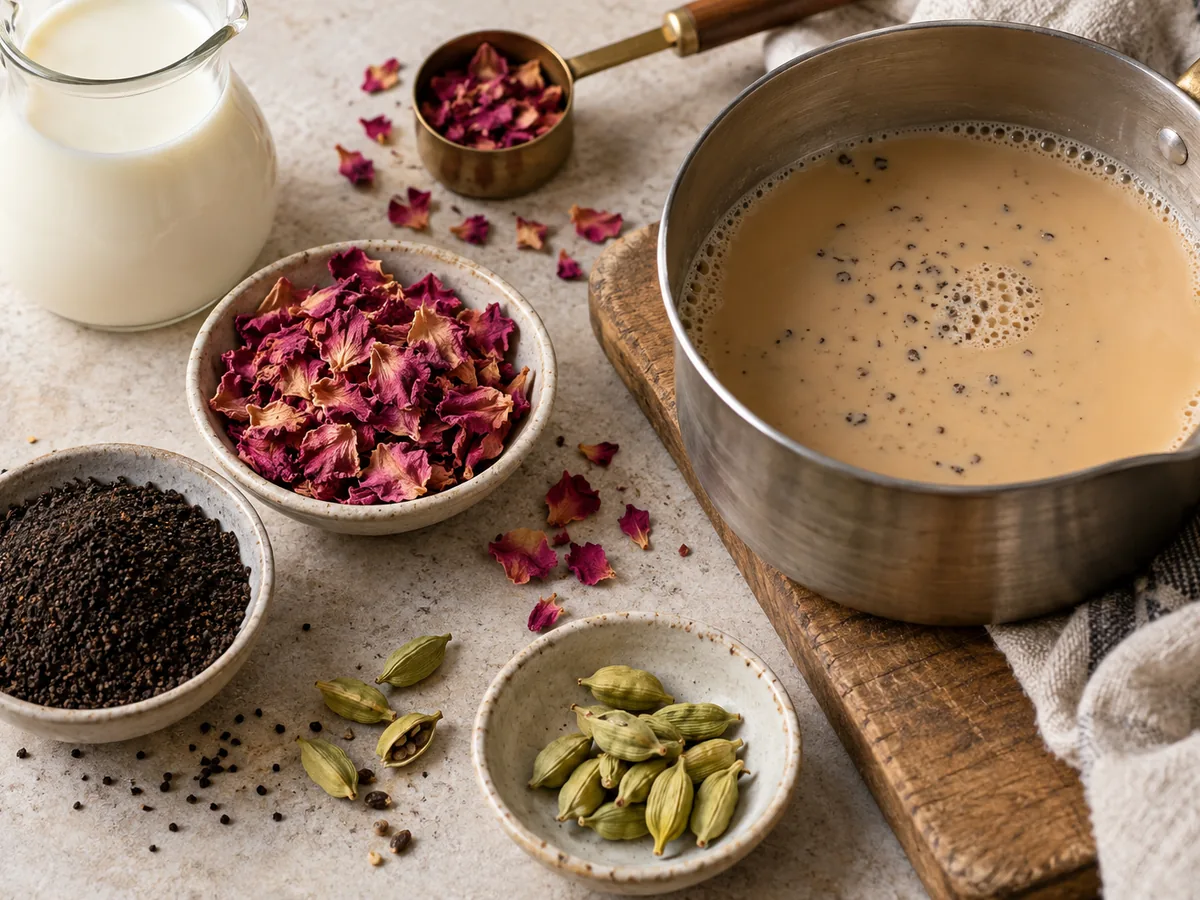
Ingredients and equipment
Use 300 ml water (about 1¼ US cups), 200 ml whole milk (about ¾ cup plus 1 tablespoon), 6 g Assam CTC black tea, 1 g food-grade dried rose petals, two green cardamom pods and optional 8 g sugar (about 2 teaspoons). You need a small deep saucepan, scale, spoon, fine strainer and two heat-safe cups. Never use florist petals or flowers of uncertain spray history.
Step-by-step method
- Check that the petals are sold for culinary use. Lightly crush the cardamom. Add both to 300 ml water, bring to a boil and simmer for 3 minutes.
- Add 6 g black tea and simmer for 90 seconds. Stir once so all tea contacts the water.
- Add milk and optional sugar. Bring to a controlled rise, lower the heat and simmer gently for 2 minutes while watching the pan.
- Strain immediately into two cups. Let the drink cool to a safe temperature before serving; discard the cooked petals and tea.
Why these brewing settings?
The institutional rose tisane allows petals about four minutes in boiling water. Giving the petals a three-minute head start, followed by the tea and milk stages, keeps their total hot contact long enough to register while limiting black-tea extraction. Cardamom is kept low so it supports rather than covers the rose. This is a research-based starting ratio and still needs TeaTurbo kitchen verification.
Troubleshooting
- Perfume-like or soapy: Reduce petals to 0.5 g; culinary rose products vary greatly in strength.
- Rose disappears: Keep the petal stage at 3 minutes and reduce cardamom before adding more petals.
- Bitter or drying: Shorten the black-tea stage to 60 seconds and strain promptly.
- Grey or dull colour: Old petals can lose aroma and colour; replace them rather than adding a large dose.
Variations, serving and storage
For a simpler cup, omit cardamom and let rose be the only aromatic. Fresh petals need a separate tested weight and must be positively identified, unsprayed and food safe. Rose water also varies in concentration and is not a gram-for-gram substitute for dried petals. Serve warm with lightly flavoured foods so the aroma remains clear. Strain and refrigerate leftovers within two hours, then reheat once gently.
Frequently asked questions
Can I use fresh garden roses?
Only if the species is edible and the plant has not been treated with unsafe sprays. Florist roses are unsuitable.
Why is my rose chai not pink?
Black tea and milk naturally produce beige or caramel tones. A vivid pink result would usually require a different ingredient or colouring.
Can I use rose water?
It can work as a modern variation, but concentration differs by product. Add a very small amount after heating and test separately.
Is rose chai caffeine-free?
No. This recipe contains Assam black tea.
References and further reading
- University of Alaska Fairbanks Cooperative Extension: Wild Roses — edible-petal selection, cleaning and rose-petal tisane guidance.
- Tea Board India: Masala Tea — black tea in the Indian spiced milk-tea context.
Related TeaTurbo articles
Editorial method: research-based preparation awaiting TeaTurbo hands-on verification. Author: Krishna Sahani.