
Tea is one of the most popular drinks in the world. Every day, billions of people enjoy a warm cup of tea for relaxation, energy, and comfort. However, many tea lovers do not know how tea is made before it reaches their kitchen.
The journey of tea begins with fresh green leaves picked from the tea plant called Camellia sinensis. Surprisingly, almost all major tea types — including black tea, green tea, white tea, oolong tea, and pu-erh tea — come from this single plant species. The biggest difference between these teas is not the plant itself but how the leaves are processed after harvest.
Tea processing plays a major role in determining the flavor, aroma, color, strength, and caffeine level of tea. For example, green tea tastes fresh and grassy because it is minimally oxidized, while black tea develops a rich and bold flavor due to full oxidation.
Understanding how tea is made helps tea drinkers appreciate the skill, tradition, and science behind every sip. From careful plucking in mountain tea gardens to drying and packaging in factories, tea manufacturing involves multiple important stages.
In this guide, you will learn the complete tea-making process step by step. We will explore where tea comes from, how tea leaves are harvested, and how different processing methods create the teas we enjoy today.
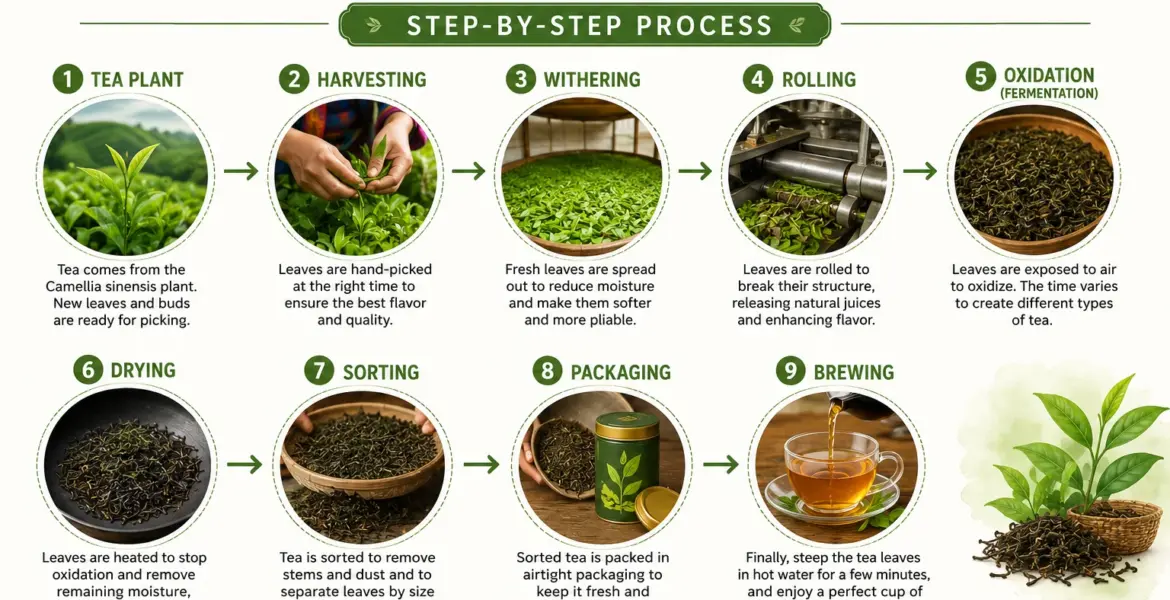
Suggested Infographic Idea: Create a visual infographic showing the full tea journey:

Tea Plant → Harvesting → Withering → Rolling → Oxidation → Drying → Sorting → Packaging → Brewing
Where Tea Comes From
Tea has a long and fascinating history that dates back thousands of years. Most historians believe tea first originated in China before spreading across Asia and eventually the entire world. Today, tea is grown in many tropical and subtropical regions.
Some of the largest tea-producing countries include:
- China
- India
- Sri Lanka
- Kenya
- Japan
- Vietnam
- Indonesia
- Turkey
Each region produces tea with unique flavors because climate, altitude, soil, and rainfall affect the character of the leaves.
For example:
- Chinese teas are often delicate and aromatic.
- Indian Assam teas are bold and malty.
- Darjeeling teas are floral and muscatel.
- Sri Lankan teas are bright and brisk.
- Kenyan teas are strong and full-bodied.
Tea plants grow best in warm climates with frequent rainfall and slightly acidic soil. Many high-quality teas are grown in mountainous regions because cooler temperatures and misty weather help leaves develop more complex flavors.
Tea cultivation is a labor-intensive industry. According to the Food and Agriculture Organization (FAO), global tea production exceeds 6 million tons annually, with China and India leading the market.
How Tea is Made: Step-by-Step Process
Tea processing is the most important stage in tea production. After harvesting, tea leaves go through several carefully controlled steps that transform fresh green leaves into black tea, green tea, oolong tea, or white tea.
The tea manufacturing process directly affects:
- Flavor
- Aroma
- Color
- Strength
- Caffeine levels
- Shelf life
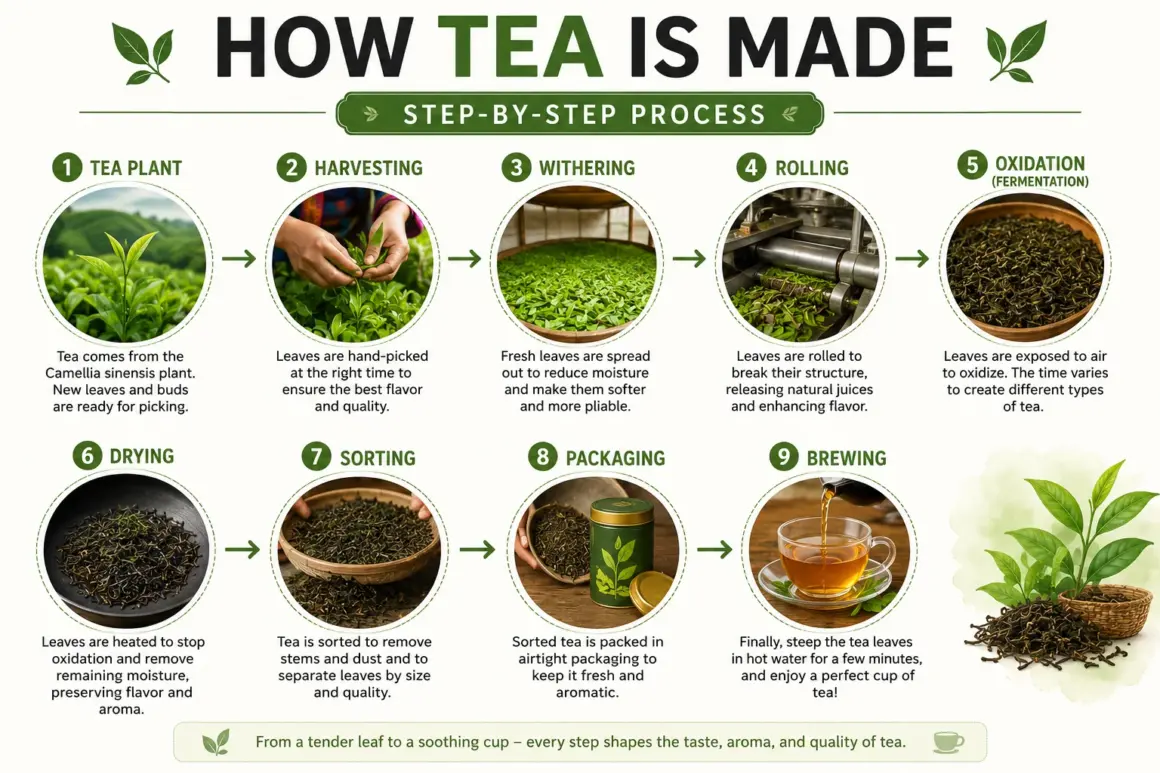
Even small changes during processing can completely change the final tea.
Step 1: Withering
Withering is the first major step after harvesting tea leaves.
Fresh tea leaves contain around 70–80% moisture. During withering, leaves are spread out on trays or racks so excess water can slowly evaporate.
This process helps:
- Soften the leaves
- Improve flexibility
- Prepare leaves for rolling
- Develop aroma compounds
Tea factories may use:
- Natural air withering
- Warm-air withering systems
- Controlled indoor withering rooms
Proper withering creates smoother and more aromatic tea.
Step 2: Rolling
After withering, tea leaves are rolled to shape them and break their cell walls.
Rolling releases:
- Natural enzymes
- Essential oils
- Leaf juices
These compounds react with oxygen during oxidation.
Traditional tea rolling is done by hand, especially for premium handmade teas. However, modern tea factories use rolling machines for speed and consistency.
Traditional Rolling
- Gentle leaf handling
- Better whole-leaf preservation
- Common in artisanal tea production
Modern Rolling Machines
- Faster production
- Consistent leaf shapes
- Ideal for commercial manufacturing
Step 3: Oxidation (Fermentation)
Oxidation is one of the most important tea production steps.
During oxidation, oxygen reacts with the enzymes inside tea leaves. This changes the leaf color from green to brown and develops deeper flavors.
The longer the oxidation process, the darker and stronger the tea becomes.
Fully Oxidized Tea
- Black tea
- Bold flavor
- Dark color
- Malty or rich taste
Partially Oxidized Tea
- Oolong tea
- Balanced flavor
- Floral and fruity notes
Unoxidized Tea
- Green tea
- Fresh grassy taste
- Light color
Temperature, humidity, and timing must be carefully controlled during oxidation.
Step 4: Drying or Firing
Drying stops oxidation and removes remaining moisture from tea leaves.
This stage is important because it:
- Prevents spoilage
- Improves shelf life
- Locks in flavor
- Stabilizes aroma
Tea leaves are usually dried until the moisture drops to around 2–3%.
Common Tea Drying Methods
- Hot-air drying
- Pan-firing
- Oven drying
- Charcoal roasting
- Sun drying
Different drying techniques create unique flavor profiles.
For example:
- Roasted oolong develops nutty notes.
- Pan-fired green tea tastes toasted.
- Sun-dried white tea tastes delicate and sweet.
Step 5: Sorting and Packaging
Once dried, tea leaves are sorted based on:
- Leaf size
- Appearance
- Quality
- Texture
Tea grading helps manufacturers create consistent products.
Common Tea Grades
- Whole leaf tea
- Broken leaf tea
- Fannings
- Dust tea
After sorting, tea is packaged in airtight containers to preserve freshness.
Modern tea packaging may include:
- Vacuum sealing
- Nitrogen flushing
- Foil-lined pouches
- Moisture barriers
Proper packaging protects tea from:
- Light
- Air
- Heat
- Humidity
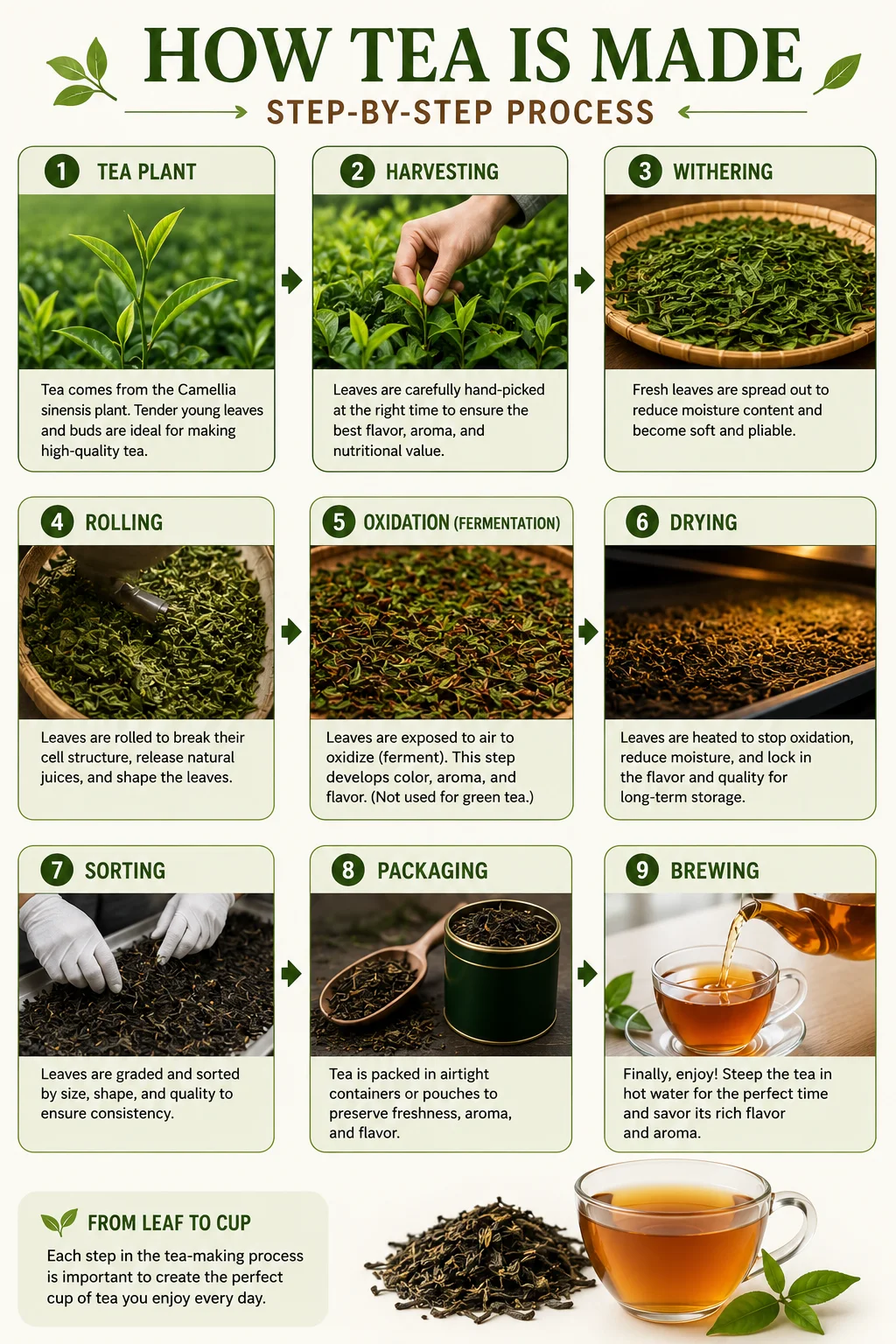
Suggested Flowchart Idea: Harvesting → Withering → Rolling → Oxidation → Drying → Sorting → Packaging
4. Different Types of Tea and How They Are Processed
Different tea types are created by changing processing methods.
The biggest factor is oxidation level.
1 Black Tea Processing
Black tea is fully oxidized.
Processing steps:
- Withering
- Rolling
- Full oxidation
- Drying
Black tea develops:
- Dark color
- Strong flavor
- Rich aroma
- Higher briskness
Popular black teas include:
- Assam tea
- Darjeeling black tea
- Ceylon tea
- English Breakfast tea
2 Green Tea Processing
Green tea undergoes minimal oxidation.
After harvesting, leaves are quickly heated to stop oxidation.
Common Methods
- Steaming (Japan)
- Pan-firing (China)
Green tea usually tastes:
- Fresh
- Grassy
- Vegetal
- Light
Popular examples:
- Sencha
- Matcha
- Dragon Well
3 Oolong Tea Processing
Oolong tea is partially oxidized.
It sits between green tea and black tea in flavor and appearance.
Oolong processing often includes:
- Repeated rolling
- Partial oxidation
- Roasting
Flavor notes may include:
- Floral
- Fruity
- Creamy
- Toasted
4 White Tea and Herbal Tea
White tea is one of the least processed teas.
It is usually:
- Hand-picked
- Lightly withered
- Gently dried
White tea has:
- Delicate flavor
- Natural sweetness
- Light color
Herbal tea is different because it does not come from Camellia sinensis.
Herbal infusions may contain:
- Chamomile
- Peppermint
- Hibiscus
- Ginger
Tea Comparison Table
| Tea Type | Oxidation Level | Flavor | Processing Style |
| Black Tea | Full | Bold and rich | Fully oxidized |
| Green Tea | Minimal | Fresh and grassy | Heated quickly |
| Oolong Tea | Partial | Floral and complex | Semi-oxidized |
| White Tea | Very low | Delicate and sweet | Minimal processing |
FAQs
1 Is all tea made from the same plant?
Yes. Most traditional teas come from the Camellia sinensis plant.
2 What makes black tea different from green tea?
The main difference is oxidation. Black tea is fully oxidized, while green tea is minimally oxidized.
3 How long does the tea-making process take?
Tea processing can take several hours to several days, depending on the tea type.
4 Is handmade tea better than machine-made tea?
Handmade tea often offers better craftsmanship, while machine-made tea provides consistency and affordability.
5 Why is tea dried after processing?
Drying removes moisture, improves shelf life, and prevents spoilage.
Conclusion
Tea goes through a fascinating journey before reaching your cup. From harvesting fresh Camellia sinensis leaves to withering, rolling, oxidation, drying, and packaging, every step in the tea manufacturing process shapes the final flavor and quality.
Different tea processing methods create the wide variety of teas enjoyed around the world. Black tea becomes bold through full oxidation, green tea stays fresh through minimal oxidation, and oolong tea balances both styles.
Climate, soil, harvesting techniques, and storage conditions also play major roles in tea quality.
Understanding how tea is made helps tea lovers appreciate the craftsmanship behind every sip. Whether you enjoy delicate white tea or strong black tea, the processing journey is what makes each cup unique.
Next time you brew tea, take a moment to enjoy the skill, tradition, and care hidden inside every leaf.