
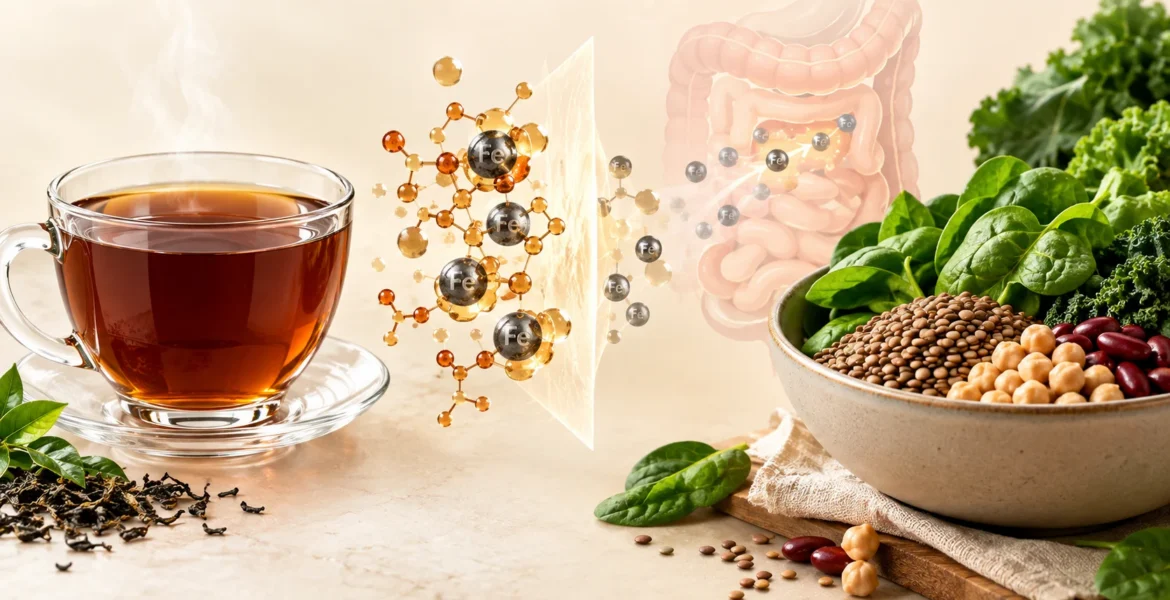
Tea is one of the most popular beverages in the world. But if you are concerned about iron deficiency, you may have heard that drinking tea with meals can reduce how much iron your body absorbs.
So, does tea really block iron absorption?
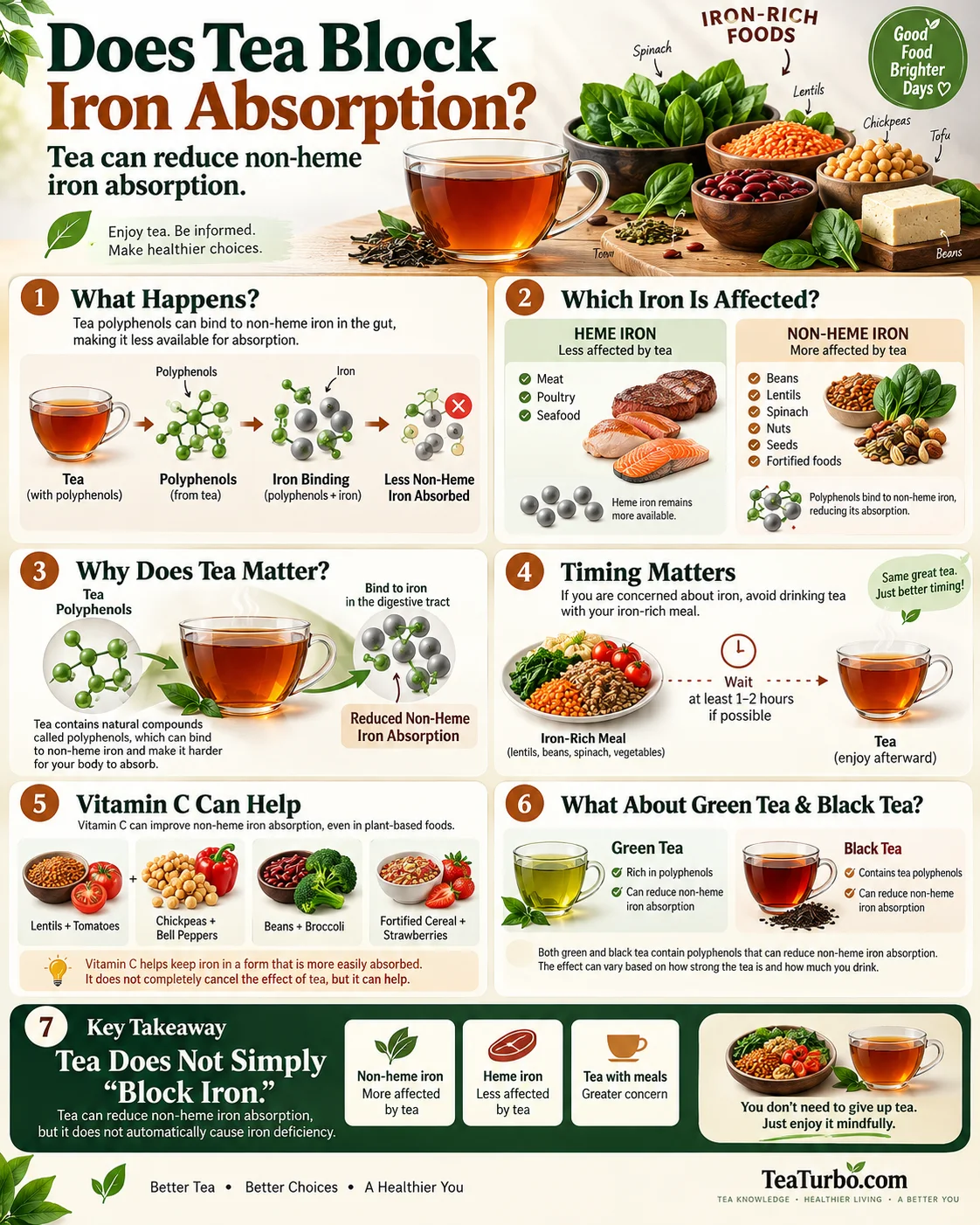
Yes, tea can reduce the absorption of dietary non-heme iron, particularly when tea is consumed with or close to an iron-rich meal. This effect is mainly linked to polyphenols in tea, which can bind iron and make it less available for absorption in the intestine. However, this does not mean that everyone who drinks tea will become iron deficient. The effect depends on the type of iron, the amount of tea and polyphenols consumed, meal composition, timing, and a person’s overall iron status.
For most healthy people with adequate iron intake, there is generally no need to stop drinking tea. However, people who have iron deficiency or are at higher risk may benefit from separating tea from iron-rich meals.
Does Tea Actually Reduce Iron Absorption?
Research has consistently found that tea can reduce the absorption of non-heme iron.
Iron in food exists mainly in two forms:
| Type of iron | Main sources | Effect of tea |
|---|---|---|
| Heme iron | Meat, poultry, seafood | Much less affected by tea |
| Non-heme iron | Beans, lentils, grains, nuts, seeds, vegetables and fortified foods | More strongly affected by tea |
Non-heme iron is particularly important for people who obtain much of their iron from plant-based foods.
A review of research on tea and iron nutrition found clear evidence that tea drinking can limit non-heme iron absorption. However, the researchers also noted that evidence connecting tea consumption directly with long-term changes in iron status was more limited and complicated by other dietary and lifestyle factors.
So, “tea reduces iron absorption” is more accurate than “tea causes iron deficiency.”
Why Does Tea Affect Iron Absorption?
The main reason is the presence of polyphenols.
Tea contains several types of polyphenolic compounds, including catechins and other phenolic compounds. Black tea also contains compounds such as theaflavins and thearubigins.
Some of these compounds can interact with iron in the digestive tract. When iron binds with these compounds, less iron may remain available for absorption.
Researchers generally consider tea polyphenols to be inhibitors of non-heme iron bioavailability. The strength of the effect can vary depending on the amount and type of polyphenols present.
This is why the effect isn’t simply about whether a beverage is called “tea.” The concentration, type of tea, brewing method, meal composition, and timing can all matter.
Which Type of Iron Is Most Affected?
This is one of the most important points to understand.
Non-Heme Iron
Non-heme iron is found primarily in plant foods and fortified foods.
Examples include:
- Lentils
- Chickpeas
- Beans
- Tofu
- Spinach
- Seeds
- Nuts
- Whole grains
- Iron-fortified cereals
Tea polyphenols can significantly reduce the absorption of this form of iron.
Heme Iron
Heme iron comes mainly from animal foods such as meat and seafood.
It follows a different absorption pathway and is generally less influenced by dietary inhibitors such as tea polyphenols.
This is why the impact of drinking tea can be particularly relevant for people whose diets rely heavily on plant-based sources of iron.
Does Green Tea Block Iron Absorption?
Green tea can reduce non-heme iron absorption.
Although green tea is often associated with health-promoting compounds such as catechins, those same polyphenols can interact with iron during digestion.
It is therefore incorrect to assume that green tea is automatically different from other teas when it comes to iron absorption.
The amount of polyphenols varies considerably among teas and depends on factors such as tea type, processing, quantity used, water, temperature and brewing time.
What About Black Tea?
Black tea can also reduce non-heme iron absorption.
Human studies have demonstrated a substantial reduction in iron absorption when polyphenol-rich tea is consumed alongside iron-containing meals. The magnitude varies considerably between studies and depends on the meal and tea used.
Therefore, if you are trying to improve iron absorption, drinking strong black tea directly with an iron-rich meal may not be the best timing.
Does Tea Block Iron From Food or Supplements?
Tea can interfere with the absorption of non-heme iron from food, and studies have also observed reductions in absorption from some fortified iron sources when tea is consumed with the meal.
If you take an iron supplement, however, you should follow the instructions provided by your healthcare professional or the product label rather than changing your treatment based solely on general tea advice.
People being treated for iron deficiency should discuss the timing of tea, coffee, meals and iron supplements with their healthcare professional.
When Should You Drink Tea If You Are Concerned About Iron?
One simple strategy is to avoid drinking tea at the same time as an iron-rich meal.
A review of tea and iron nutrition suggested that people at risk of iron deficiency drink tea between meals and wait at least one hour after eating before drinking tea.
For example:
Breakfast: Eat your iron-rich foods → wait → drink tea later.
Lunch: Have your meal → choose water with the meal → enjoy tea later.
Dinner: Keep tea separate from the meal if you are concerned about iron absorption.
This does not mean that everyone needs to follow a strict tea schedule. The importance of timing depends on your diet and individual risk of iron deficiency.
Can Vitamin C Help?
Vitamin C is well known for improving the absorption of non-heme iron.
Good sources include:
- Oranges
- Lemons
- Kiwi
- Strawberries
- Bell peppers
- Tomatoes
- Broccoli
Including a vitamin-C-rich food with a plant-based iron source can help improve non-heme iron absorption.
However, vitamin C should not be viewed as a guaranteed way to completely cancel out the inhibitory effect of a high-polyphenol tea. Research suggests that the ability of ascorbic acid to counteract polyphenol inhibition can depend on the amount of polyphenols present.
Should You Stop Drinking Tea If You Have Low Iron?
Not necessarily.
The evidence does not mean that everyone needs to eliminate tea.
For healthy people without a known risk of iron deficiency, an earlier review concluded that there was no need to restrict tea consumption simply because of concerns about iron. For people at risk of iron deficiency, separating tea from meals is a practical approach.
If you have confirmed iron deficiency anemia, however, it is better to discuss your diet and tea habits with a healthcare professional. Iron deficiency can have many causes, and simply changing when you drink tea may not address the underlying problem.
Tea and Iron: What the Science Really Says
The evidence can be summarized simply:
| Question | What research suggests |
|---|---|
| Can tea reduce iron absorption? | Yes |
| Is non-heme iron most affected? | Yes |
| Is heme iron less affected? | Generally yes |
| Are tea polyphenols involved? | Yes |
| Does every tea have exactly the same effect? | No |
| Does drinking tea automatically cause iron deficiency? | No |
| Should everyone stop drinking tea? | No |
| Should people at risk of iron deficiency separate tea from meals? | This can be a practical strategy |
| Can vitamin C improve non-heme iron absorption? | Yes |
Practical Tips to Protect Iron Absorption
If you enjoy tea and want to support your iron intake, you don’t necessarily have to give it up.
Try these simple habits:
1. Avoid tea with iron-rich meals
Instead of drinking tea immediately with your meal, have water with the meal and enjoy tea later.
2. Include vitamin C
Pair plant-based iron foods with foods rich in vitamin C.
For example:
Lentils + tomatoes
Chickpeas + bell peppers
Beans + broccoli
Iron-fortified cereal + strawberries
3. Pay attention if you are at risk of iron deficiency
People with known iron deficiency or increased iron requirements should be more careful about factors that can reduce iron absorption.
4. Don’t focus on tea alone
Iron status depends on the overall diet, iron intake, absorption, losses and individual health factors.
5. Don’t self-treat anemia
If you have symptoms or laboratory-confirmed iron deficiency, speak with a healthcare professional to identify the cause and appropriate treatment.
References
1. PubMed — Impact of Tea Drinking on Iron Status in the UK: A Review. https://pubmed.ncbi.nlm.nih.gov/14718031/
2. PMC — Iron Absorption: Factors, Limitations, and Improvement Methods. https://pmc.ncbi.nlm.nih.gov/articles/PMC9219084/
3. PMC — Biological Potential and Mechanisms of Tea’s Bioactive Compounds: An Updated Review. https://pmc.ncbi.nlm.nih.gov/articles/PMC11519742/
4. PMC — Dietary Heme Iron: A Review of Efficacy, Safety and Tolerability. https://pmc.ncbi.nlm.nih.gov/articles/PMC12252460/
5. PMC — The Effect of Tea on Iron Absorption. https://pmc.ncbi.nlm.nih.gov/articles/PMC1410962/
