If you love warm, spicy drinks, you’ve probably enjoyed a chai tea latte. But one common question people ask is: how much caffeine in a chai tea latte?
The answer is not as simple as a single number. It depends on the type of chai, how it’s prepared, and where you buy it. In this guide, we’ll break it all down in a simple and easy way.
What Is a Chai Tea Latte?
A chai tea latte is a blend of black tea, milk, spices, and sweetener. The spices usually include:
- Cinnamon
- Cardamom
- Ginger
- Cloves
- Black pepper
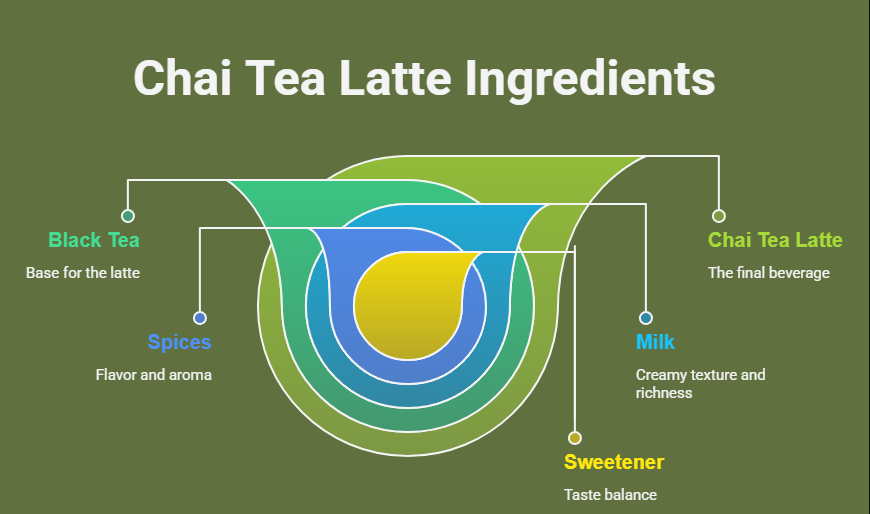
Traditionally, chai comes from India, where it is called masala chai. It’s brewed strong and mixed with milk and sugar.
Because chai uses black tea as a base, it naturally contains caffeine.
How Much Caffeine in a Chai Tea Latte?
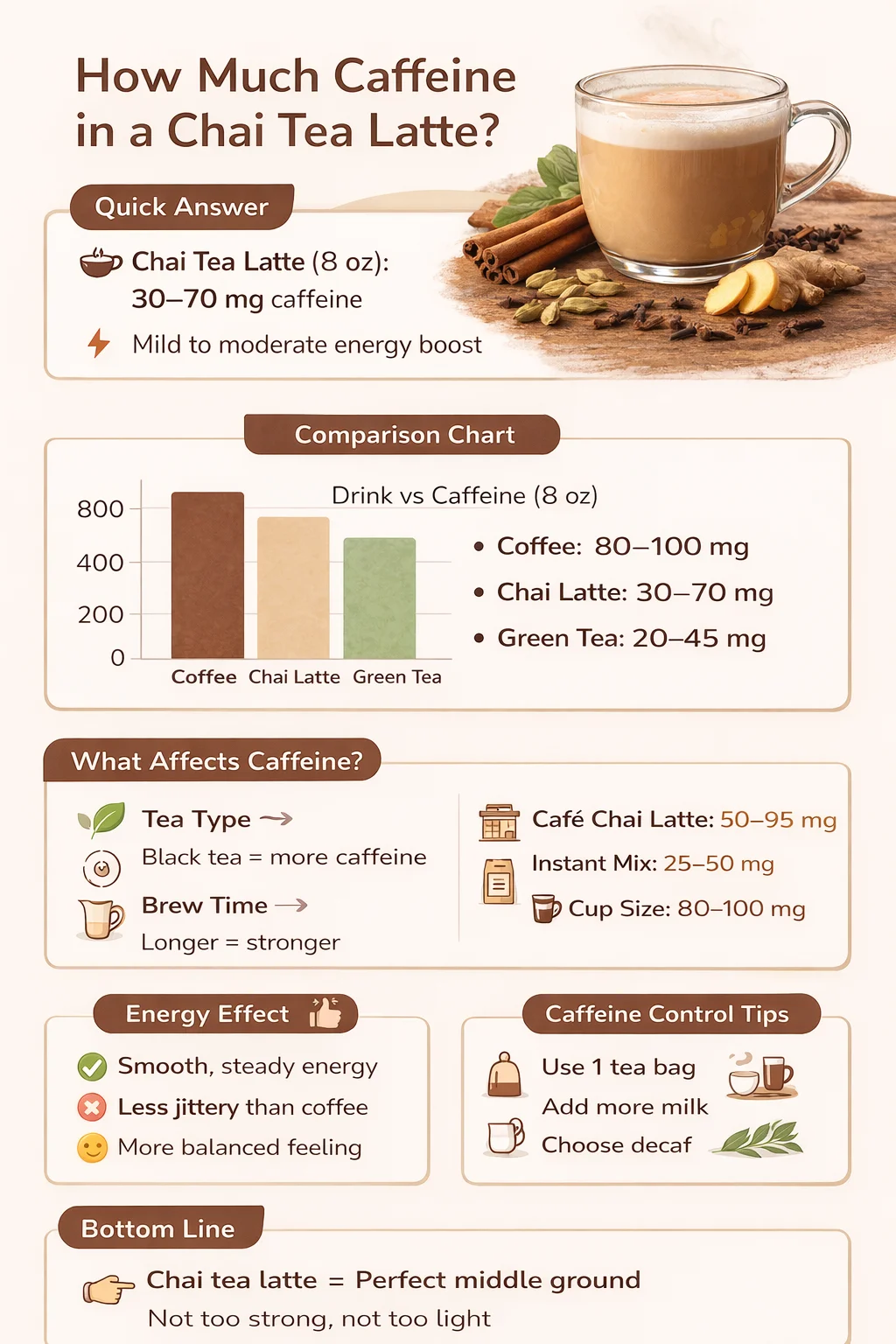
On average, a chai tea latte contains:
- 30 to 70 mg of caffeine per cup (8 oz)
However, this range can vary depending on several factors.
Quick Comparison
- Chai tea latte: 30–70 mg
- Coffee (8 oz): 80–100 mg
- Green tea: 20–45 mg
So, chai sits right in the middle—not too strong, not too mild.
Caffeine in Popular Chai Tea Lattes
Let’s look at some real-world examples.
1. Coffee Shop Chai Latte
Most coffee chains use chai concentrate mixed with milk.
- Small (8 oz): ~30–50 mg
- Medium (12 oz): ~50–70 mg
- Large (16 oz): ~70–95 mg
For example, a 16 oz chai latte from a popular café can have around 95 mg of caffeine, which is close to a cup of coffee.
2. Homemade Chai Tea Latte
When you make chai at home, caffeine depends on how much tea you use.
- 1 black tea bag: ~40–50 mg
- 2 tea bags: ~80–100 mg
If you simmer the tea longer, it can extract even more caffeine.
3. Instant Chai Mix
Powdered chai mixes often contain less tea.
- Typical caffeine: 25–50 mg per serving
Some mixes focus more on sugar and flavor than actual tea.
Why Does Caffeine Vary in Chai Latte?
Now you might wonder why the caffeine level is not fixed. Here are the main reasons.
1. Type of Tea Used
Most chai uses black tea, which has higher caffeine than green or white tea.
However, some blends may use:
- Green tea (less caffeine)
- Decaf tea (almost no caffeine)
2. Brewing Time
The longer you brew tea, the more caffeine is released.
- 3 minutes: moderate caffeine
- 5+ minutes: higher caffeine
3. Tea-to-Milk Ratio
A stronger chai (more tea, less milk) = more caffeine.
A milk-heavy latte = less caffeine.
4. Serving Size
This one is simple:
- Bigger cup = more caffeine
A large chai latte can have almost double the caffeine of a small one.
Chai Tea Latte vs Coffee: Which Has More Caffeine?
If you’re choosing between chai and coffee, here’s a simple breakdown.
Coffee
- Stronger caffeine hit
- Faster energy boost
- Can feel intense for some people
Chai Tea Latte
- Milder caffeine
- Slower, smoother energy
- Less jittery feeling
Many people prefer chai because it gives calm energy instead of a sudden spike.
Does Chai Tea Latte Keep You Awake?
Yes, but not as strongly as coffee.
Since chai contains caffeine, it can:
- Improve alertness
- Boost focus
- Reduce tiredness
However, because the caffeine level is lower, it’s less likely to:
- Cause anxiety
- Disrupt sleep (if consumed earlier in the day)
If you’re sensitive to caffeine, it’s best to avoid chai late at night.
Is There Decaf Chai Tea Latte?
Yes, you can enjoy chai without caffeine.
Options include:
- Decaffeinated black tea chai
- Herbal chai (no tea leaves)
- Rooibos chai (naturally caffeine-free)
These options give you the same spicy flavor without the caffeine.
Health Perspective: Is the Caffeine in Chai Safe?
For most people, the caffeine in chai tea latte is perfectly safe.
According to general health guidelines:
- Safe daily caffeine intake: up to 400 mg for adults
So, even if you drink:
- 2–3 cups of chai latte
You are still within a safe range.
Benefits of Moderate Caffeine
Chai tea latte offers more than just caffeine. It also contains spices with health benefits:
- Ginger: helps digestion
- Cinnamon: may support blood sugar control
- Cardamom: aids metabolism
Combined with caffeine, chai becomes both energizing and comforting.
How to Control Caffeine in Your Chai Latte
If you want to adjust caffeine levels, here are some easy tips:
To Reduce Caffeine
- Use 1 tea bag instead of 2
- Add more milk
- Brew for a shorter time
- Choose decaf tea
To Increase Caffeine
- Use strong black tea (like Assam)
- Brew longer
- Use less milk
- Add an extra tea bag
Interesting Facts About Chai and Caffeine
- India is one of the largest tea consumers in the world
- Black tea contains about 40–50 mg caffeine per cup
- Chai’s spices do not contain caffeine
- The energy from chai is often described as “balanced”
In fact, many people switch from coffee to chai for a smoother daily routine.
Conclusion
So, how much caffeine in a chai tea latte?
The simple answer is: 30 to 70 mg per cup, depending on how it’s made.
Chai tea latte offers a perfect middle ground between coffee and tea. It gives you enough energy to stay alert, but without the strong effects of coffee.
Whether you enjoy it from a café or make it at home, chai is a flavorful and comforting drink that fits easily into your daily routine.
FAQs
1. Does chai tea latte have more caffeine than coffee?
No, chai tea latte has less caffeine than coffee. Coffee usually contains almost double the caffeine.
2. Can I drink chai tea latte every day?
Yes, you can drink it daily in moderation. It’s safe as long as your total caffeine intake stays within limits.
3. Is chai tea latte good for beginners?
Absolutely! Its mild caffeine and sweet, spicy taste make it a great choice for beginners.
4. Does boiling chai increase caffeine?
Yes, longer boiling or brewing can extract more caffeine from the tea leaves.
5. Is there caffeine in herbal chai?
No, herbal chai (without black tea) is caffeine-free.
Key Takeaways
- A chai tea latte contains 30–70 mg of caffeine per cup
- It has less caffeine than coffee but more than green tea
- Caffeine levels depend on tea type, brewing time, and serving size
- You can control caffeine by adjusting how you prepare it
- Decaf and herbal chai options are available for caffeine-free enjoyment