

Migraines can be painful, exhausting, and hard to manage. Many people look for natural ways to reduce symptoms without relying only on medication. One common question is: does tea help with migraines?
The simple answer is yes—certain types of tea may help reduce migraine symptoms. However, not all teas work the same way. Some can relieve pain, while others may even trigger headaches if used incorrectly.
In this guide, we’ll explore how tea affects migraines, which types work best, and how to use tea safely for relief.
Also read: History of Tea
What Is a Migraine?
Before understanding how tea helps, it’s important to know what a migraine is.
A migraine is more than just a headache. It often includes:
- Throbbing pain (usually on one side of the head)
- Sensitivity to light and sound
- Nausea or vomiting
- Visual disturbances (aura)
According to global health data, migraines affect over 1 billion people worldwide, making them one of the most common neurological conditions.
Does Tea Help with Migraines?
Yes, tea can help with migraines in several ways. It depends on the type of tea and your body’s response.
Tea may help by:
- Reducing inflammation
- Improving blood flow
- Relaxing the nervous system
- Providing mild caffeine relief
However, moderation is key. Too much tea—especially caffeinated tea—can worsen migraines.
How Tea Works for Migraine Relief
1. Caffeine Effect
Some teas contain caffeine, like black tea and green tea.
- Small amounts of caffeine can narrow blood vessels, which may reduce migraine pain.
- In fact, caffeine is used in some headache medications.
However:
- Too much caffeine can trigger migraines.
- Sudden caffeine withdrawal can also cause headaches.
👉 Balance is important.
2. Anti-Inflammatory Properties
Many teas are rich in antioxidants.
These compounds:
- Reduce inflammation in the brain
- Help lower migraine intensity
Green tea, for example, contains catechins that support brain health.
3. Relaxation and Stress Relief
Stress is a major migraine trigger.
Herbal teas like chamomile:
- Calm the mind
- Improve sleep
- Reduce anxiety
This indirectly helps prevent migraines.
Best Teas for Migraines
Let’s look at the most effective teas for migraine relief.
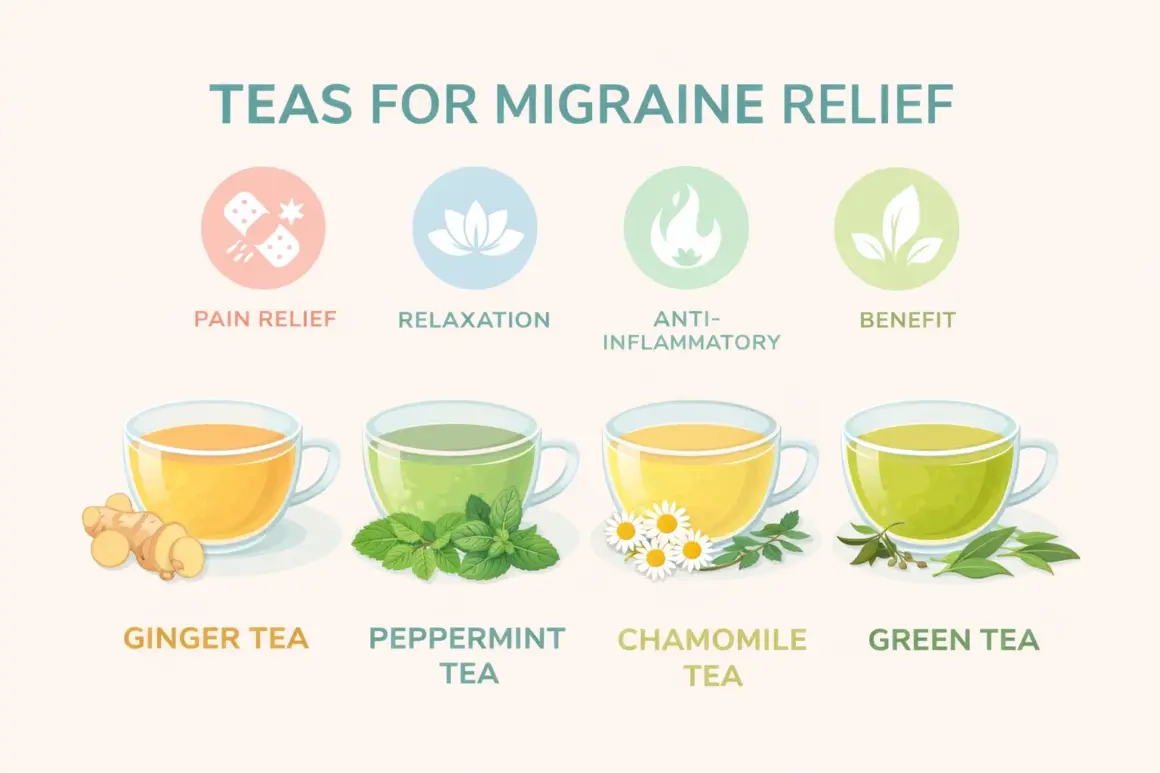
1. Ginger Tea
Ginger tea is a herbal tea made by boiling fresh ginger root in water. It is known for its anti-inflammatory properties and is often used to reduce nausea and migraine discomfort.
Ginger tea is one of the best natural remedies for migraines.
Benefits:
- Reduces nausea (common in migraines)
- Lowers inflammation
- Improves digestion
Some studies suggest ginger may work similarly to mild pain relievers.
How to use:
- Drink 1–2 cups during a migraine attack
2. Peppermint Tea
Peppermint tea is an herbal infusion made from peppermint leaves. It has a cooling effect and helps relax muscles, making it useful for relieving tension headaches.
Peppermint tea has a cooling and soothing effect.
Benefits:
- Relaxes muscles
- Improves blood flow
- Reduces tension headaches
It is especially helpful if your migraine is linked to stress.
3. Chamomile Tea
Chamomile tea is a calming herbal tea made from dried chamomile flowers. It promotes relaxation, improves sleep, and may help reduce stress-related migraines.
Chamomile is known for its calming properties.
Benefits:
- Helps with sleep
- Reduces stress
- Eases mild pain
Drinking chamomile tea before bed may help prevent migraines triggered by poor sleep.
4. Green Tea
Green tea is a lightly processed tea made from unoxidized tea leaves. It contains antioxidants and a small amount of caffeine, which may help reduce migraine pain when consumed in moderation.
Green tea contains a small amount of caffeine and powerful antioxidants.
Benefits:
- Reduces inflammation
- Provides mild caffeine relief
- Supports brain health
However, drink in moderation to avoid caffeine overload.
5. Feverfew Tea
Feverfew tea is made from the leaves of the feverfew plant, traditionally used as a natural remedy. It may help prevent migraines and reduce their frequency over time.
Feverfew is a traditional herbal remedy for migraines.
Benefits:
- May reduce frequency of migraines
- Helps control blood vessel changes
It’s often used as a preventive option rather than immediate relief.
Teas That May Trigger Migraines
While tea can help, some types may worsen migraines.
Watch out for:
- Strong black tea (too much caffeine)
- Sweetened iced teas (high sugar)
- Artificial flavored teas
Triggers vary from person to person. Keep a tea diary to track what works for you.
How to Use Tea for Migraine Relief
To get the best results, follow these simple tips:
1. Drink at the Right Time
- At the start of symptoms
- During stress or fatigue
2. Stay Hydrated
Dehydration is a common migraine trigger. Tea can help, but also drink plain water.
3. Avoid Overconsumption
- Limit caffeine intake
- Stick to 2–3 cups per day
4. Choose Natural Ingredients
Fresh or loose-leaf teas are better than heavily processed options.
Tea vs Medication: What to Expect
Tea is not a replacement for medical treatment, especially for severe migraines.
However:
- It can support your treatment plan
- It works well for mild to moderate symptoms
- It offers a natural, low-risk option
If migraines are frequent or severe, consult a healthcare professional.
Real-World Insight
Many people use tea as part of their daily routine to manage headaches.
A 2022 survey on natural remedies found:
- Around 35% of migraine sufferers use herbal teas
- Ginger and peppermint were among the top choices
This shows growing interest in natural solutions.
FAQs
1. Does tea help with migraines instantly?
Some teas like ginger or green tea may provide quick relief, but results vary from person to person.
2. Which tea is best for migraines?
Ginger tea is often considered the most effective, especially for pain and nausea.
3. Can caffeine in tea trigger migraines?
Yes, too much caffeine or withdrawal can trigger migraines. Moderate intake is key.
4. Is herbal tea better than regular tea for migraines?
In many cases, yes. Herbal teas are caffeine-free and focus on relaxation and anti-inflammatory benefits.
5. How many cups of tea should I drink for migraine relief?
2–3 cups per day is usually safe. Avoid excessive consumption.
Key Takeaways
- Tea can help reduce migraine symptoms naturally
- Ginger, peppermint, and chamomile are top choices
- Small amounts of caffeine may help, but too much can trigger migraines
- Herbal teas are safer for regular use
- Tea works best as part of a balanced migraine management plan
Conclusion
So, does tea help with migraines? Yes—when used correctly, tea can be a simple and effective way to manage migraine symptoms.
From soothing herbal blends to antioxidant-rich green tea, there are many options to explore. The key is to understand your body and choose the right type of tea for your needs.
Start with gentle options like ginger or chamomile, and observe how your body responds. Over time, tea can become a comforting and helpful part of your migraine relief routine.