
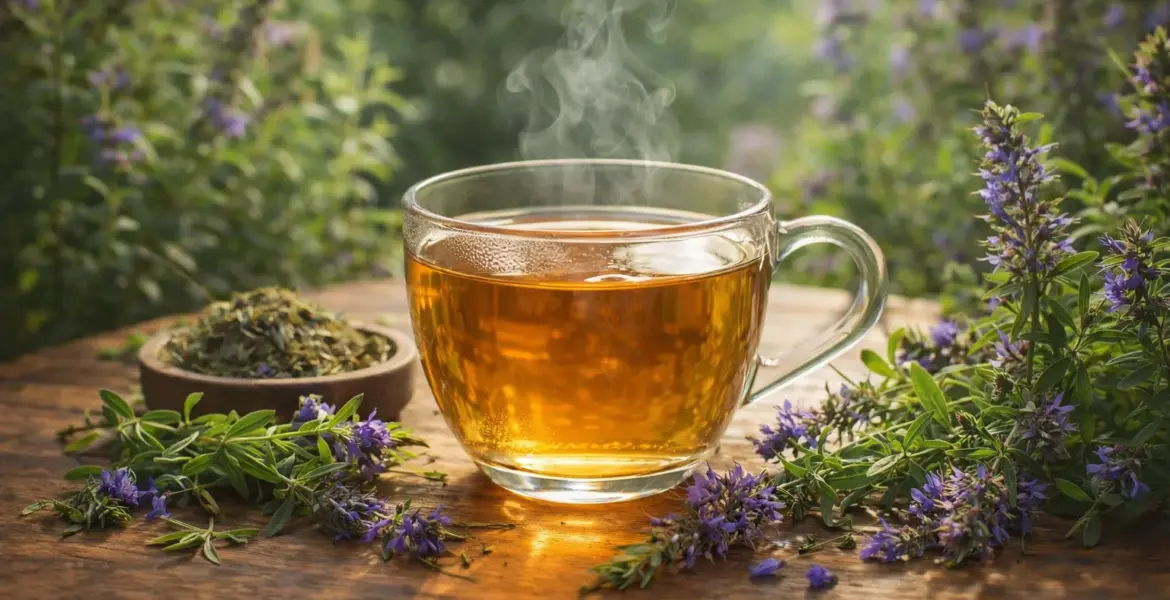
If you’ve ever explored herbal teas beyond the usual green or chamomile, you might have come across hyssop tea. But what exactly is it?
What Is Hyssop Tea? It is a herbal infusion made from the leaves and flowers of the hyssop plant. Known for its slightly minty and bitter taste, this tea has been used for centuries in traditional medicine and herbal remedies.
Hyssop tea is especially popular among those who enjoy natural, caffeine-free beverages with potential wellness benefits. Let’s explore everything you need to know about this unique herbal tea.
What Is Hyssop Tea Made From?
Hyssop tea comes from the hyssop plant (Hyssopus officinalis). This plant belongs to the mint family, which explains its refreshing aroma.
Key Features of the Hyssop Plant:
- Small shrub with narrow leaves
- Purple or blue flowers
- Strong herbal fragrance
- Native to Southern Europe and the Middle East
The leaves and flowers are dried and used to make tea.
What Does Hyssop Tea Taste Like?
The taste of hyssop tea is quite unique. It may not be for everyone at first, but many people grow to love it.
Flavor Profile:
- Slightly bitter
- Minty and earthy
- Mildly sweet aftertaste
If the bitterness feels strong, you can add honey or lemon to balance the flavor.
Health Benefits of Hyssop Tea
When asking What Is Hyssop Tea, many people are really curious about its health benefits. While it’s not a miracle cure, hyssop tea has been traditionally used for several purposes.
1. Supports Respiratory Health
Hyssop tea has been used to help with:
- Cough
- Cold
- Sore throat
It acts as a natural expectorant, helping clear mucus.
2. Aids Digestion
Drinking hyssop tea may help:
- Reduce bloating
- Improve digestion
- Ease stomach discomfort
This is why it’s often consumed after meals.
3. Rich in Antioxidants
Like many herbal teas, hyssop tea contains plant compounds that help fight oxidative stress.
4. May Help Relax the Body
Its mild calming effect can:
- Reduce stress
- Promote relaxation
- Support better sleep
However, it’s not as strong as chamomile tea in this aspect.
5. Traditional Detox Use
Historically, hyssop tea was used in cleansing rituals and detox practices, especially in ancient cultures.
How to Make Hyssop Tea at Home
Making hyssop tea is simple and requires only a few ingredients.
Ingredients:
- 1–2 teaspoons dried hyssop leaves
- 1 cup hot water
- Optional: honey or lemon
Step-by-Step Instructions:
- Boil water and let it cool slightly (around 90°C).
- Add dried hyssop leaves to a cup.
- Pour hot water over the leaves.
- Let it steep for 5–10 minutes.
- Strain and serve.
You can adjust steeping time depending on how strong you like your tea.
Best Time to Drink Hyssop Tea
Timing can make a difference in your tea experience.
Ideal Times:
- After meals → for digestion
- During cold or cough → for relief
- Evening → for relaxation
Since it’s caffeine-free, you can enjoy it anytime without worrying about sleep disruption.
Are There Any Side Effects?
While learning What Is Hyssop Tea, it’s also important to understand its safety.
Possible Side Effects:
- May cause allergic reactions in some people
- Not recommended during pregnancy
- High amounts may be unsafe
Who Should Avoid It:
- Pregnant women
- People with epilepsy
- Young children (unless advised by a doctor)
Always consume herbal teas in moderation.
Hyssop Tea vs Other Herbal Teas
How does hyssop tea compare to other popular herbal teas?
Hyssop Tea
- Bitter, minty taste
- Strong traditional medicinal use
Chamomile Tea
- Mild and floral
- Great for sleep
Peppermint Tea
- Refreshing and cooling
- Good for digestion
Ginger Tea
- Spicy and warming
- Helps with nausea
Hyssop tea stands out for its historical use in respiratory and digestive health.
Cultural and Historical Significance
Hyssop has a rich history that goes beyond tea.
Interesting Facts:
- Mentioned in ancient religious texts
- Used in purification rituals
- Popular in traditional European medicine
This long history adds to its appeal as a herbal tea.
Tips to Improve Your Hyssop Tea Experience
If you’re new to hyssop tea, these tips can help:
- Add honey to reduce bitterness
- Mix with other herbs like mint or chamomile
- Use fresh leaves for a stronger flavor
- Drink in moderation
Conclusion
So, What Is Hyssop Tea? It is a herbal tea made from the hyssop plant, known for its unique taste and traditional health uses.
While it may not be as popular as green or black tea, hyssop tea offers a natural, caffeine-free option with potential benefits for digestion, respiratory health, and relaxation.
If you enjoy exploring herbal teas, hyssop tea is definitely worth trying.
FAQs
1. What is hyssop tea used for?
Hyssop tea is commonly used for respiratory support, digestion, and relaxation.
2. Is hyssop tea safe to drink daily?
Yes, but in moderation. Avoid excessive intake.
3. Does hyssop tea contain caffeine?
No, hyssop tea is completely caffeine-free.
4. Can I drink hyssop tea for a cough?
Yes, it is traditionally used to help relieve cough and clear mucus.
5. What does hyssop tea taste like?
It has a slightly bitter, minty, and earthy flavor.