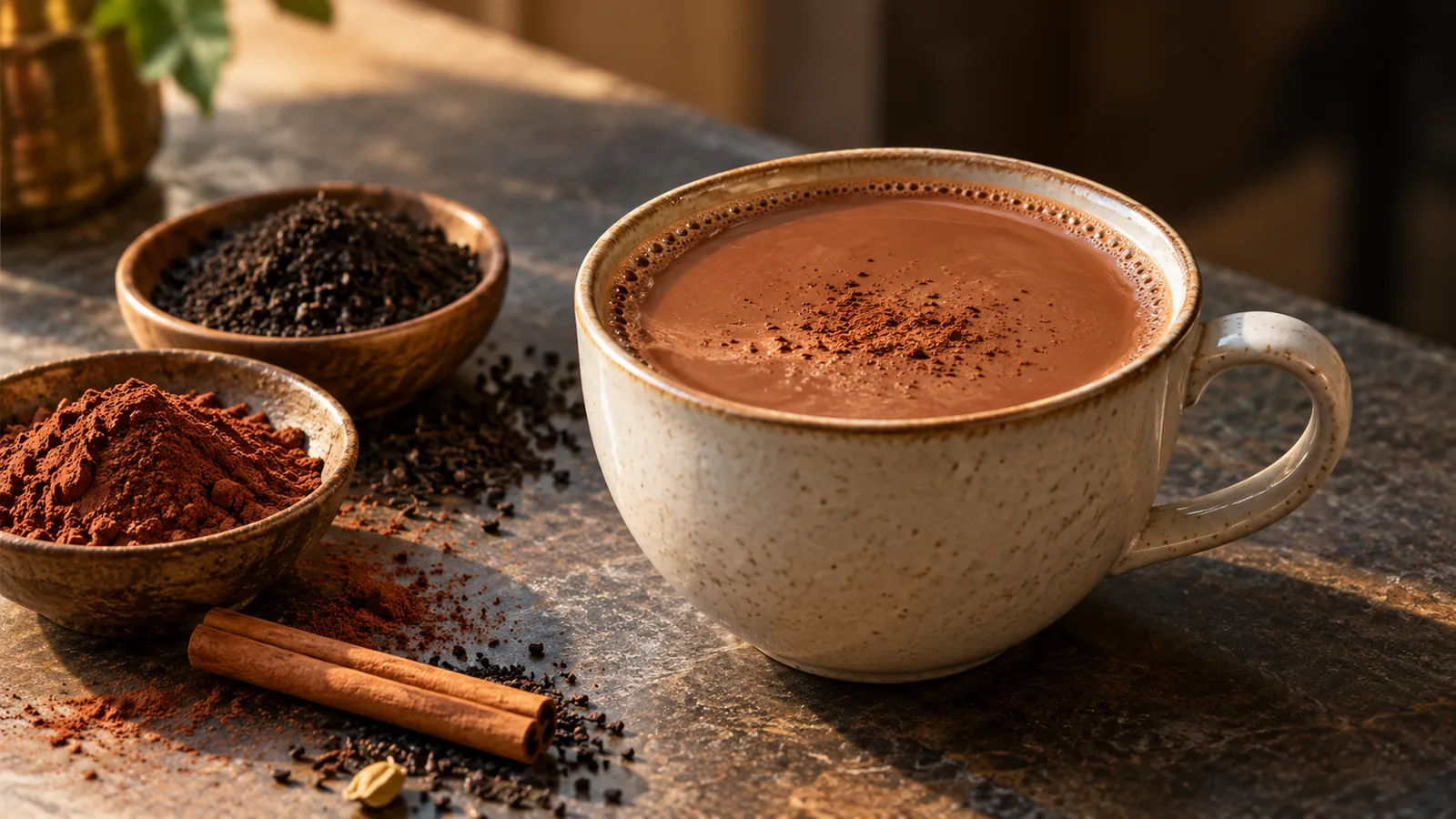
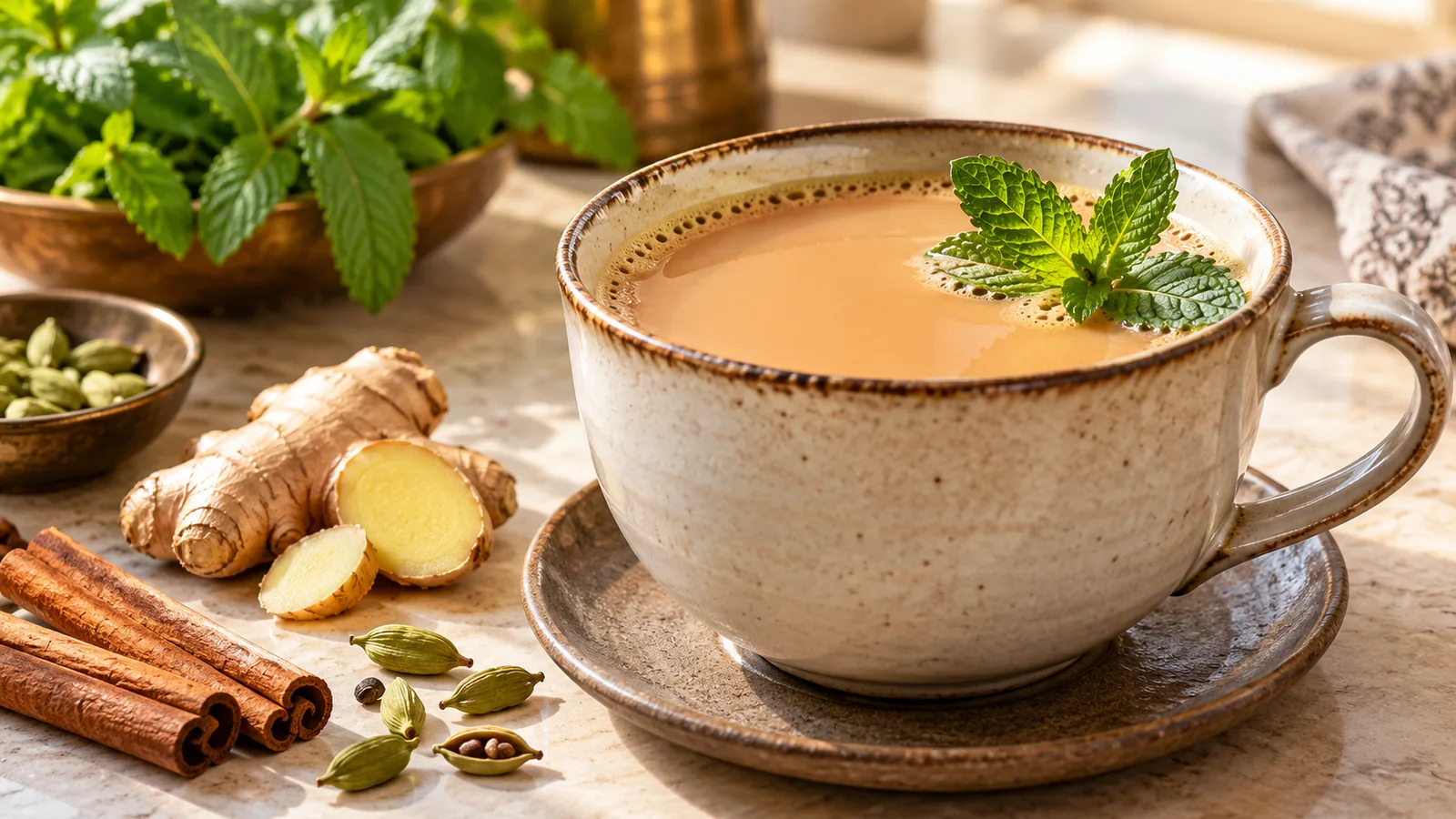
Tulsi masala chai brings the aromatic leaves of holy basil into a spiced black milk tea. Tulsi is a herb; the tea base here is still Camellia sinensis black tea. This recipe uses fresh, identified tulsi leaves with ginger and cardamom, then strains everything into two small cups. It is a practical editorial formula rather than a claim that all Indian households use one blend, and it awaits TeaTurbo's physical brew and taste test.
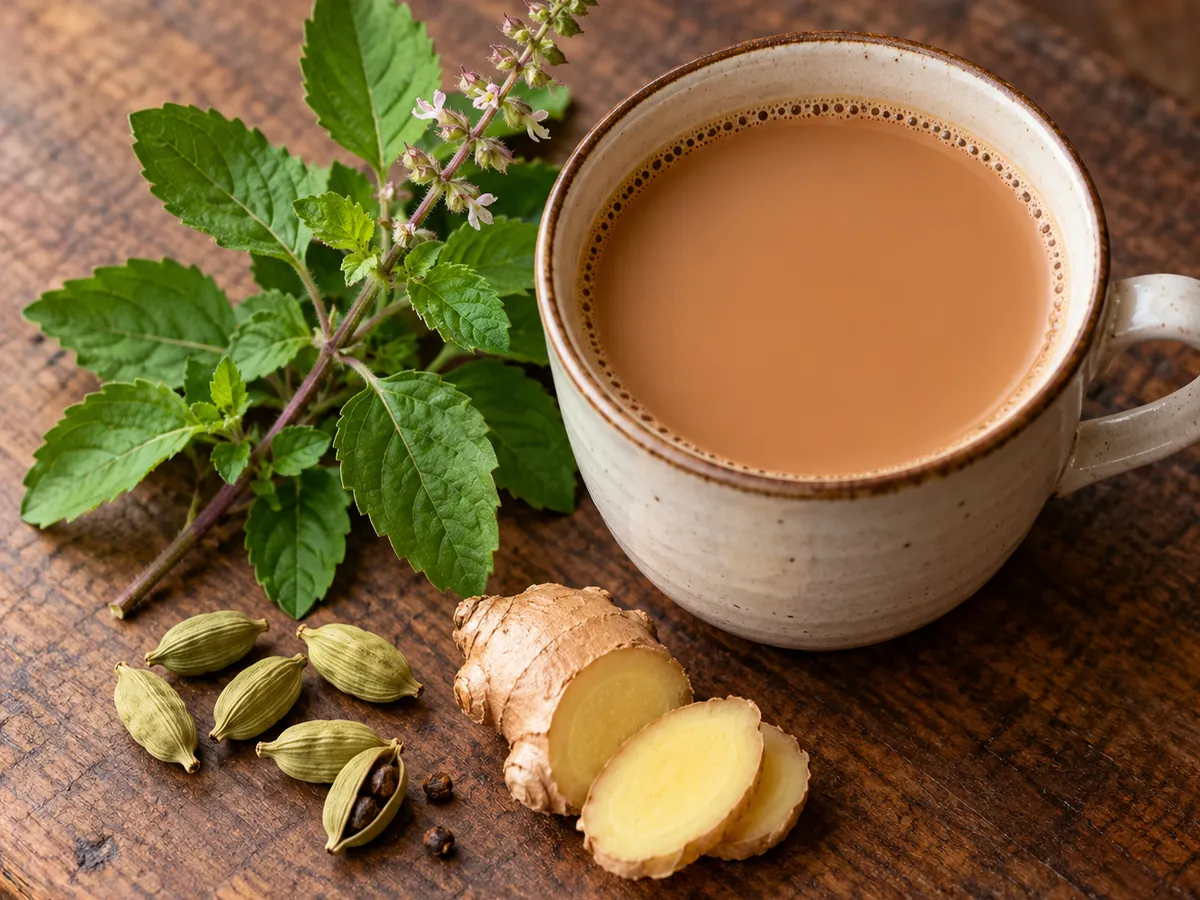
Images: AI-generated illustrations, not photographs of a tested batch.
Quick answer: tulsi masala chai at a glance
Simmer 8 g sliced ginger and 3 lightly crushed cardamom pods in 300 ml water for 3 minutes. Add 6 g Assam CTC black tea and 6–8 clean fresh tulsi leaves; simmer 2 minutes. Add 200 ml whole milk, bring to a rise, lower heat and simmer 2 minutes. Strain into two small cups; optional sugar can be stirred in to taste. Yield is about 350–420 ml. Water begins near 100°C / 212°F; milk should simmer gently. Leaves vary in size and aroma, so start conservatively.
Jump to the TeaTurbo recipe card
What is tulsi masala chai?
Tulsi, also called holy basil, is Ocimum tenuiflorum; the Biodiversity Information System of West Bengal identifies the plant as tulasi and holy basil. It should not be confused with ordinary culinary sweet basil. The Tea Board of India describes masala chai as Indian black tea with possible spices including ginger and cardamom. Combining tulsi with that tea is a household-style variation, not a formal fixed heritage recipe. Do not treat this beverage as a remedy or make immunity claims.
Ingredients and equipment
Use 300 ml water (about 1¼ US cups), 200 ml whole milk (about ¾ cup plus 1 tablespoon), 6 g Assam CTC black tea, 6–8 fresh food-grade tulsi leaves (about 1 g, depending on leaf size), 8 g sliced fresh ginger, 3 lightly crushed green cardamom pods and optional 8 g sugar (about 2 teaspoons). Use clean tulsi leaves positively identified as holy basil, not an unknown garden plant. You need a small deep saucepan, spoon, fine strainer and two cups. The recipe contains dairy and caffeine.
Step-by-step tulsi chai method
- Wash and inspect the tulsi leaves; discard wilted or damaged ones. Lightly crack the cardamom pods. Bring 300 ml water, ginger and cardamom to a boil, approximately 100°C / 212°F at sea level, then simmer for 3 minutes.
- Add 6 g black tea and the tulsi leaves. Simmer gently for 2 minutes, keeping the pan uncovered.
- Add 200 ml milk and optional sugar. Let the mixture rise once, lower heat immediately and simmer gently for 2 minutes. Watch for foaming and stir once.
- Turn off the heat and strain promptly into two cups. Let it cool to a comfortable drinking temperature. Expect about 350–420 ml total; discard the cooked leaves and spices after this single infusion.
Tulsi Masala Chai — Holy Basil and Spiced Milk Tea
Black milk tea with identified holy basil leaves, ginger and cardamom, measured for two small cups.
By Krishna Sahani
No ratings yet · Be the first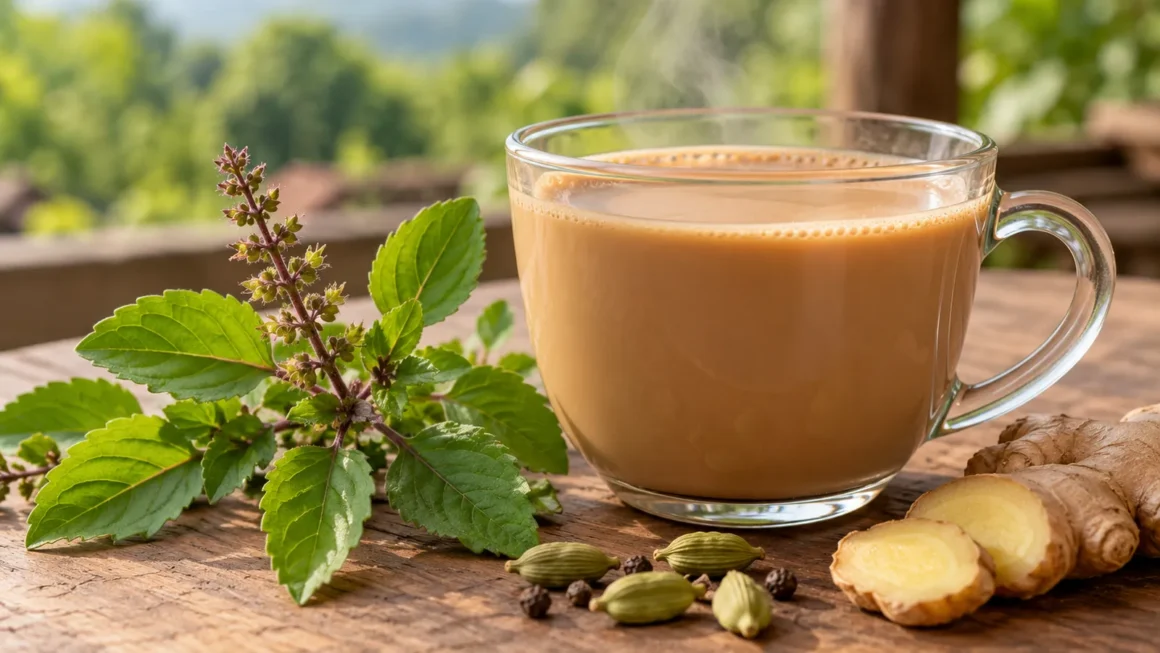
Equipment: Deep small saucepan
Fine mesh strainer
Spoon
Two heat-safe cups
Ingredients
Ingredients
Instructions
-
Prepare
Bring 300 ml water, 8 g ginger and 3 crushed cardamom pods to a boil, about 100°C / 212°F; simmer 3 minutes. -
Brew
Add 6 g black tea and 6–8 clean holy basil leaves; simmer 2 minutes. -
Finish
Add 200 ml milk and optional sugar. Let rise, lower heat and simmer gently 2 minutes. -
Serve
Strain into two cups. Yield about 350–420 ml.
Brewing notes
Notes
Use correctly identified fresh Ocimum tenuiflorum (tulsi) leaves. One cooked infusion: 6 g black tea per 300 ml water plus 200 ml milk.
Storage
Serve fresh. Refrigerate strained leftover milk tea promptly in a covered container and reheat gently.
Ratings
Rate this recipe
Why these settings?
The ginger and cardamom get a head start in water; tulsi joins the tea later to avoid cooking it for the entire time. The measured leaf count is a beginner starting point, not a dose validated by the cited agencies. Tulsi varieties and leaf size vary, and stronger masala can obscure its character. Make one change at a time after a kitchen test: fewer spices for clearer tulsi, less tea for a softer cup, or a little more tea for a milkier serving.
Troubleshooting
- Tulsi barely noticeable: Reduce ginger or cardamom before increasing herb quantity; verify the leaves are actually tulsi.
- Herbal flavour dominates: Begin with 4–5 leaves in the next batch.
- Bitter or drying: Shorten the black-tea stage by 30 seconds or use 1 g less tea.
- Milk foams over: Use a deep pan and turn down the heat as soon as the liquid rises.
Variations and serving
Without milk, the same herbs and black tea make a lighter infusion, but its balance needs separate testing. A tulsi-only herbal infusion without black tea is a different caffeine-free drink. A little cinnamon can be added as a modern blend choice; it is not required. Serve warm in small cups with the herbs strained out. Anyone avoiding particular herbs for personal medical reasons should discuss them with a qualified clinician.
Storage and reuse
Milk chai is best freshly served. Strain any remainder and refrigerate it promptly in a covered container; reheat gently. Keep fresh tulsi clean and refrigerated according to the grower or seller's directions, and do not reuse cooked herbs in a later batch.
FAQs
Is tulsi the same as sweet basil?
No. Use identified holy basil, Ocimum tenuiflorum, for this recipe.
Is this caffeine-free?
No. It contains black tea. A tulsi-only infusion would be a different drink.
Can I use dried tulsi?
Possibly, but dried leaves are more concentrated by volume. This exact card is for fresh leaves; a dried-leaf version needs its own measured test.
Must masala chai include cinnamon and cloves?
No. Spice combinations vary. This version keeps ginger and cardamom so the tulsi remains distinct.
References and further reading
- Biodiversity Information System of West Bengal: Ocimum tenuiflorum — identifies tulasi as holy basil, Ocimum tenuiflorum.
- Tea Board of India: Masala Tea — black tea and familiar masala-chai spices.
Related TeaTurbo articles
Editorial note: Research-based preparation; awaiting TeaTurbo hands-on verification. Author attribution in WordPress: Krishna Sahani. Images are AI illustrations.