
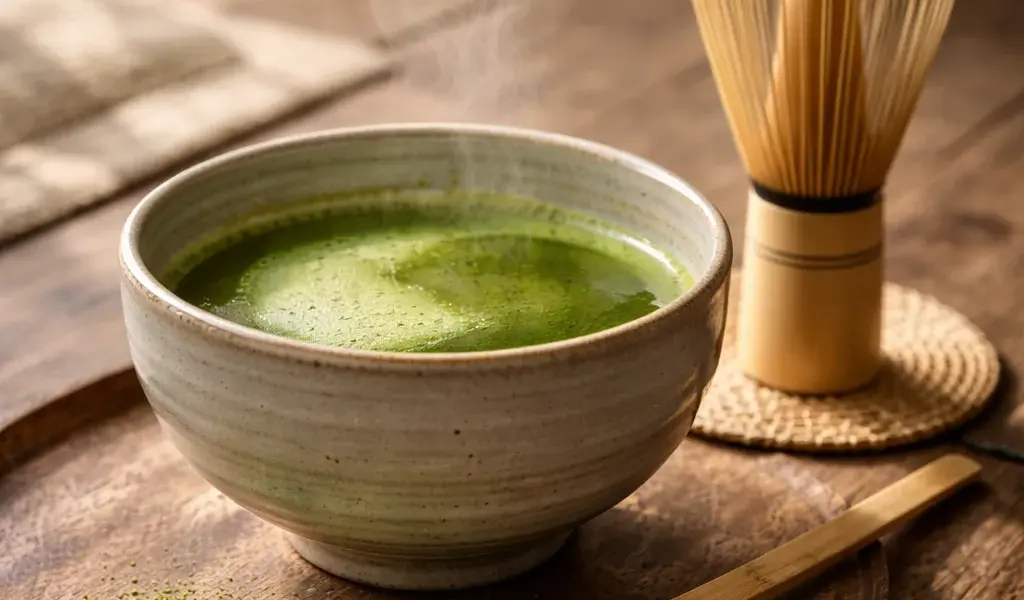
Imagine you are sitting in a quiet, peaceful garden in Japan. Someone hands you a warm bowl filled with a vibrant, emerald-green liquid topped with a soft layer of froth. This is matcha tea, a drink that has been cherished for over a thousand years for its deep flavor and calming energy.
If you are new to the world of specialty tea, you might be wondering: what does matcha taste like? Is it just like regular green tea, or is it something completely different? For most people, the first sip is a total surprise.
In this guide, we will break down the complex matcha taste, look at the science behind why it tastes so unique, and help you decide if this “super-drink” is right for you.
Understanding the Basics: What is Matcha Tea?
Before we dive into the flavor, it is important to know exactly what you are drinking. Matcha tea is not like your average tea bag from the grocery store. Instead of steeping whole leaves and then throwing them away, matcha is a finely ground powder made from the entire tea leaf.
When you drink matcha, you are actually consuming the whole leaf suspended in water. Because you are getting the full plant, the flavor is much more intense than a standard cup of tea. This unique green tea powder comes from the Camellia sinensis plant, but it is grown and processed using special methods that change everything about its taste.
What Does Matcha Taste Like? The Four Main Flavor Pillars
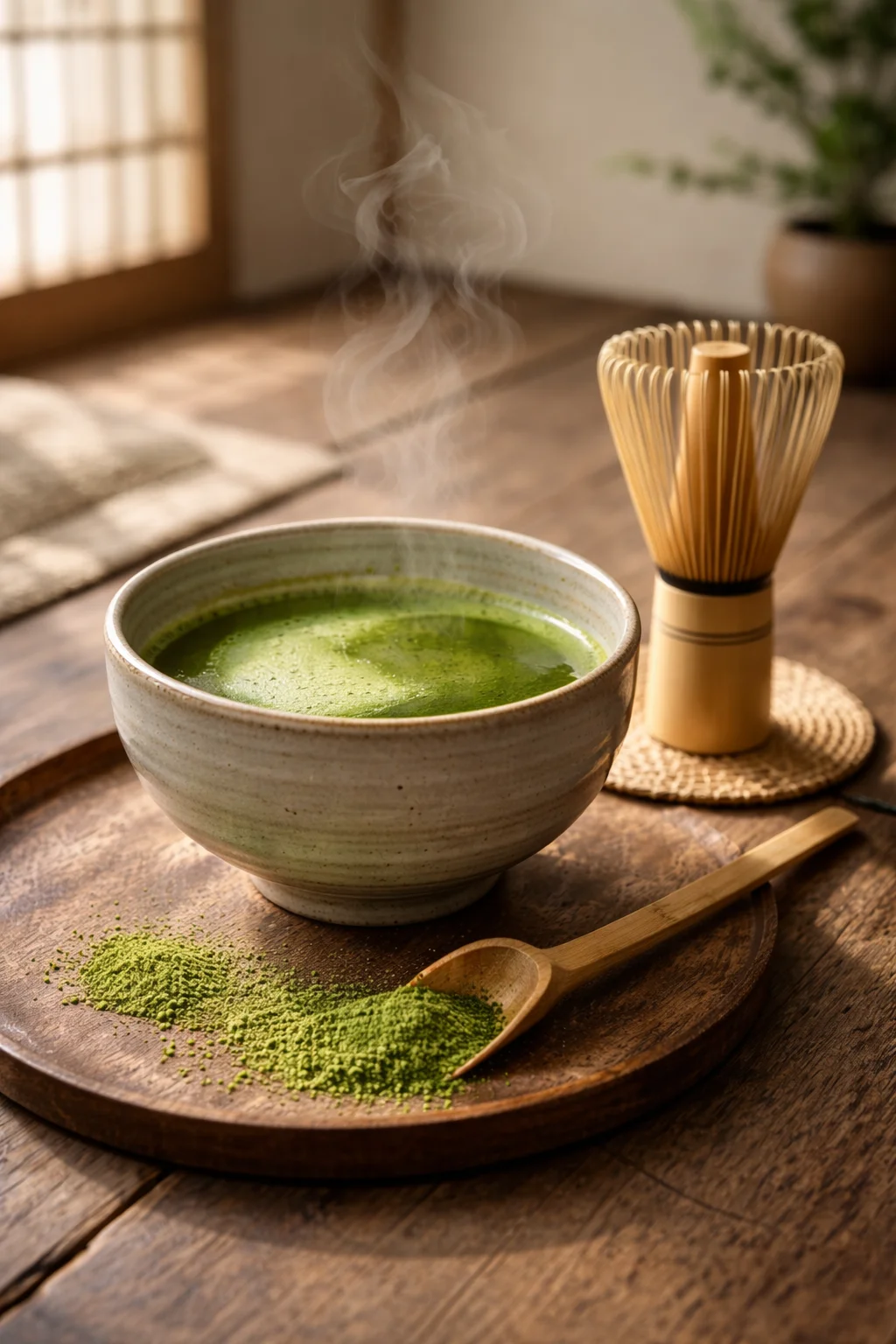
When people describe the matcha taste, they usually talk about four main things: umami, vegetal sweetness, creaminess, and a mild bitterness.
1. The Power of Umami
The most famous characteristic of high-quality matcha is its umami flavor. Umami is often called the “fifth taste” alongside sweet, sour, salty, and bitter. It is a savory, rich taste often found in things like mushrooms, seaweed, or broth. In matcha, this provides a deep, satisfying “meatiness” that sets it apart from any other beverage.
2. Vegetal and “Green” Notes
Because matcha is made from fresh green leaves, it has a very vegetal or “grassy” flavor. Some people say it reminds them of fresh spinach, snap peas, or even the smell of a meadow after rain. It also has a unique aroma called “ooikou,” which smells a bit like green laver or seaweed.
3. Creamy and Smooth Texture
If you whisk your matcha tea correctly, it should have a thick, creamy texture. Unlike thin, watery teas, matcha feels rich in the mouth. This is especially true for koicha (thick tea), which is used in the traditional Japanese tea ceremony and uses a high amount of powder to very little water.
4. Mild and Pleasant Bitterness
While low-quality matcha can be very bitter, high-grade matcha should only have a tiny hint of bitterness. This bitterness is balanced out by a natural, lingering sweetness that stays on your tongue after you finish your sip.
The Science Behind the Taste: Why Shading Matters
The secret to what does matcha taste like actually happens before the tea is even picked. About three weeks before harvest, farmers cover the tea bushes with bamboo mats or cloth to block out the sunlight.
This “shading” process forces the plant to change its chemistry in amazing ways:
- More Chlorophyll: The leaves turn a dark, vibrant green to catch whatever light they can, which gives the tea its beautiful color.
- Increased L-Theanine: Shading prevents the amino acid L-theanine from breaking down. L-theanine is responsible for the sweet, umami taste and the feeling of “calm focus” you get from drinking it.
- Fewer Tannins: Sunlight creates tannins, which make tea taste dry and bitter. By keeping the plants in the dark, the tea remains smooth and non-bitter.
| Feature | Regular Green Tea (Sencha) | Matcha Green Tea |
|---|---|---|
| Growing Method | Full sun | Shade-grown for 2-3 weeks |
| Form | Loose leaves | Fine powder |
| Main Flavor | Refreshing and sharp | Savory umami and rich |
| Caffeine Level | Moderate | Higher |
| Antioxidants | Good | Exceptionally High (EGCG) |
History of the Flavor: From China to Japan
The journey of matcha tea began in China during the Tang and Song dynasties, where people first started grinding tea leaves into powder and whisking them with hot water. However, it was a Zen Buddhist monk named Eisai who brought the seeds and methods to Japan in the 12th century.
Over time, Japanese tea masters perfected the shading and stone-grinding techniques that created the umami flavor we know today. What started as a medicinal drink for monks to stay awake during meditation eventually became the center of the Japanese tea ceremony, a spiritual practice built on harmony, respect, purity, and tranquility.
Ceremonial vs. Culinary Grade: Does Quality Change the Taste?
When you go to buy matcha, you will notice different labels. The grade you choose will completely change your experience of what does matcha taste like.
Ceremonial Grade
This is the highest quality available. It is meant to be whisked with just hot water and sipped on its own. It is made from the youngest, most tender leaves from the first harvest. It tastes sweet, creamy, and is a bright, “electric” green.
Culinary Grade
This grade is intended for baking or making matcha lattes. It is made from older leaves that have more of a sharp, bold bitterness. While it isn’t as nice to drink plain, its strong flavor stands up well against milk and sugar.
Health Benefits: Why Your Body Loves the Taste
One reason people enjoy the matcha taste is because they know it is packed with health benefits. Because you are drinking the entire leaf, you get a much higher concentration of nutrients than regular tea:
- Catechins (EGCG): These are powerful antioxidants that help protect your cells and may help prevent diseases like cancer.
- Focus and Energy: Matcha contains caffeine for energy, but the L-theanine helps prevent the “jitters” often caused by coffee.
- Fiber and Protein: Matcha tea is surprisingly rich in dietary fiber and plant protein.
- Vitamin C: High-quality matcha can contain more than double the amount of Vitamin C compared to other green teas.
How to Prepare Matcha for the Best Flavor
To get the most out of your matcha tea, you have to treat it with a little bit of care. If you use boiling water or don’t whisk it enough, it will taste bitter and clumpy.
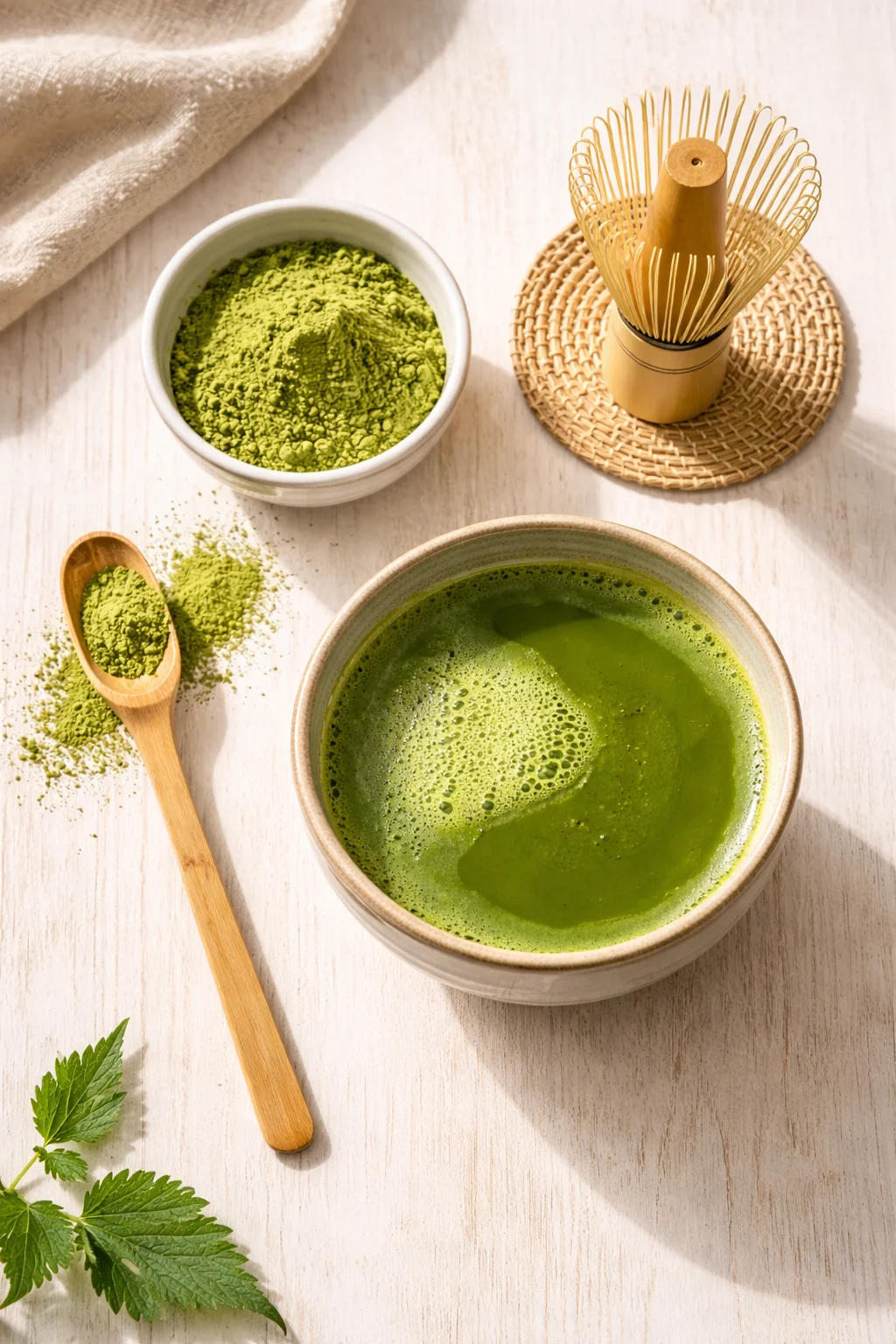
- Sift the Powder: Use a small strainer to remove any clumps so the tea is smooth.
- Use the Right Temperature: Never use boiling water! Aim for about 175°F (80°C). Water that is too hot will burn the delicate leaves and make them taste bitter.
- Whisk with a “Chasen”: Use a traditional bamboo whisk (chasen) to stir the powder and water in a zig-zag motion until a thick foam forms on top.
- Enjoy Immediately: Matcha is a suspension, not a solution, so the powder will eventually settle at the bottom if you let it sit too long.
Key Takeaways
- What does matcha taste like? It is a complex mix of umami, vegetal sweetness, and creamy texture with a mild bitter finish.
- Why is it green? The vibrant green color comes from a shading process that increases chlorophyll.
- Savory Secret: The savory “umami” flavor comes from a high concentration of the amino acid L-theanine.
- Quality Matters: Ceremonial grade is for drinking plain; culinary grade is for mixing with milk or food.
- The Experience: Whisking matcha creates a frothy, rich drink that is much thicker than standard tea.
Conclusion: Should You Try Matcha?
The matcha taste is truly one-of-a-kind. While it can take a few tries to get used to the “earthy” and “savory” notes, many people find it becomes their favorite part of the day. Whether you enjoy it as a simple hot tea in a traditional bowl or as a cold, creamy latte, you are participating in a tradition that spans centuries and cultures.
So, if you are looking for a drink that offers a unique flavor experience and a powerhouse of health benefits, grab a whisk and give matcha tea a try!
FAQs
1. Is matcha more bitter than regular green tea?
It depends on the quality! High-grade, ceremonial matcha is actually less bitter than regular green tea because the shading process reduces tannins. However, low-quality culinary matcha can be quite bitter.
2. Why does my matcha taste like grass or seaweed?
That is actually a sign of quality! The vegetal “grassy” notes and the seaweed-like aroma (ooikou) are natural characteristics of the Tencha leaves used to make matcha.
3. Does matcha taste good with milk?
Yes! In fact, matcha lattes are one of the most popular ways to drink it in the United States and Europe. The creaminess of milk pairs perfectly with the bold, savory flavor of the tea.
4. Why is my matcha clumpy and not frothy?
You likely need to sift your powder through a fine strainer first and use a bamboo whisk (chasen) to get that perfect layer of foam.
5. Can I drink matcha every day?
Most experts say yes! Because it is rich in antioxidants like EGCG and calming amino acids like L-theanine, regular consumption can support both physical and mental health. Just be mindful of the caffeine if you are sensitive to it