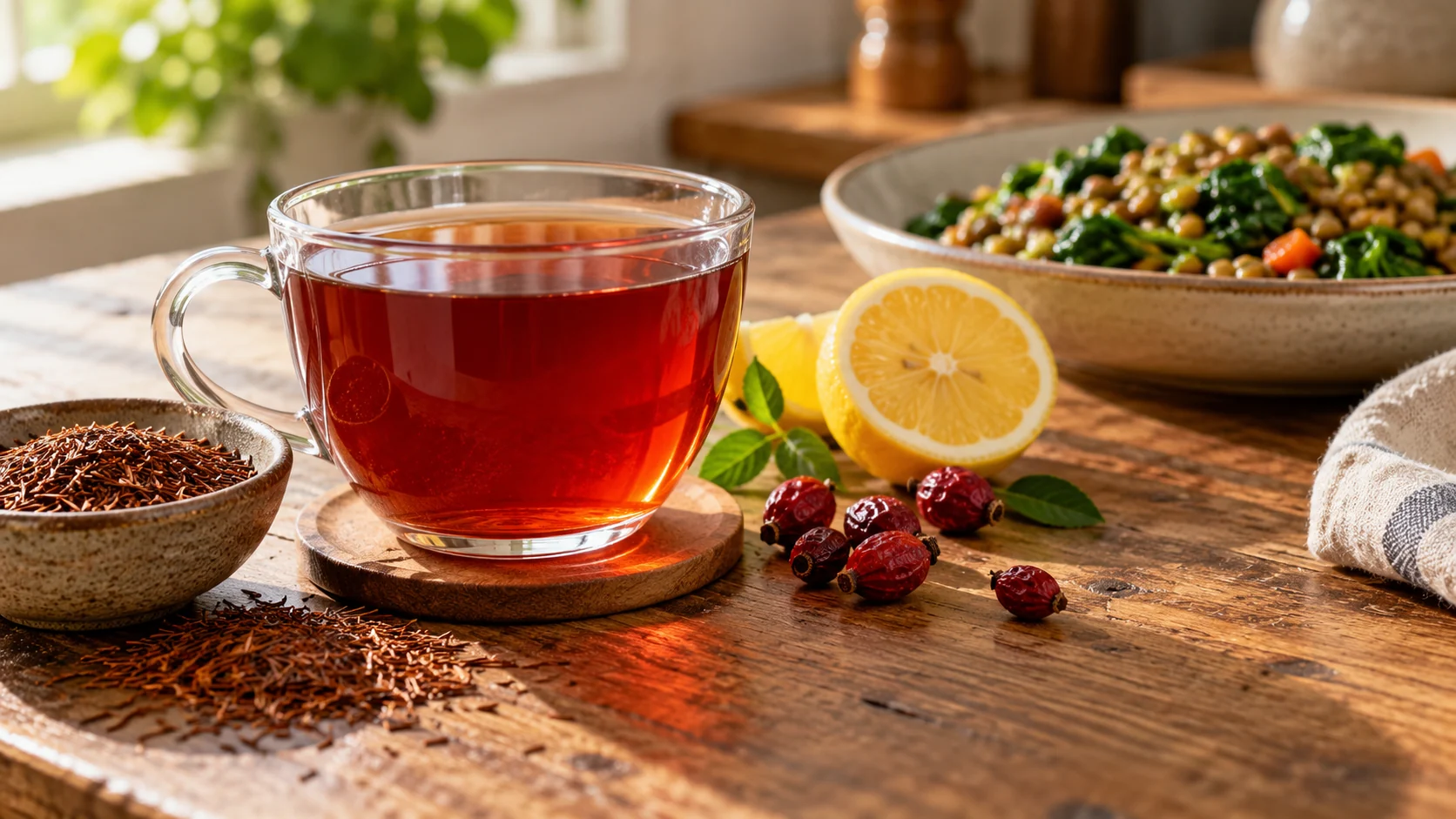
Quick answer: If you have iron deficiency and want a tea-like drink, rooibos is the most evidence-supported, low-interference option—but it is not a treatment and should still be kept separate from iron tablets and iron-rich meals. A small human study found that rooibos increased iron absorption much more than water did, but less than ordinary tea. The bigger rule is timing: drink herbal infusions between meals, and use water with an iron-rich meal or supplement.
No herbal tea has been shown to correct iron deficiency anaemia. Claims that nettle, dandelion, ginger or hibiscus “build blood” go beyond the available human evidence. Some herbal infusions contain polyphenols that can reduce non-haem iron absorption, even though they are caffeine-free.
Best herbal tea for iron deficiency: the practical ranking
| Rooibos | In a small older study, mean iron absorption was 7.25% with rooibos, 9.34% with water and 1.70% with ordinary tea. | Best-supported tea alternative, but have it between meals. |
| Fresh ginger and lemon infusion | There is no good evidence that ginger tea raises iron. Lemon supplies vitamin C, which can improve non-haem iron absorption, but the amount in a cup varies. | A pleasant caffeine-free option; do not use it instead of treatment. |
| Rosehip infusion | Rosehips contain vitamin C before processing, but the amount reaching a brewed cup varies with product, storage, heat and steeping. | Reasonable between meals; not a reliable iron or vitamin C dose. |
| Hibiscus | A 2023 laboratory study found only about 0.93 mg iron in 250 ml of its test beverage, while hibiscus polyphenols formed complexes with iron. | Refreshing, but not an iron treatment. Keep it away from meals if your iron is low. |
| Chamomile | A human meal study found chamomile reduced non-haem iron absorption by 47% compared with water. | Drink between meals, not with an iron-rich meal. |
| Peppermint | In the same study, peppermint reduced absorption by 84%. | Avoid around meals and iron supplements. |
| Black, green and oolong tea | Tea polyphenols can substantially reduce non-haem iron absorption when consumed with food. | Separate from meals; these are not the best choices when iron absorption is the priority. |
Important: Percentages from individual absorption studies describe specific test drinks and meals. They are not a promise of what will happen with every brand, brew or person.
Why rooibos is the most sensible choice
Rooibos comes from Aspalathus linearis, not the tea plant Camellia sinensis. It is naturally caffeine-free. More importantly for this question, the limited direct human evidence is reassuring.
In a study of 30 healthy young men, participants took an iron dose with rooibos, ordinary tea or water. Mean iron absorption was 7.25% with rooibos, 1.70% with ordinary tea and 9.34% with water. Rooibos did not produce the marked reduction seen with ordinary tea. This is useful, but the study was small, old and conducted in healthy men—not people being treated for iron deficiency.
That makes rooibos a lower-interference substitute, not an iron-rich remedy. If you enjoy a warm drink, choose plain rooibos between meals and avoid blends containing black or green tea.
Why “iron-rich herbal tea” is often misleading
A dry leaf can contain minerals without delivering a meaningful, absorbable amount to the cup. Three things get overlooked:
- Extraction: Only part of a plant’s iron moves into hot water.
- Bioavailability: Plant iron is non-haem iron, and absorption is affected by the rest of the drink and meal.
- Polyphenols: Many herbs contain compounds that bind iron in the digestive tract.
Hibiscus shows the problem clearly. In one analysis, dried calyces contained iron, yet only about 30% was extracted into the beverage. The resulting cup supplied less than 1 mg in the tested formulation, and polyphenols could make some of that iron less available. A mineral listed for a raw plant therefore does not prove that its infusion will raise ferritin or haemoglobin.
What about nettle and dandelion tea?
Nettle tea
Nettle is regularly promoted online as the best herbal tea for anaemia because the plant contains iron and vitamin C. However, a nutrient analysis of nettle leaf is not the same as a clinical trial of nettle tea. We did not find strong human evidence showing that brewed nettle tea corrects iron deficiency or meaningfully raises ferritin. Product strength and mineral extraction also vary.
Nettle may interact with medicines or be unsuitable for some people, including during pregnancy. Do not use it as a substitute for a diagnosed treatment plan.
Dandelion tea
Dandelion is sometimes said to improve “nutrient absorption” or support the liver in a way that raises iron. These claims do not establish that dandelion tea treats iron deficiency. It is not a dependable source of absorbed iron, and it can interact with medicines or trigger reactions in people sensitive to related plants.
The evidence-based answer is less exciting but more useful: choose a drink that interferes as little as possible, and get iron from food or clinician-recommended supplements.
Can vitamin C in herbal tea help?
Vitamin C can improve absorption of non-haem iron from plant foods. That is why iron-rich meals are often paired with bell pepper, citrus fruit, tomatoes, kiwi or strawberries. But a squeeze of lemon does not automatically cancel a high-polyphenol drink, and the vitamin C content of a dried or heat-processed herbal product may be unpredictable.
For a dependable strategy, eat a vitamin-C-rich food with the meal and have your infusion later. TeaTurbo’s lemon ginger tea recipe is a caffeine-free option, but it should be viewed as a drink—not an anaemia remedy.
Best time to drink herbal tea when iron is low
Timing may matter more than the name on the tea box. In a controlled trial, drinking tea at the same time as an iron-containing meal reduced absorption. Waiting one hour cut that inhibitory effect roughly in half. UK NHS guidance commonly advises keeping tea and coffee away from meals, while its ferrous sulfate guidance recommends a two-hour gap around the supplement.
- With iron-rich meals: Choose water. Add a vitamin-C-rich food.
- After a meal: Wait at least one hour before tea; if you have diagnosed deficiency, a longer gap may be sensible if your clinician recommends it.
- With an iron supplement: Follow the label and your clinician or pharmacist. NHS guidance for ferrous sulfate says to leave a two-hour gap before tea or coffee.
- Between meals: Plain rooibos is the most evidence-supported tea-like alternative.
For a deeper explanation, read does tea block iron absorption?
A simple low-interference tea routine
Here is a practical example, not a medical prescription:
- Breakfast: Iron-containing food plus fruit or vegetables rich in vitamin C; drink water.
- Mid-morning: Plain rooibos, at least an hour after breakfast.
- Lunch: Lentils, beans, meat or another iron source; add peppers, tomatoes or citrus; drink water.
- Afternoon: Rooibos, or a ginger-and-lemon infusion, between meals.
- Iron tablet: Take it exactly as directed and keep tea, coffee and calcium-containing drinks outside the advised window.
If your clinician gives you different timing instructions, follow those. The cause of deficiency, the type of iron medicine and side effects can change the best schedule.
When tea advice is not enough
Iron deficiency can result from heavy periods, pregnancy, gastrointestinal blood loss, low intake, or problems absorbing iron. Symptoms can include tiredness, shortness of breath, heart palpitations, headaches, pale skin and cravings for non-food items such as ice. These symptoms are not specific, so a blood test is needed for diagnosis.
See a healthcare professional if you suspect iron deficiency, have persistent symptoms, are pregnant, have heavy bleeding, notice blood in your stool, or have already been told that ferritin or haemoglobin is low. Tea cannot identify or correct the underlying cause. Do not start high-dose iron without appropriate advice; too much iron can be harmful.
Frequently asked questions
What is the best herbal tea for iron deficiency?
Rooibos is the best-supported lower-interference tea alternative, based on limited human evidence. No herbal tea has been proven to treat iron deficiency, and water remains the safest choice with iron-rich food or supplements.
Can herbal tea increase iron levels?
There is no strong evidence that a typical herbal tea raises ferritin or treats iron deficiency anaemia. Some herbs contain iron in the raw plant, but only part may enter the cup, and polyphenols can reduce absorption.
Is nettle tea good for anaemia?
Nettle tea is often marketed for anaemia, but convincing human trials showing that it corrects anaemia are lacking. Treat it as an optional beverage, not as iron therapy.
Is rooibos tea high in iron?
No. Rooibos is useful here because it may interfere less with iron absorption than ordinary tea, not because it supplies a clinically meaningful iron dose.
How long after taking iron can I drink herbal tea?
Follow your product label and clinician’s advice. NHS guidance for ferrous sulfate recommends leaving a two-hour gap before tea or coffee. Because herbal infusions vary and some inhibit absorption, keeping them outside that window is a cautious approach.
Does peppermint tea block iron absorption?
It can. In a controlled human meal study, peppermint tea reduced non-haem iron absorption by 84% compared with water under the study conditions. Drink it between meals if your iron is low.
Bottom line
The best herbal tea for iron deficiency is not an iron cure. Plain rooibos is the most defensible tea-like choice because limited human evidence suggests it interferes less than ordinary tea. Drink it between meals. Use water with iron-rich food or supplements, include vitamin-C-rich foods, and get the cause of low iron properly assessed.
Medical disclaimer: This article is for general information and does not diagnose or treat iron deficiency. Follow advice from your doctor, dietitian or pharmacist, especially if you are pregnant, take medicines, have ongoing bleeding, or use an iron supplement.
Sources
- The effect of rooibos tea on iron absorption — PubMed.
- Inhibition of non-haem iron absorption in man by polyphenolic-containing beverages — British Journal of Nutrition/PubMed.
- A one-hour interval between an iron-containing meal and tea attenuates inhibition — American Journal of Clinical Nutrition/PubMed.
- Evaluating hibiscus beverage as an iron source — Journal of Agriculture and Food Research.
- Iron deficiency anaemia — NHS.
- About ferrous sulfate — NHS.
