Kulhad chai is defined as much by its serving cup as by the tea inside it. A kulhad is a small earthenware cup used for hot drinks in India; there is no single fixed spice blend called kulhad chai. This recipe gives you a straightforward two-cup black milk tea and explains how to serve it in food-safe clayware without inventing a special brewing ritual. The measurements are an editorial starting point awaiting TeaTurbo's hands-on test.
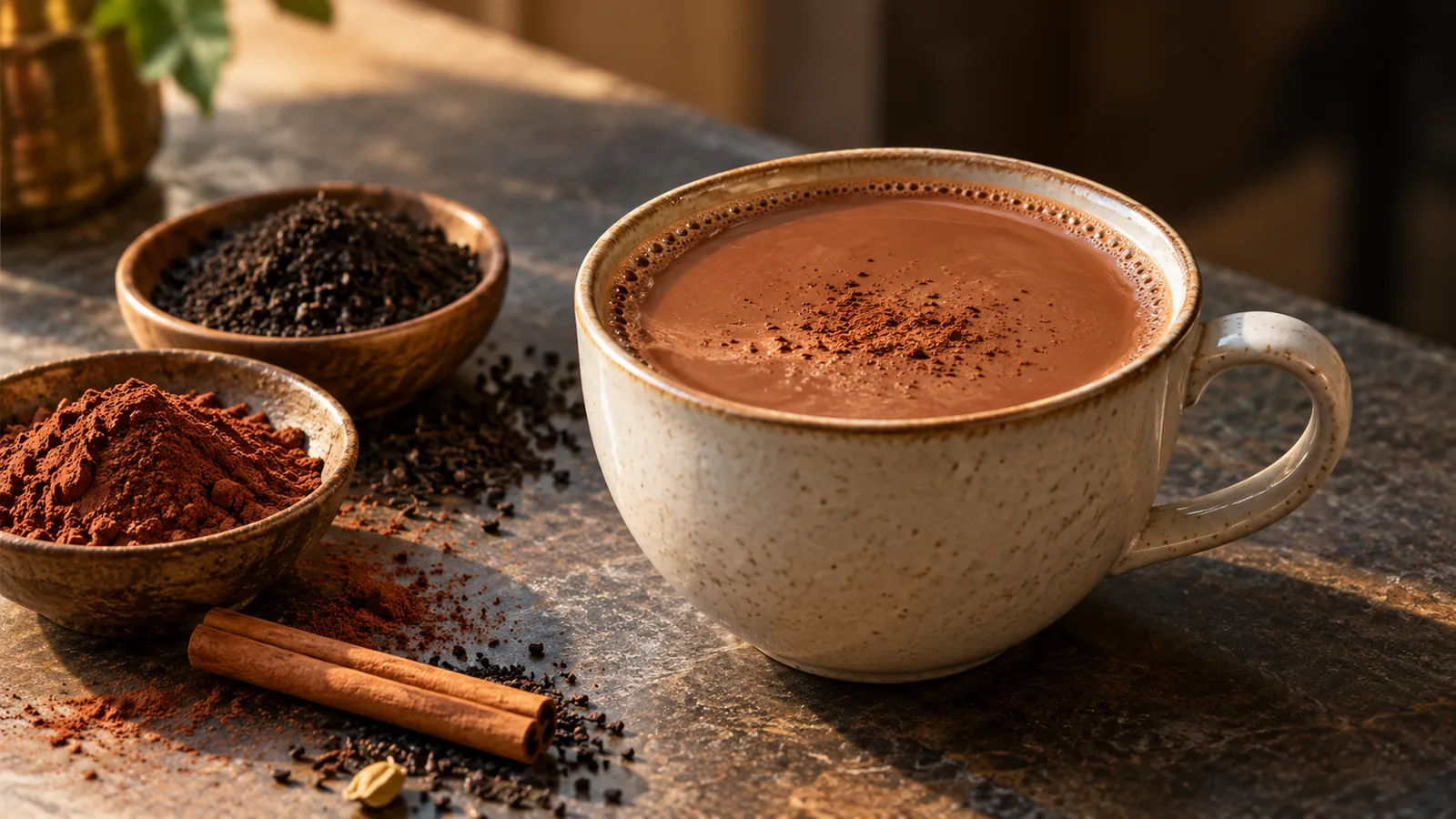
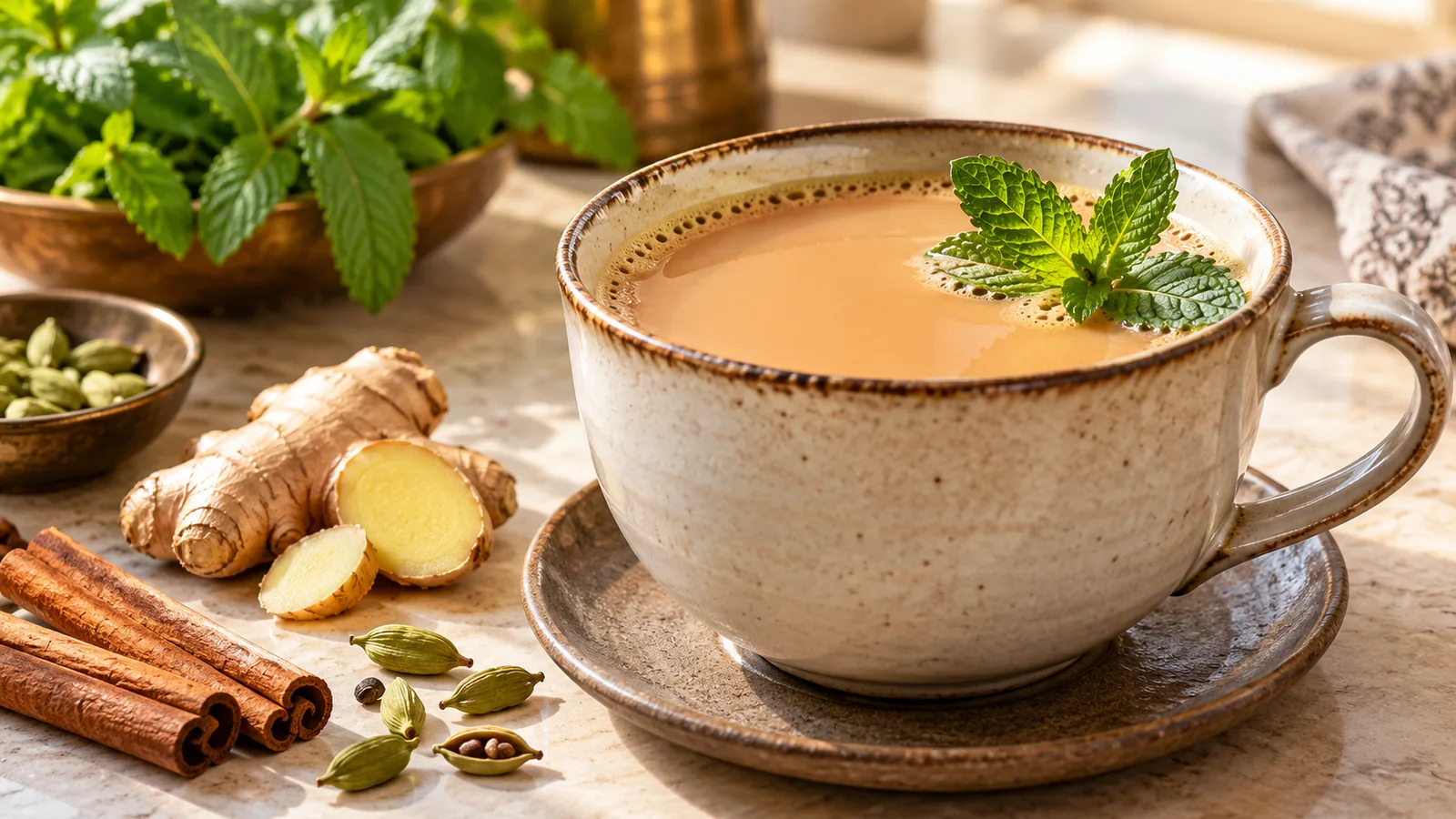
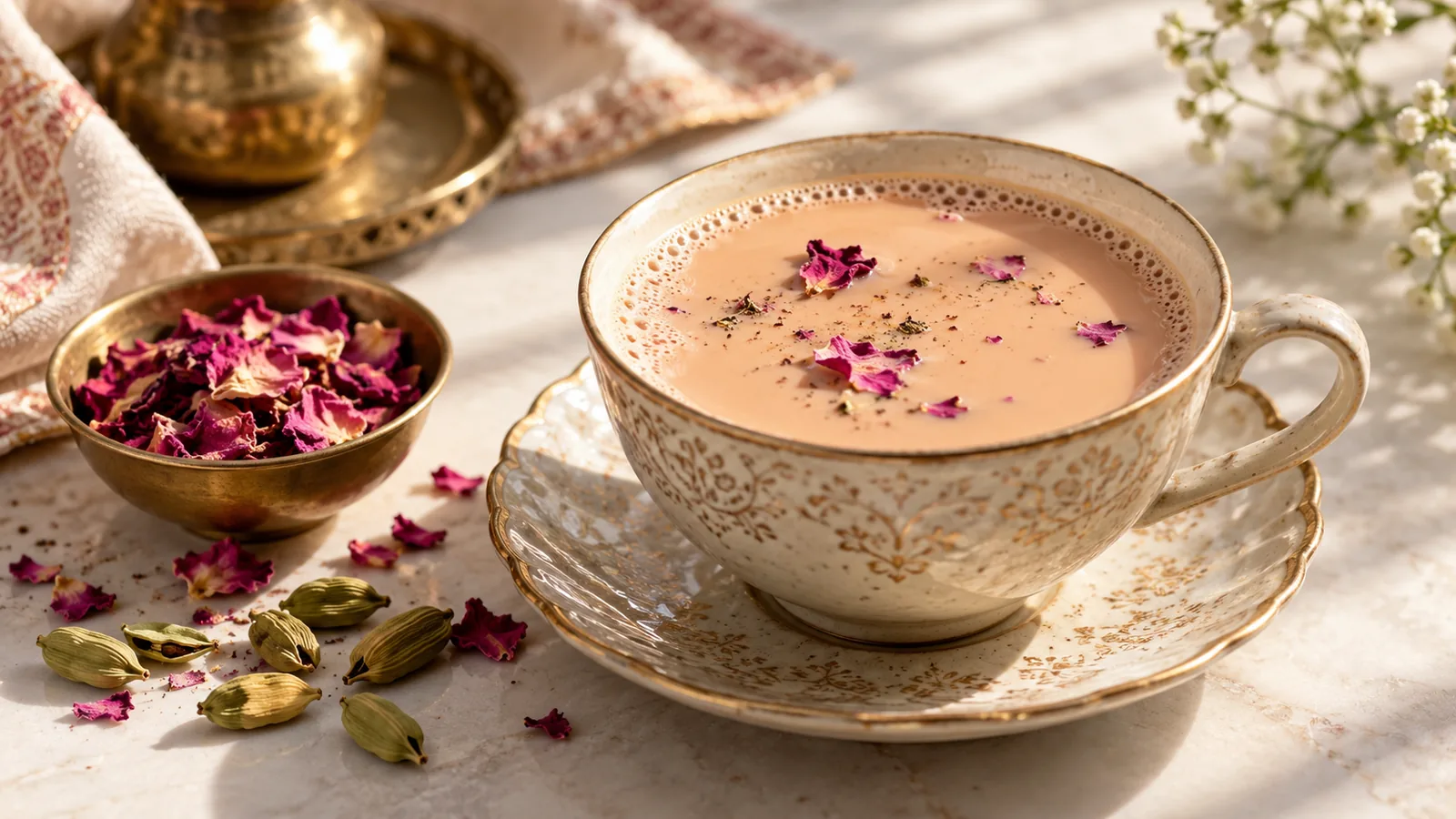
Images: AI-generated illustrations of the proposed drink and setup, not photographs of a tested batch.
Quick answer: kulhad chai at a glance
For two small servings, simmer 6 g Assam CTC black tea in 300 ml freshly boiled water for 2 minutes. Add 200 ml whole milk and, if wanted, 8–12 g sugar. Bring the mixture just to a rise, lower the heat and simmer 2 minutes. Strain into two clean, heat-safe, food-contact-rated kulhads. This produces approximately 350–420 ml, depending on evaporation. A kulhad changes the serving experience; it does not call for a prescribed tea-to-water ratio.
Jump to the TeaTurbo recipe card
What is kulhad chai?
Kulhad refers to the clay cup. India's Press Information Bureau documented a railway-station initiative to serve chai in kulhads, linking the cups to potters and everyday tea service. The article does not supply a standardized milk-tea formula. This version therefore describes a practical home chai served in that vessel, without claiming every region or vendor makes the same drink.
Ingredients and equipment
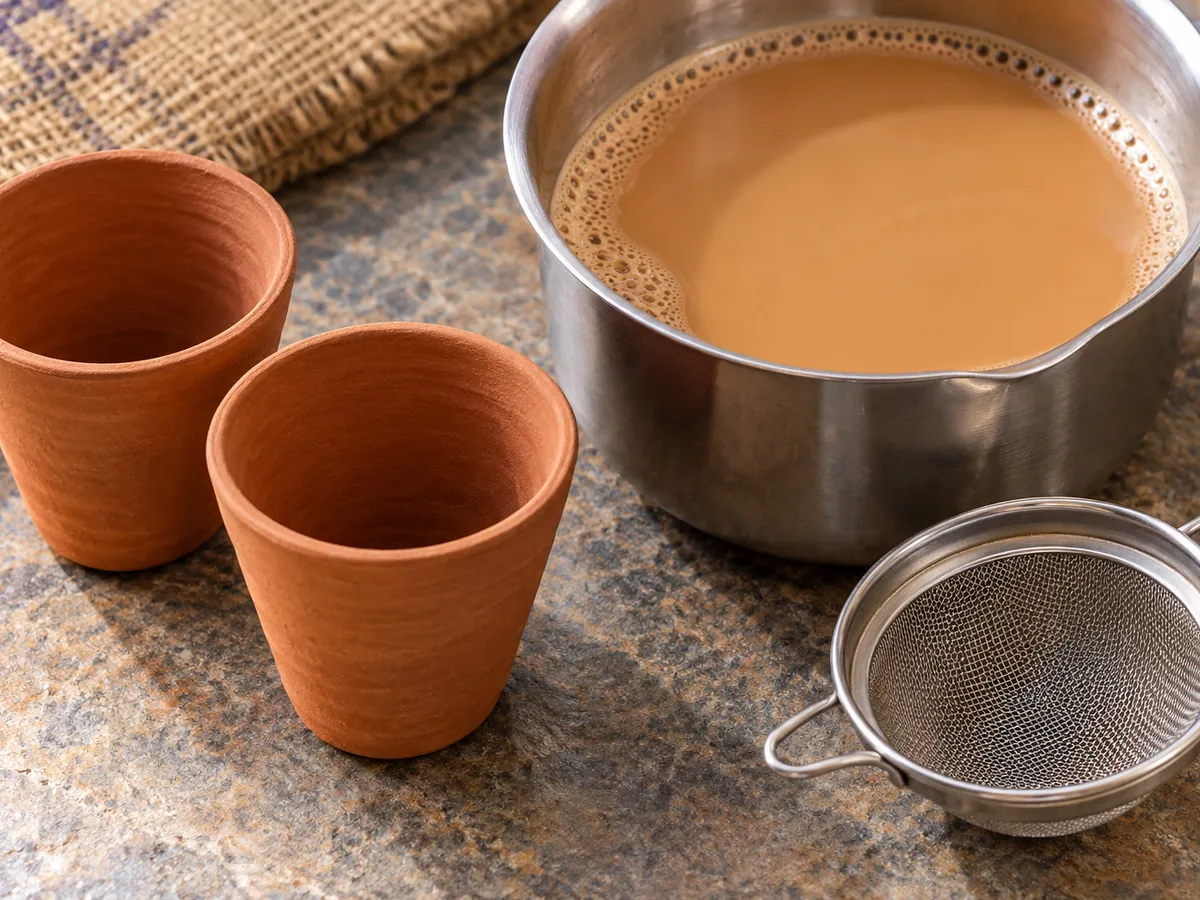
Use 300 ml water (about 1¼ US cups), 200 ml whole milk (about ¾ cup plus 1 tablespoon), 6 g Assam CTC black tea and optional 8–12 g sugar (about 2–3 teaspoons). Choose two small kulhads specifically sold for hot-food contact; a heat-safe ceramic cup is a sensible substitute. You also need a deep small saucepan, spoon and fine strainer. Weigh the tea because CTC granules and whole leaves do not pack into spoons equally. This recipe contains dairy and caffeine.
Step-by-step kulhad chai method
- Inspect and wash the cups according to their maker's instructions. Do not use a decorative or unknown glazed cup for food. Set the cups on a stable, heat-safe surface.
- Bring 300 ml water to a boil (about 100°C / 212°F at sea level). Add 6 g tea and simmer gently for 2 minutes.
- Pour in 200 ml milk and add sugar if wanted. Watch closely as the liquid rises. Lower the heat and simmer for 2 minutes, stirring once; do not let it boil over.
- Turn off the heat and immediately strain into the two cups. Allow the chai and the clay rim to cool to a safe drinking temperature. This is one cooked infusion; discard the spent leaves.
Kulhad Chai — Milk Tea in a Clay Cup
Measured black milk tea served in two small food-safe clay cups.
By Krishna Sahani
No ratings yet · Be the first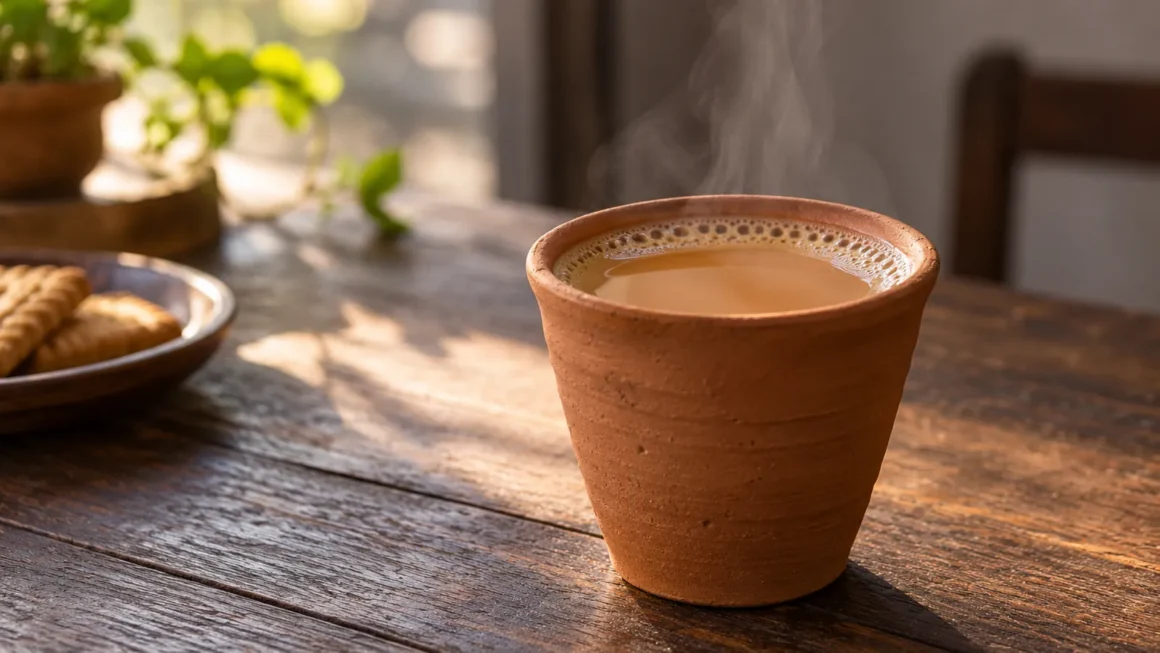
Equipment: Deep small saucepan
Fine mesh strainer
Spoon
Two food-contact-rated kulhads
Ingredients
Tea and milk
Optional sweetener
Instructions
-
Brew black tea
Bring 300 ml water to a boil, about 100°C / 212°F. Add 6 g black tea and simmer for 2 minutes. -
Add milk
Add 200 ml milk and optional sugar. Let the tea rise, lower the heat and simmer gently for 2 minutes, watching for boil-over. -
Strain into kulhads
Strain into two clean food-contact-rated kulhads. Yield about 350–420 ml; let cool to a safe sipping temperature.
Brewing notes
Notes
Start with 6 g tea per 300 ml water, then add 200 ml milk. Water boil about 100°C / 212°F; 2-minute tea simmer and 2-minute milk simmer. One cooked infusion. Serve in food-safe kulhads; do not heat an ordinary kulhad over flame.
Storage
Serve fresh; refrigerate any strained remainder promptly in a covered food-safe vessel and reheat gently.
Ratings
Rate this recipe
Why these settings?
The water stage makes a strong black-tea base before dilution with milk. The short milk stage warms and combines it without a prolonged boil. These specific numbers are TeaTurbo's untested beginner formula, not values issued by the PIB. Expect variation from tea cut, pan size and personal preference. For less strength, reduce tea by 1 g; for more milkiness, increase milk and reduce water by the same volume.
Troubleshooting
- Bitter or drying: Shorten the tea-only simmer by 30 seconds or use 1 g less tea next time.
- Weak after adding milk: Increase tea by 1 g before lengthening the total cook.
- Grainy or earthy residue: Check that the cup is made for hot beverages and cleaned as directed; use another food-safe vessel if its surface sheds material.
- Milk foams over: Use a deeper pan and lower heat the moment the liquid rises.
Variations and serving
Plain milk tea keeps the vessel in focus. Ginger or cardamom may be added as a household preference, making a spiced variation rather than a required kulhad ingredient. Do not heat an ordinary kulhad over a burner to create a smoky effect; that is a different method with different equipment risks. See the separate tandoori chai draft for the distinction.
Cup safety and storage
The US Food and Drug Administration notes that some improperly made glazed pottery can release lead into food or drink. Ask the seller for food-contact and hot-drink suitability; avoid decorative ware. Serve the milk tea fresh. If keeping a remainder, strain and refrigerate it promptly in a covered food-safe container, then reheat gently once.
FAQs
Must kulhad chai contain spices?
No. The name describes service in a clay cup, and the tea can be plain or spiced.
Can I reuse a kulhad?
Follow the manufacturer's food-use and cleaning directions. Do not assume a disposable cup is designed for repeated washing or microwave use.
Does the clay cup make the tea smoky?
An ordinary serving kulhad is not a tandoori finish. It may contribute an earthen sensory impression, but a strong smoky character requires a separate, carefully controlled heated-cup technique.
Can I use a tea bag?
Yes, if the total black tea in the bags is close to 6 g; check the pack rather than treating one bag as a fixed weight.
References and further reading
- Press Information Bureau: “Kulhad” Travels to 25 New Destinations in Rajasthan — use of kulhads for railway tea service, not recipe ratios.
- US FDA: Questions and Answers on Lead-Glazed Traditional Pottery — food-contact pottery safety.
Related TeaTurbo articles
Editorial note: Research-based preparation; awaiting TeaTurbo hands-on verification. Author attribution in WordPress: Krishna Sahani. Images are AI illustrations, not evidence of testing.