Masala chai is an Indian spiced milk tea, but there is no single spice mix or milk ratio that every household uses. This masala chai recipe gives you a measured, two-cup starting point with black tea, ginger, cardamom, cinnamon and cloves. You will simmer the spices in water first, add the tea, then briefly cook everything with milk. The amounts are research-based and ready for your own adjustment; TeaTurbo has not yet kitchen-tested this version.
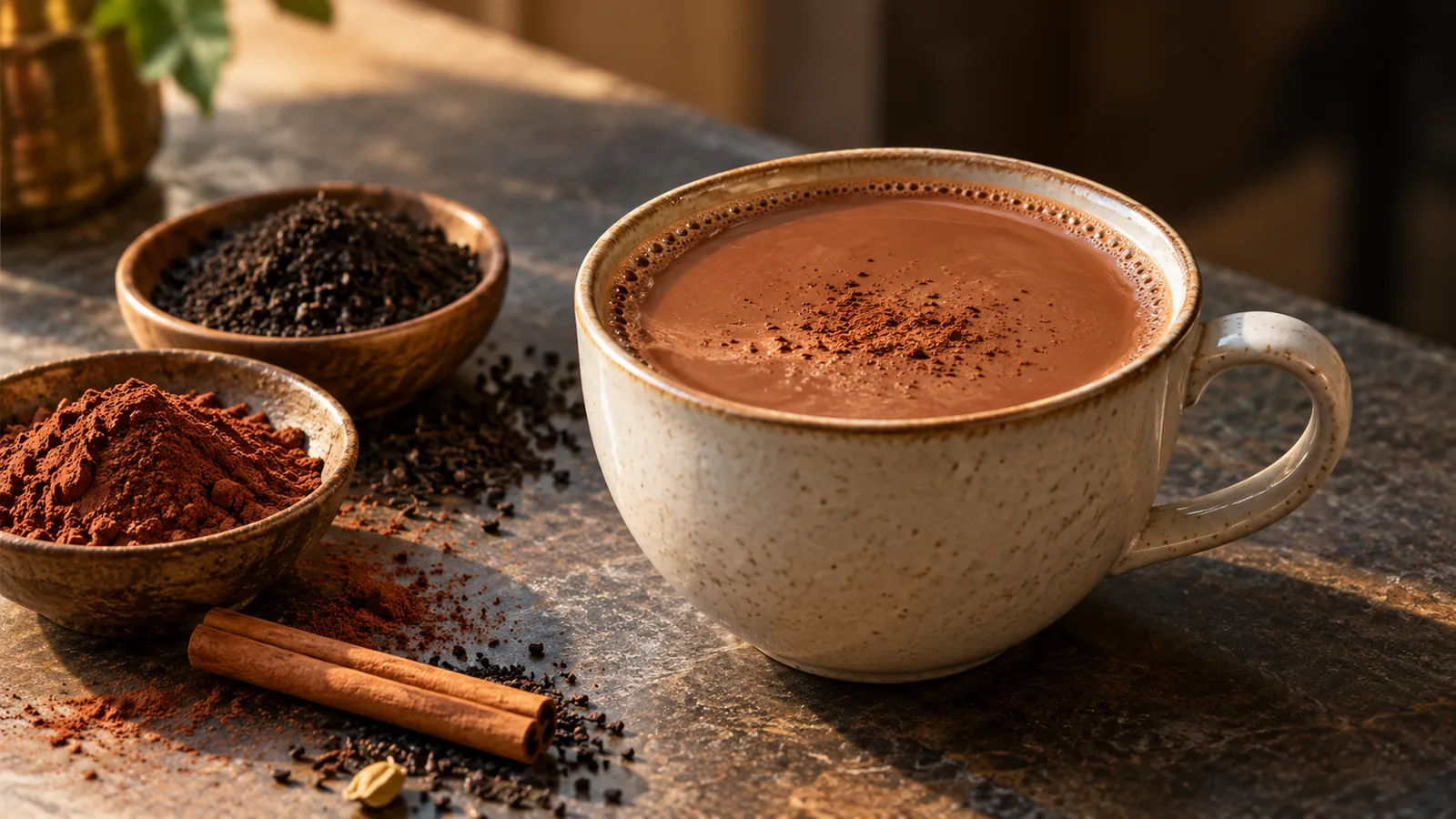
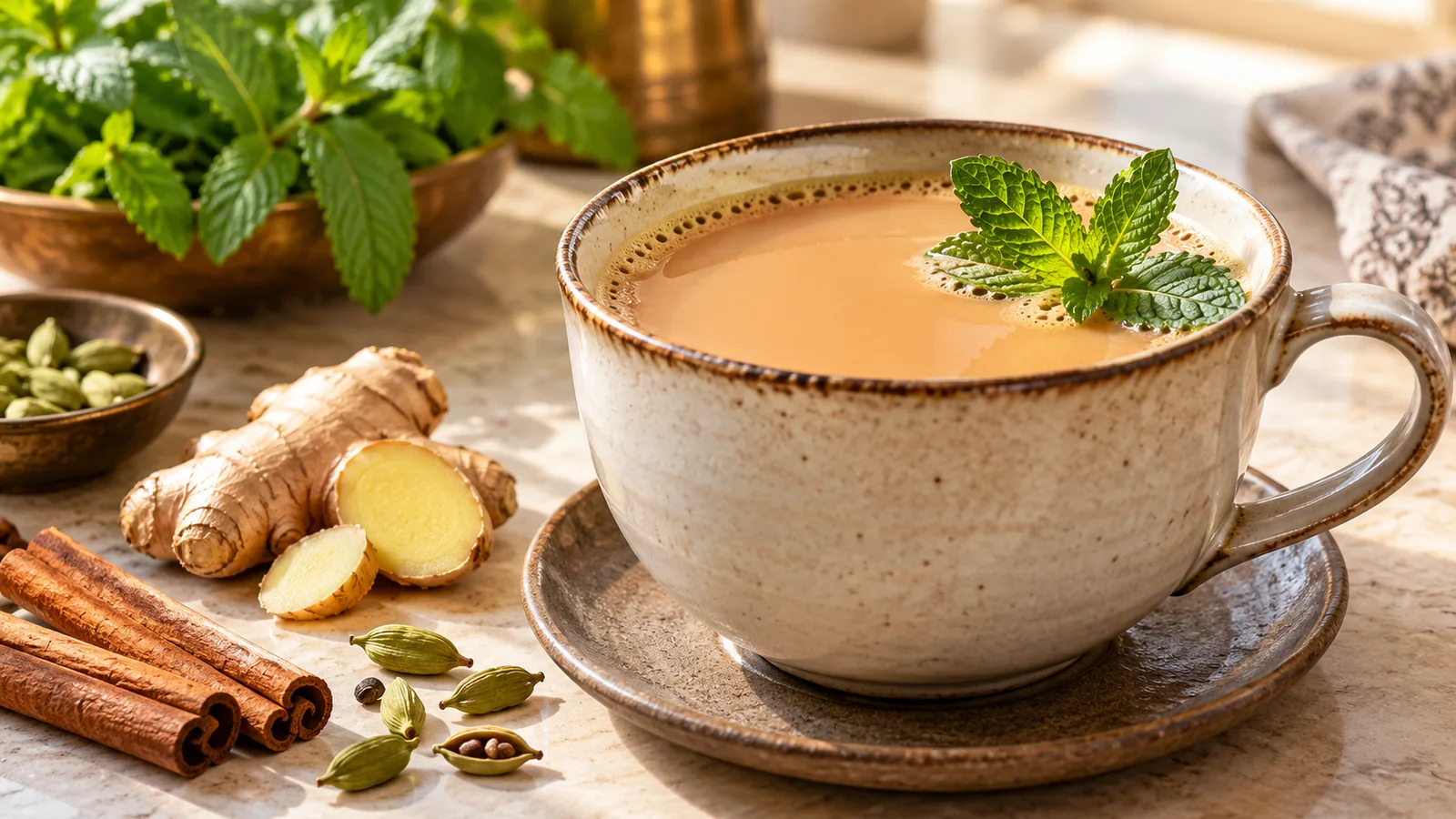
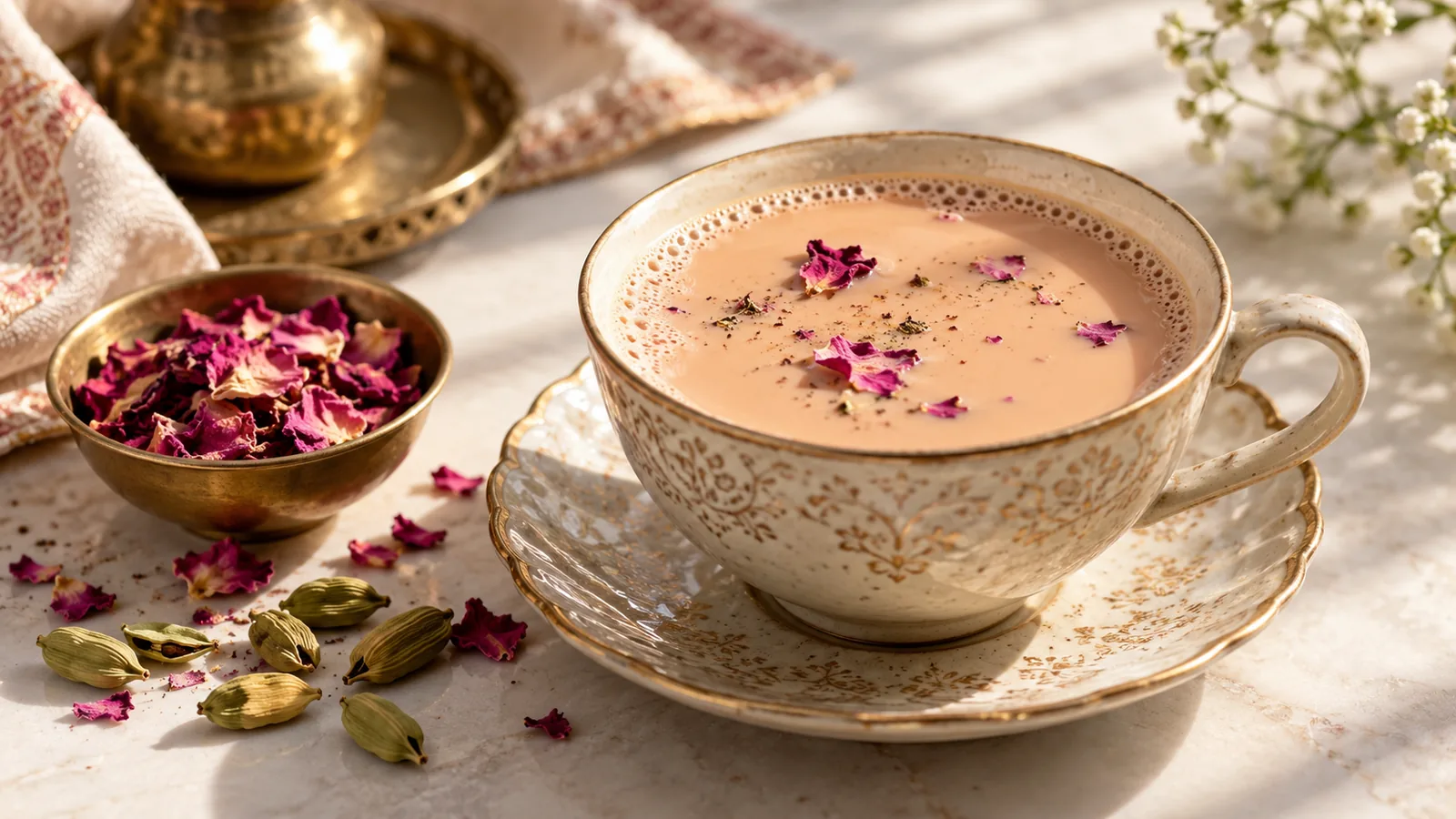
Image note: The featured and detail WebP images are AI-generated illustrations, not photographs of a TeaTurbo brew test.
Quick answer: how to make masala chai
For roughly two small cups, simmer 10 g sliced ginger, 4 lightly crushed green cardamom pods, a short cinnamon piece and 2 cloves in 250 ml water for 3 minutes. Add 6 g Assam CTC black tea for 2 minutes, then 250 ml milk and optional sugar. Bring back to a gentle bubbling simmer for 2–3 minutes, watching the pan, and strain. Use just-boiled water (about 100°C / 212°F); the milk mixture should simmer, not boil over. The measured amounts are an untested TeaTurbo starting formula; tea strength, spices and milk proportion can be adjusted.
Jump to the TeaTurbo recipe card
What is masala chai?
Chai means tea in Hindi; masala refers to a spice mixture. In this drink, black tea is cooked with spices and commonly milk and sugar. It is a prepared beverage, not a separate type of tea leaf. Indian cooks make it in many ways, so this is a practical version rather than a claim of one authentic blend. The Tea Board of India identifies Indian black tea, ginger, cardamom and cinnamon as familiar masala-chai components.
Ingredients and equipment
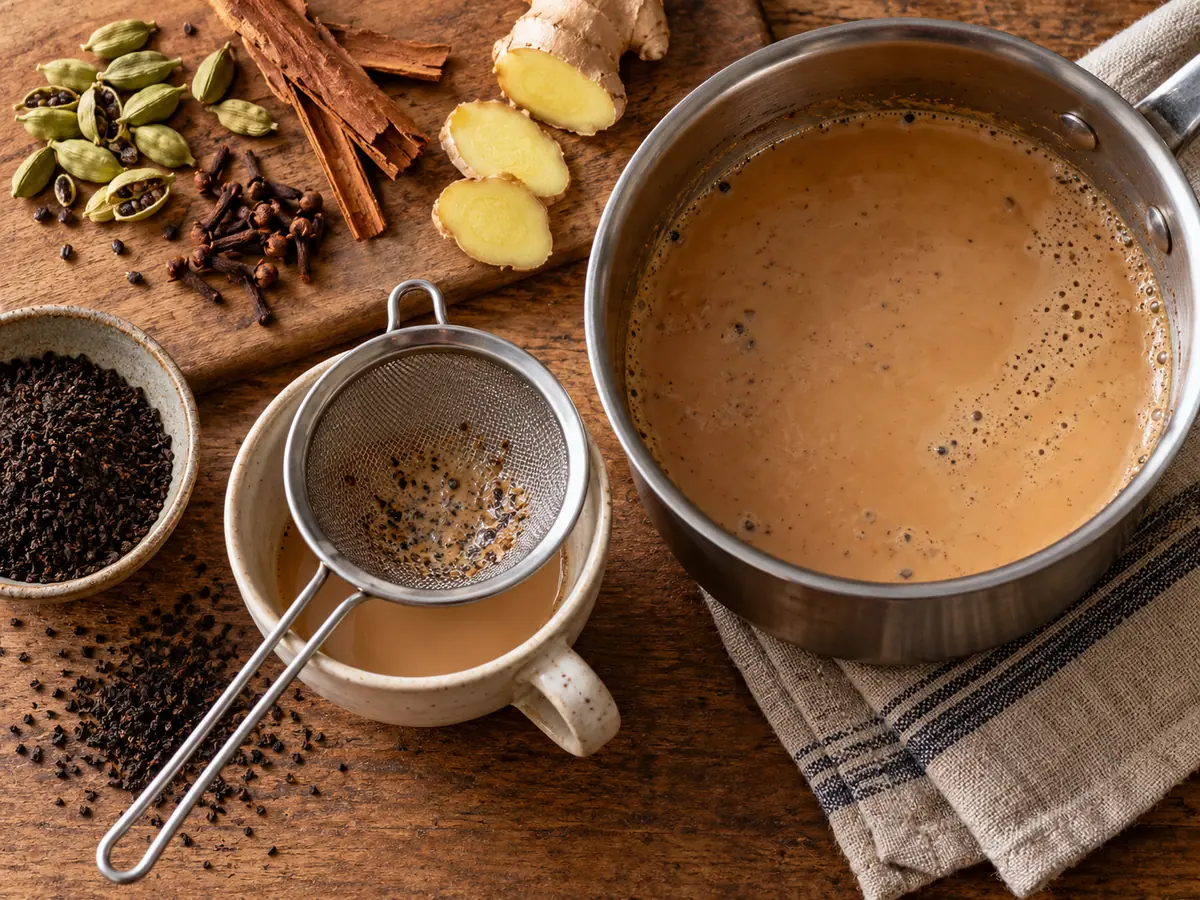
Use 250 ml water (about 1 cup), 250 ml whole milk (about 1 cup), 6 g granular Assam CTC black tea, 10 g fresh ginger in thin slices, 4 green cardamom pods lightly cracked, one 2–3 cm piece of cinnamon bark, 2 whole cloves and up to 8 g sugar (about 2 teaspoons), if wanted. The leaf mass is weighed because spoonfuls differ between CTC granules and larger leaves. You need a small deep saucepan with headroom, a spoon, a fine strainer and two heat-safe cups. This contains milk and caffeine.
Step-by-step stovetop method
- Lightly crack the cardamom. Add it with the ginger, cinnamon and cloves to 250 ml water in the saucepan. Bring to a boil, then simmer uncovered for 3 minutes.
- Add 6 g black tea. Keep at a lively simmer for 2 minutes. The liquid will darken; do not judge strength only by colour.
- Add 250 ml milk and optional sugar. Increase heat until the mixture rises, then immediately lower it. Simmer gently for 2–3 minutes, stirring once or twice. Never leave the pan unattended: milk can foam up quickly.
- Turn off the heat and strain promptly into two small cups. Expect roughly 350–420 ml total, depending on evaporation and the pan. Serve hot and let it cool enough to drink safely.
Masala Chai: Two-Cup Stovetop Method
A measured stovetop milk tea with black CTC tea, ginger, cardamom, cinnamon and cloves.
By Krishna Sahani
No ratings yet · Be the first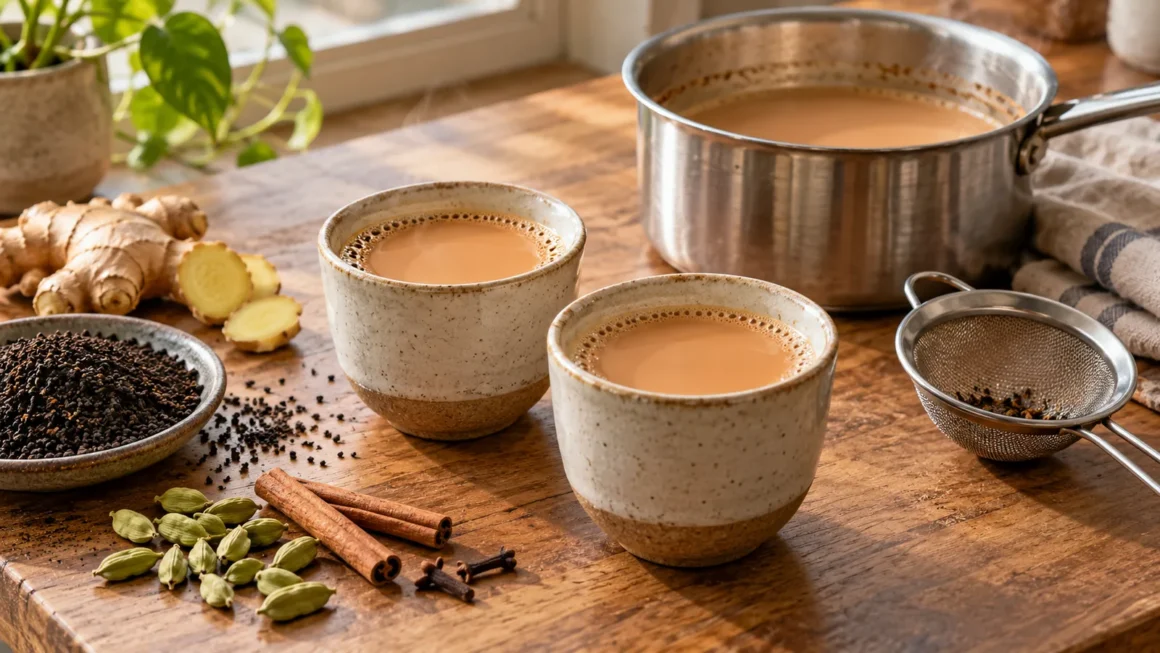
Equipment: Deep small saucepan
Fine mesh strainer
Spoon
Two heat-safe cups
Ingredients
Tea and milk
Spices and optional sweetener
Instructions
-
Infuse spices
Lightly crack cardamom. Bring 250 ml water, ginger, cardamom, cinnamon and cloves to a boil; simmer uncovered for 3 minutes. -
Cook the tea
Add 6 g Assam CTC black tea and simmer for 2 minutes, until the liquor darkens. -
Add milk
Add 250 ml milk and optional sugar. Let the mixture rise, lower heat immediately, then simmer gently for 2–3 minutes, stirring. Do not leave the milk unattended. -
Strain and serve
Turn off the heat and strain into two small heat-safe cups. Expect about 350–420 ml total, depending on evaporation.
Brewing notes
Notes
Start water at 100°C / 212°F, then use a gentle simmer. Tea-only cook 2 minutes; milk finish 2–3 minutes. One cooked infusion. Tea-to-water stage: 6 g per 250 ml, with 250 ml milk added later. Yield varies with evaporation.
Storage
Serve fresh. Strain and refrigerate leftover milk tea within 2 hours, or 1 hour above 32°C / 90°F; reheat gently.
Ratings
Rate this recipe
Why these settings?
Cooking the whole spices in water before adding milk gives them time to infuse without holding the tea over heat for the entire process. CTC granules can produce a robust liquor with milk; larger whole-leaf black tea may need a different mass or time. The Tea Board describes the ingredient family, but does not prescribe these exact ratios. Start here, then change one variable at a time. This is preparation guidance awaiting physical verification.
Troubleshooting
- Harsh or dry: Use 1 g less tea or shorten its water-only simmer by 30–60 seconds before reducing the spices.
- Weak after milk: Try 1 g more tea next time, or use a robust CTC tea rather than extending every stage.
- Too spicy: Remove the cloves or halve the ginger. Cardamom and cinnamon can remain as the core blend.
- Scorched milk or a skin: Use a deeper pan and lower the heat as soon as milk rises; stir the bottom gently.
Variations and serving
Ginger, cardamom, cinnamon and cloves are a useful combination, not a mandatory tradition. Sugar is optional here. A cafe-style foamed latte made with concentrate and steamed milk is a modern variation, with a different cooking method. Serve this chai in small cups with a biscuit or savoury snack if you like.
Storage and reuse
Chai containing milk is best served fresh. If you keep a remainder, strain it, cool promptly and refrigerate in a covered container within 2 hours (within 1 hour above 32°C / 90°F); reheat gently. Do not leave the milk tea on a counter overnight. USDA guidance provides the time limits. Discard the cooked leaves and spices after this batch.
FAQs
Can I use tea bags?
Yes, but bag size and tea cut vary. Start with enough plain black tea bags to supply about 6 g tea in total, then adjust the next batch.
Is masala chai always sweet?
No. Sweetness is a household preference; this recipe works without added sugar.
Can I use plant milk?
Yes as a modern substitution. Use an unsweetened product that tolerates heating and keep the simmer gentle; its flavour and texture will differ from dairy milk.
Does masala chai contain caffeine?
This version does because it uses black tea. The amount varies with the tea and preparation; see TeaTurbo's masala chai caffeine guide.
References and further reading
- Tea Board of India: Masala Tea — Indian black tea and chai spices; it does not validate this article's exact amounts.
- USDA: Leftovers and Food Safety — storage time limits for milk-based leftovers.
Related TeaTurbo articles
Editorial note: Research-based preparation; awaiting TeaTurbo hands-on verification. The accompanying AI-generated images are illustrations, not photographs of a tested batch. Author attribution in WordPress: Krishna Sahani; editorial drafting assistance by TeaTurbo's AI workflow.