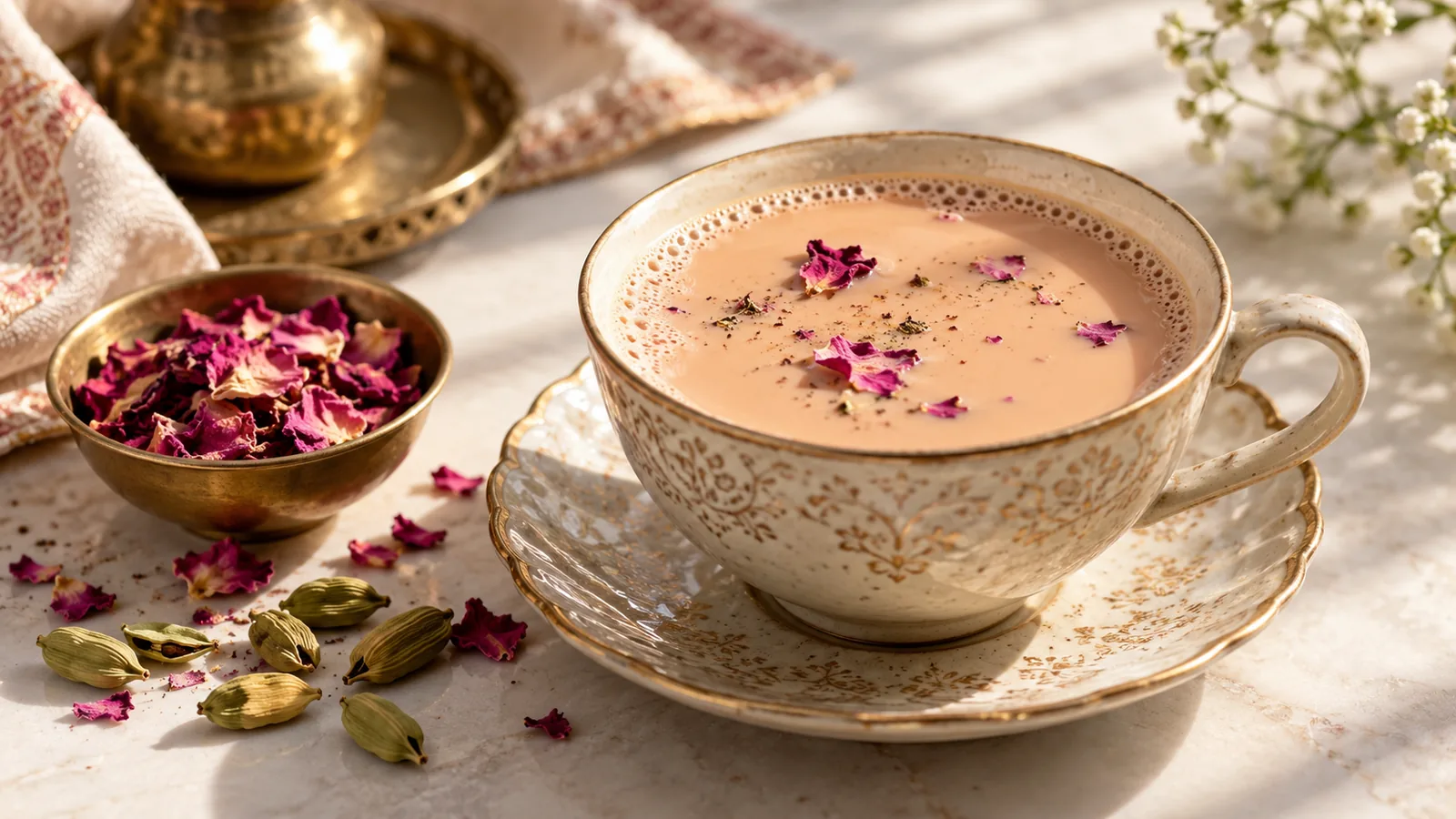
Kesar chai adds saffron’s gentle aroma and colour to Indian milk tea. The main practical question is when to add the delicate strands: start them in a little hot water while the black tea cooks, then add the infusion with the milk. This two-cup recipe uses a restrained amount of saffron rather than turning the drink vivid yellow. It is a research-informed editorial formula, ready for TeaTurbo’s physical brew and taste test before publication.
Images: AI-generated illustrations, not photographs of an actual TeaTurbo test.
Quick answer: how to make kesar chai
Soak 5–8 saffron threads in 15 ml hot water for 5 minutes. Simmer 5 g Assam CTC black tea in 285 ml just-boiled water for 2 minutes. Add 200 ml milk, the saffron liquid and optional 8 g sugar; bring to a gentle rise, then simmer 2 minutes. Strain into two small cups. The water totals 300 ml including the saffron soak. Expect roughly 350–420 ml after evaporation. The precise strand count is a starting point, not a universal customary amount.
What is kesar chai?
Kesar is saffron, the dried stigma of Crocus sativus. This article is about black-tea-and-milk chai flavoured with saffron, rather than saffron-only herbal water or a sweet saffron milk drink. India’s National Council for Hotel Management & Catering Technology describes pre-soaking saffron in warm water for a separate beverage; it does not validate this chai’s exact formula. The Tea Board of India identifies Indian black tea as a foundation for milk-and-spice chai. Kesar chai can be made in more than one way.
Ingredients and equipment
Use 285 ml water for the saucepan plus 15 ml water for blooming the saffron (300 ml total, about 1¼ cups), 200 ml whole milk (about ¾ cup plus 1 tablespoon), 5 g Assam CTC black tea, 5–8 food-grade saffron threads and optional 8 g sugar (about 2 teaspoons). A lightly crushed green cardamom pod is optional. You need a small heat-safe bowl, deep saucepan, spoon, strainer and two cups. Weigh the tea; a teaspoon does not reliably indicate mass across leaf styles. This recipe contains dairy and caffeine.
Step-by-step saffron chai method
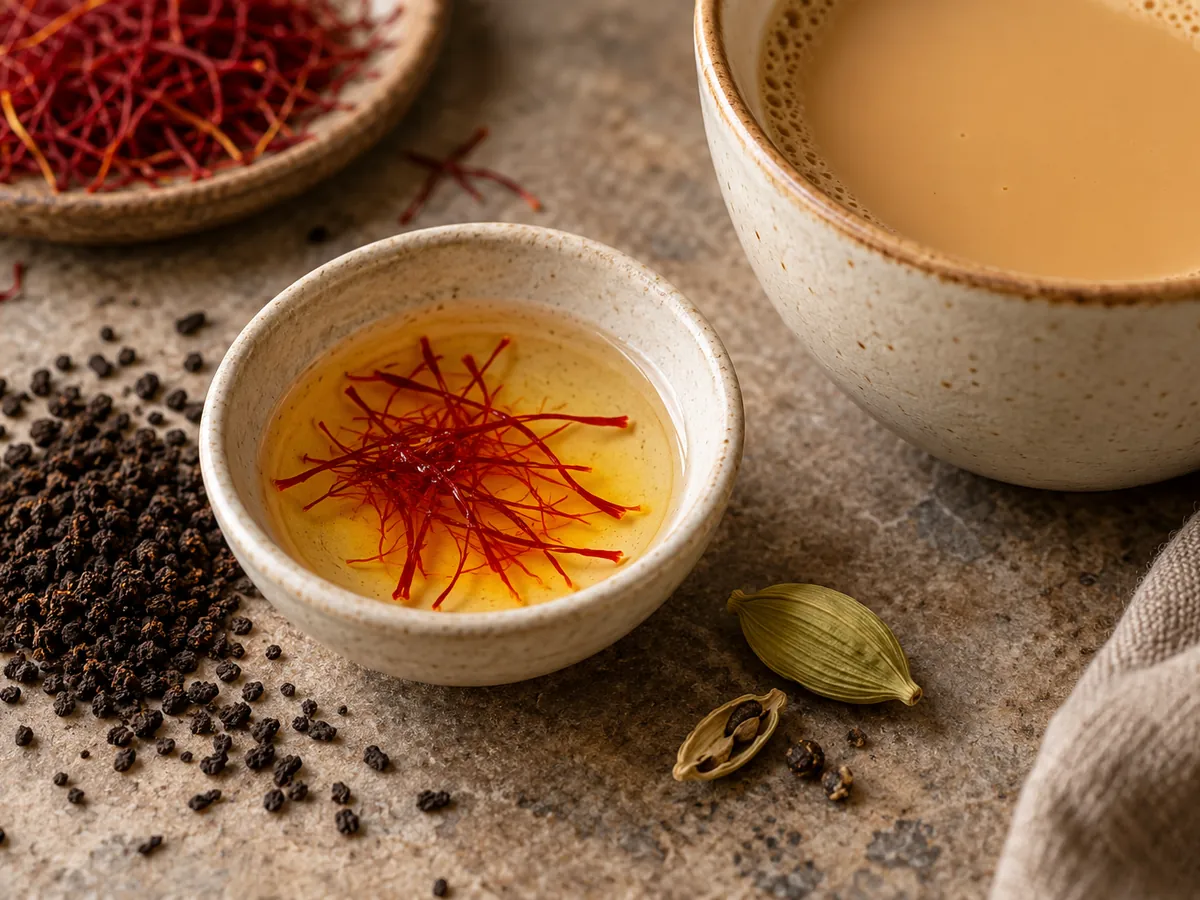
- Heat 15 ml water until hot, approximately 80–90°C / 176–194°F; pour it over the saffron threads in a small bowl. Leave for 5 minutes while preparing the tea. The water may turn golden.
- Bring the remaining 285 ml water to a boil, near 100°C / 212°F at sea level. Add 5 g black tea and simmer gently for 2 minutes.
- Add 200 ml milk, all the saffron and its soaking liquid, and optional sugar. If using cardamom, add it now. Allow the pan to rise once, lower heat and simmer gently for 2 minutes while watching for boil-over.
- Turn off the heat and strain promptly into two small cups. Serve warm after the rim cools enough to sip safely. This is one cooked infusion; discard the spent tea.
Kesar Chai — Saffron Milk Tea with Black Tea
A measured two-cup saffron milk tea with real saffron threads and black tea. Learn when to soak the strands and how to keep the flavour balanced.
By Krishna Sahani
No ratings yet · Be the first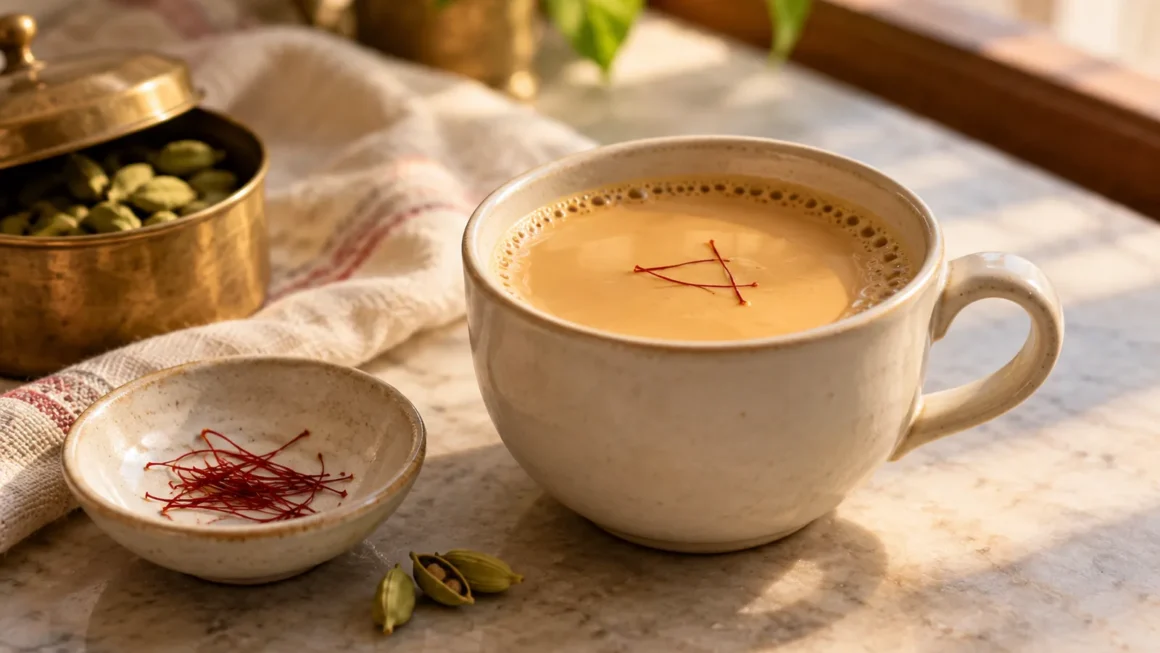
Equipment: Deep small saucepan
Fine mesh strainer
Spoon
Two heat-safe cups
Ingredients
Ingredients
Instructions
-
Prepare
Soak 5–8 saffron threads in 15 ml water at about 80–90°C / 176–194°F for 5 minutes. -
Brew
Bring 285 ml water to a boil, about 100°C / 212°F. Add 5 g black tea and simmer 2 minutes. -
Finish
Add 200 ml milk, saffron and soaking liquid, and optional sugar/cardamom. Let rise once, then simmer gently 2 minutes. -
Serve
Strain into two cups. Yield about 350–420 ml.
Brewing notes
Storage
Serve fresh. Refrigerate strained leftover milk tea promptly in a covered container and reheat gently.
Ratings
Rate this recipe
Why these settings?
The short saffron soak makes the strands easy to distribute without lengthy cooking. A slightly smaller tea mass than a plain strong chai allows the saffron to remain noticeable; that is an editorial choice to test, not a claim made by the cited agencies. Tea cut, saffron quality and milk proportion will change the result. Adjust a single variable after tasting rather than treating a saturated yellow colour as a quality target.
Troubleshooting
- Saffron disappears under tea: Try 1 g less tea or a few more authentic saffron threads next time; avoid excess cardamom.
- Weak tea: Increase the tea by 1 g rather than prolonging the saffron heating.
- Harsh or dry: Shorten the black-tea water simmer by 30 seconds.
- Unnaturally bright yellow: Check the saffron supplier and any added colourings; real saffron tea need not resemble a dyed drink.
Variations and serving
Cardamom is an optional Indian-style pairing, not a required ingredient in every kesar chai. A saffron-only infusion without black tea is a different beverage. A richer milk-heavy cafe version may be pleasant, but label it as a modern preference. Serve in small heat-safe cups; visible threads can be left as garnish only if readers understand the drink is strained tea and not a documented kitchen test.
Storage and reuse
Serve milk chai fresh. Cool any remainder promptly, refrigerate covered and reheat gently. Keep saffron dry and sealed away from light according to its packaging; do not store soaked strands at room temperature for a later day.
FAQs
Is kesar chai the same as saffron milk?
No. This recipe contains black tea, so it has tea flavour and caffeine. Saffron milk can be tea-free.
Can I add saffron directly to the saucepan?
Yes, but pre-soaking lets you see that the strands are wet and makes them easier to distribute evenly.
How much saffron is enough?
Start with 5–8 threads for two small cups, then adjust after a physical taste test. Strand size and strength vary.
Can I use saffron powder?
Whole threads make identification and dosing easier. If using powder, check that it is pure food-grade saffron and use a very small measured amount.
References and further reading
- National Council for Hotel Management & Catering Technology: Aatithyam, March 2025 — a separate beverage uses a warm-water saffron infusion; it supplies no chai ratio.
- Tea Board of India: Masala Tea — Indian black tea as a chai base.
Related TeaTurbo articles
Editorial note: Research-based preparation; awaiting TeaTurbo hands-on verification. Author attribution in WordPress: Krishna Sahani. Images are AI illustrations.