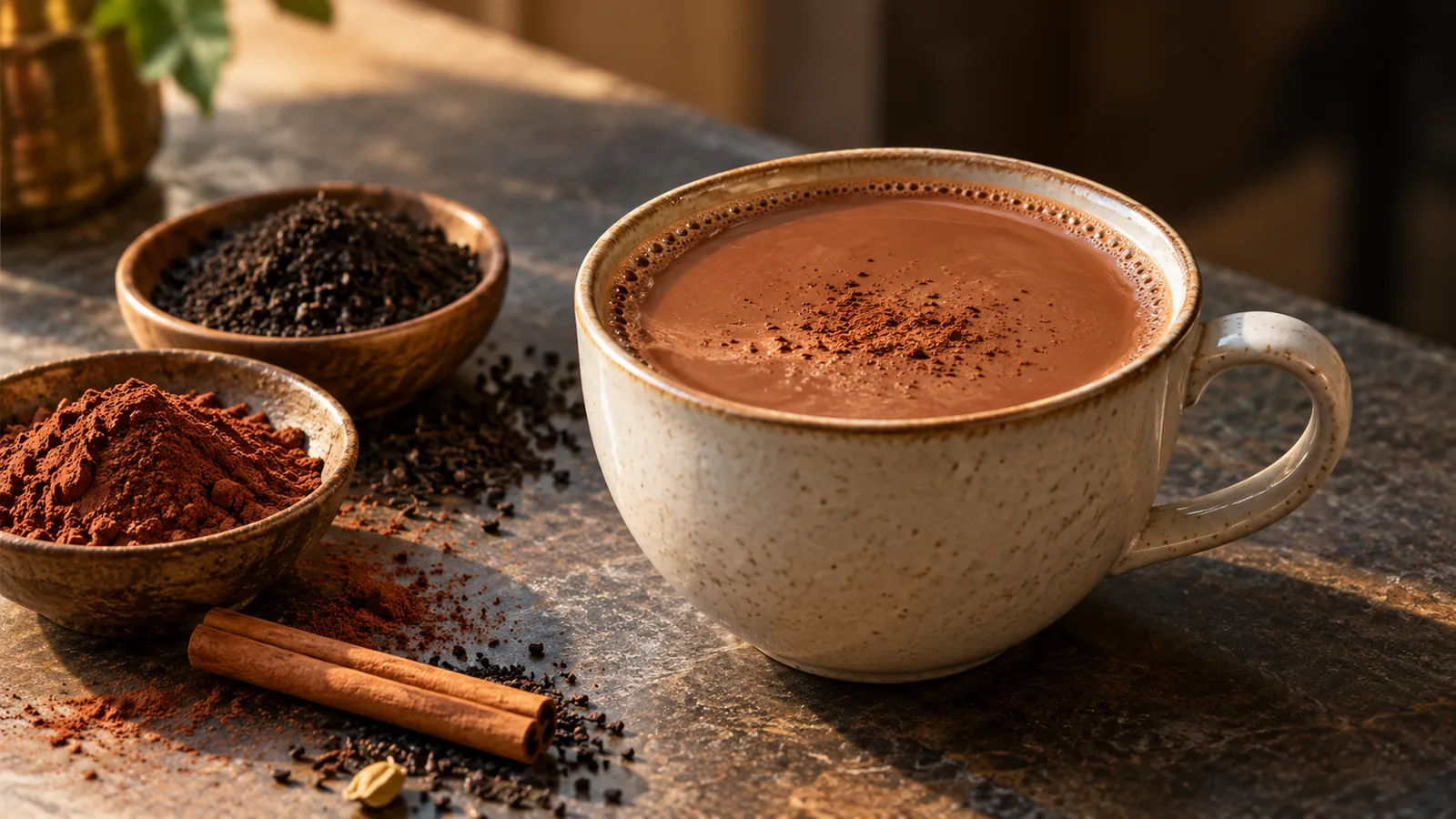
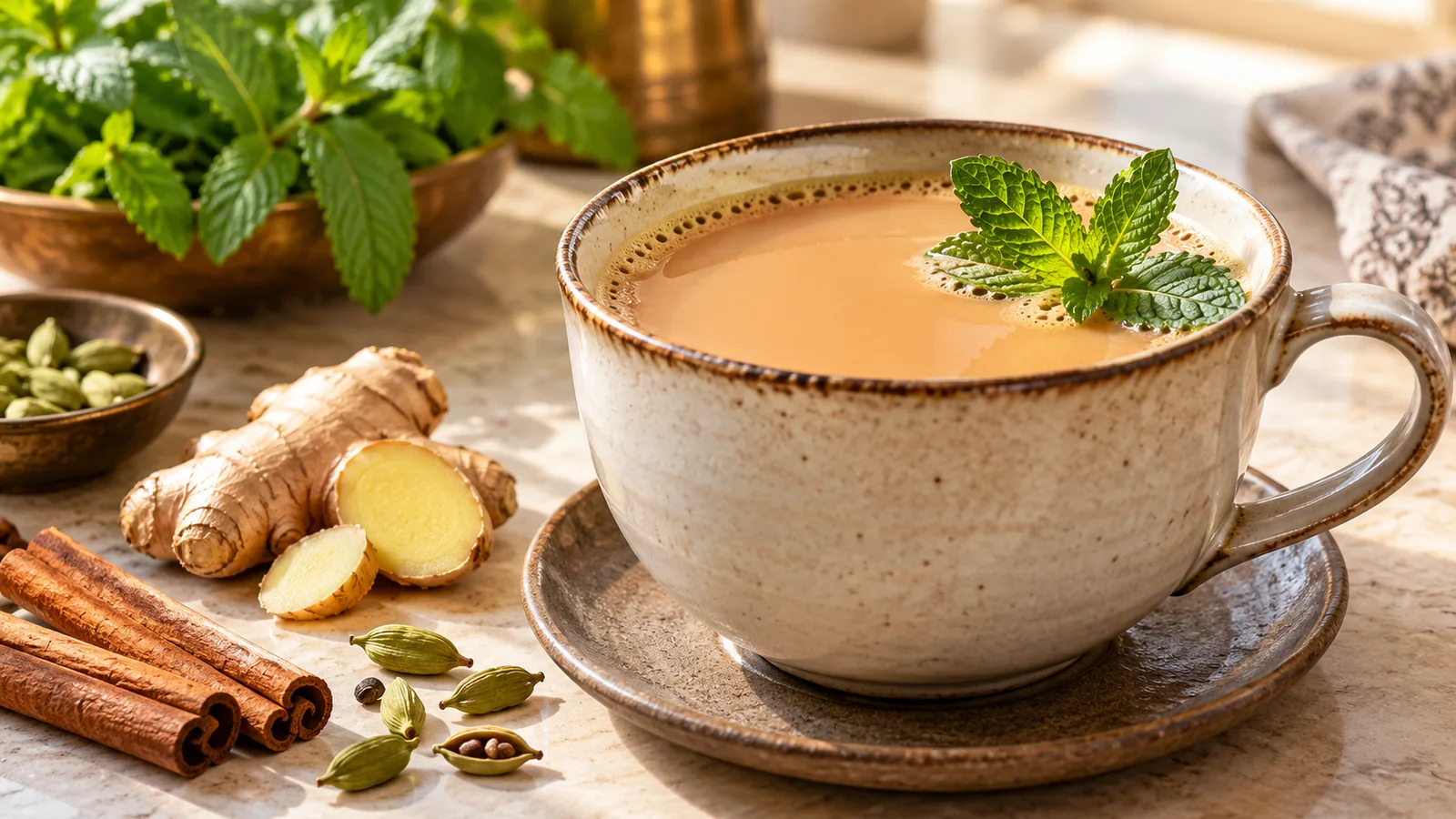
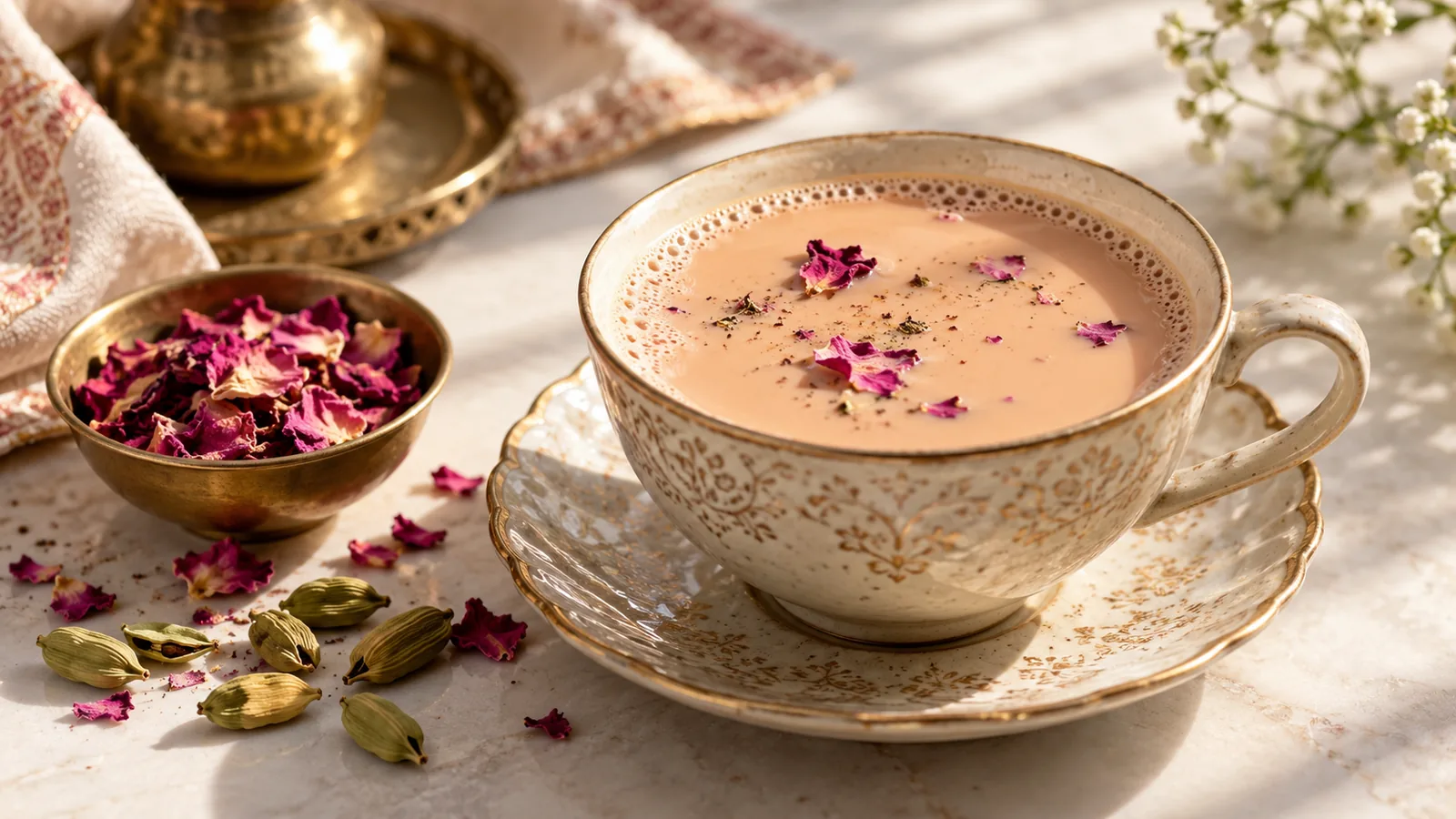
Adrak chai puts fresh ginger at the centre of an Indian milk tea. This adrak chai recipe shows how to make two modest cups with weighed ginger and black tea, a water-first simmer and a short finish with milk. The ginger can be sliced for a gentler result or crushed for a more assertive one. These measurements are a research-based starting point, pending a TeaTurbo kitchen test, because home recipes differ widely in milk ratio and added spices.
Image note: The featured and detail WebP images are AI-generated illustrations, not photographs of a TeaTurbo brew test.
Quick answer: adrak chai at a glance
Simmer 10 g lightly crushed fresh ginger in 300 ml water for 3 minutes. Add 6 g black CTC tea and simmer 2 minutes. Add 200 ml milk and optional sugar, bring it just to a rise, then simmer gently 2 minutes and strain. Use boiling water at the start (about 100°C / 212°F), but keep the milk from boiling over. This makes about 350–420 ml, or two small servings. These are TeaTurbo's untested starting amounts; adjust the milk share to preference.
Jump to the TeaTurbo recipe card
What is adrak chai?
Adrak is ginger in Hindi. Adrak chai, also called adrak wali chai, is black tea flavoured with ginger, commonly made with milk and sugar in Indian homes. It is different from a ginger-only herbal infusion: this formula contains Camellia sinensis black tea and therefore caffeine. The Tea Board of India names ginger as a familiar addition to Indian black-tea chai. A ginger-forward formula can use different water-to-milk ratios.
Ingredients and equipment
Measure 300 ml water (about 1¼ US cups), 200 ml whole milk (a little under 1 US cup), 6 g Assam CTC black tea, 10 g fresh ginger, and 0–8 g sugar (up to about 2 teaspoons). Use a small saucepan with generous headroom, a spoon, fine strainer and two heat-safe cups. Scrub the ginger; peel it if its skin is tough. Cut it thinly or crush it lightly. Do not convert the tea mass to a fixed teaspoon count: leaf cuts vary. The recipe contains dairy and caffeine.
How to make ginger milk tea
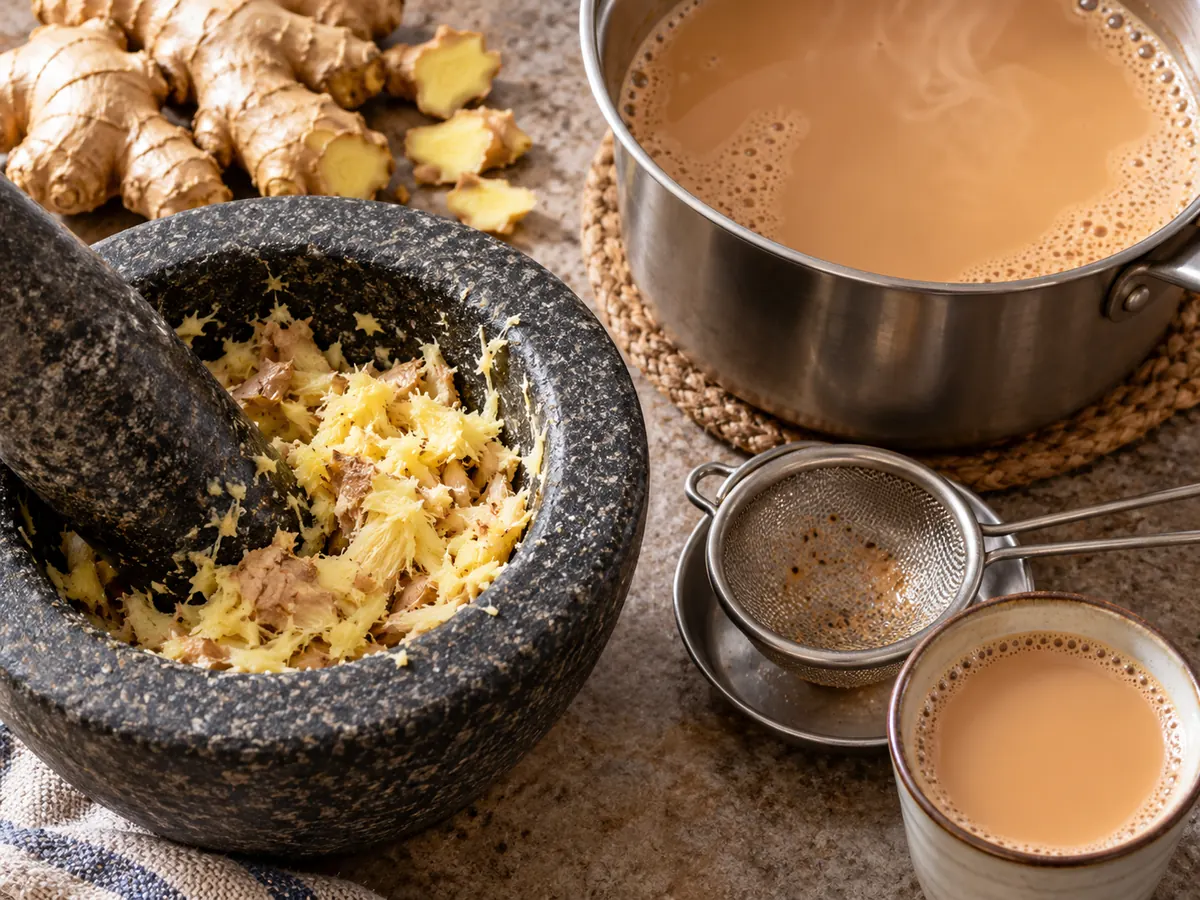
- Put the ginger and 300 ml water in the saucepan. Bring to a boil, lower to a steady simmer and cook for 3 minutes. Crushed ginger will give a stronger result than slices.
- Add 6 g tea and simmer for 2 minutes. The liquor should look deep brown before milk goes in.
- Pour in 200 ml milk and add sugar if using. Bring just to a rise, lower the heat immediately and simmer gently for 2 minutes. Stir once; do not walk away from the pan.
- Strain into two small cups and serve hot, allowing a moment for the drink to cool safely. The yield depends on evaporation.
Adrak Chai: Ginger Milk Tea
A ginger-forward Indian milk tea made with black CTC tea, fresh ginger and milk. This measured stovetop method makes two small cups.
By Krishna Sahani
No ratings yet · Be the first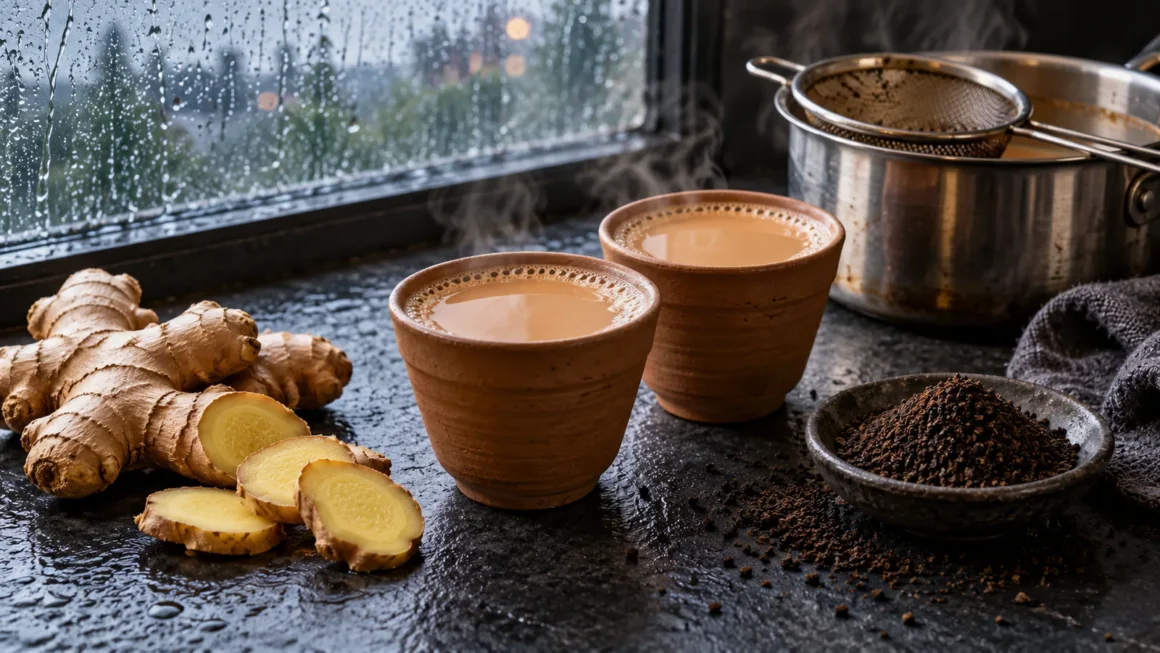
Equipment: Deep small saucepan
Fine mesh strainer
Spoon
Two heat-safe cups
Ingredients
Tea and milk
Ginger and sweetener
Instructions
-
Simmer ginger
Bring 300 ml water and 10 g lightly crushed ginger to a boil; simmer 3 minutes. -
Add tea
Add 6 g black CTC tea and simmer 2 minutes. -
Finish with milk
Add 200 ml milk and optional sugar. Bring just to a rise, lower heat and simmer gently 2 minutes. Watch for boil-over. -
Strain and serve
Strain into two small cups. Yield is approximately 350–420 ml depending on evaporation.
Brewing notes
Notes
For one cooked infusion, boil 300 ml water, simmer ginger for 3 minutes, add 6 g black CTC tea for 2 minutes, then add 200 ml milk and simmer gently for 2 minutes.
Storage
Serve fresh. Refrigerate leftover milk tea within 2 hours, or 1 hour above 32°C / 90°F; reheat gently.
Ratings
Rate this recipe
Why start ginger in water?
The water stage lets ginger infuse before milk is added. Adding tea later keeps it from cooking as long as the ginger. TeaTurbo uses a water-forward starting ratio so ginger remains distinct; the Tea Board source does not validate these precise quantities. If your ginger is especially pungent, use 7 g on the next attempt; if your milk is richer, the tea may need more strength. Those adjustments require a real brew test.
Troubleshooting this chai
- Ginger too sharp: Slice rather than crush it, or reduce from 10 g to 7 g. Do not mask an overly strong batch with extra sugar as the only fix.
- Tea too bitter: Shorten the tea-only simmer to 1 minute or reduce the CTC by 1 g. Fine tea dust extracts differently from larger granules.
- Weak after milk: Use 1 g more tea next time before extending the final milk simmer.
- Milk film or scorched bottom: Lower the heat sooner and stir the bottom. A small, wide pan needs closer attention.
Variations and serving
Cardamom can be added as an optional ginger-and-spice variation, but this baseline keeps ginger in the lead. For a modern dairy-free version, try unsweetened oat or soy milk and keep the finish gentle. A plain biscuit makes a simple accompaniment. Serve adrak chai hot in small cups.
Storage
Fresh is best. Strain any leftover milk tea, cool it promptly and refrigerate covered within 2 hours, or within 1 hour when the room is hotter than 32°C / 90°F. Reheat gently and discard if it has been left out too long. USDA guidance supports those limits. Do not reuse the cooked tea and ginger as though they were fresh ingredients.
FAQs
Can I make adrak chai without milk?
Yes. Indian ginger tea also has water-forward versions; omit milk and dilute to taste. The result is lighter than this milk-chai formula.
Should I grate or slice the ginger?
Grating exposes more surface and can taste more forceful. Lightly crushed or sliced ginger is an easier beginner starting point.
Can I use ginger powder?
You can, but dried ginger tastes different and needs its own measured trial. This recipe's 10 g refers only to fresh ginger.
Is this caffeine-free?
No. The black tea supplies caffeine. Ginger alone, steeped without tea, would be a different infusion.
References and further reading
- Tea Board of India: Masala Tea — Indian black tea and chai spices; it does not validate this article's exact amounts.
- USDA: Leftovers and Food Safety — storage time limits for milk-based leftovers.
Related TeaTurbo articles
Editorial note: Research-based preparation; awaiting TeaTurbo hands-on verification. The AI-generated images are illustrations, not photographs of a tested batch. Author attribution in WordPress: Krishna Sahani; editorial drafting assistance by TeaTurbo's AI workflow.