
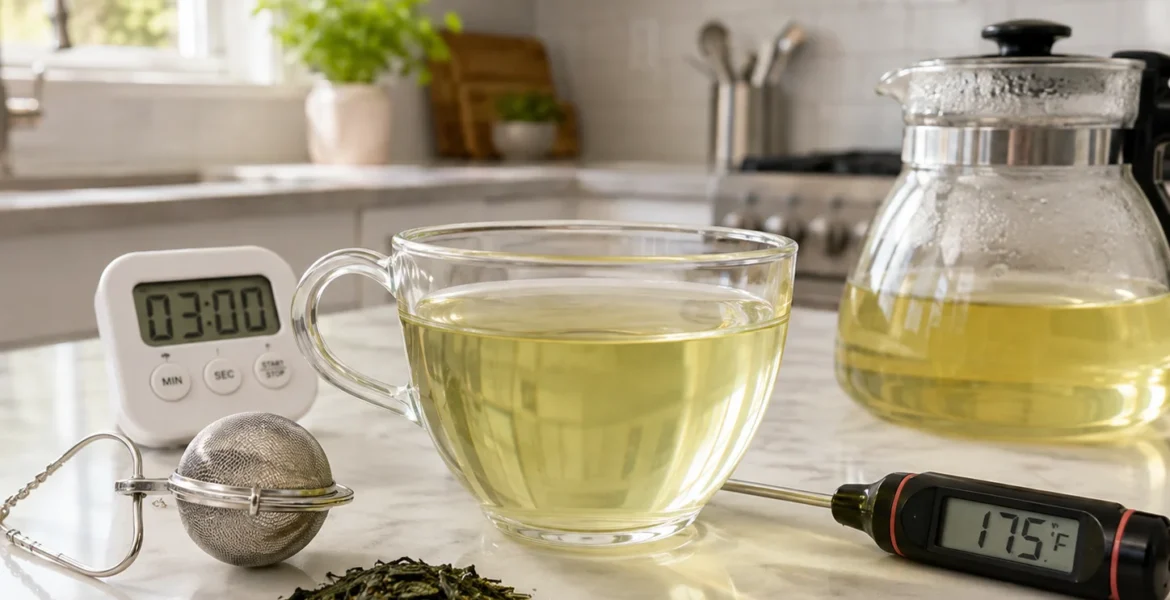
The easiest way to make green tea taste good is to brew it cooler and for less time. For an everyday green tea with no specific instructions, start with 2–2.5 grams of tea, 8 fl oz (240 ml) of water at about 175°F (80°C), and a 2-minute steep. Remove the leaves completely.
If it still tastes bitter, try cooler water or a shorter steep before adding anything. For extra flavor without added sugar, try mint, lemon peel, ginger, jasmine, or cold brewing.
Quick Green Tea Brewing Guide
| Brewing Variable | Good Starting Point |
|---|---|
| Green tea | 2–2.5 g loose leaf or 1 tea bag |
| Water | 8 fl oz (240 ml) |
| Temperature | About 175°F (80°C) |
| Loose-leaf steep time | About 2 minutes |
| Fine tea bag | Start around 60–90 seconds |
| After steeping | Remove tea completely |
| If too bitter | Lower temperature or shorten steep |
| If too weak | Add slightly more tea or a little more time |
See Also | How much loose leaf tea per cup
See Also | Green tea guide for beginners
These are starting points rather than rules. Different green teas respond differently to heat. Japanese tea guidance, for example, recommends substantially cooler water for some premium sencha and gyokuro, while other green teas can tolerate higher temperatures for short infusions.
How to Brew Green Tea So It Tastes Good
You need:
- 2–2.5 grams loose-leaf green tea or one tea bag
- 8 fl oz (240 ml) water
- kettle
- mug or teapot
- infuser or strainer if using loose leaves
- timer
Follow these steps:
- Heat the water to approximately 175°F (80°C).
- Place the green tea in your cup, infuser, or teapot.
- Pour the water over the tea.
- Steep loose leaves for about 2 minutes.
- If using a fine-particle tea bag, begin tasting around 60–90 seconds.
- Remove the leaves or tea bag completely.
- Taste the tea before adding anything.
- Adjust only one brewing variable on the next cup.
If it is bitter, try 165–170°F (74–77°C) next time.
If the temperature seems right but the tea is still harsh, reduce the steep to about 90 seconds. Also read more about best brewing temperature for tea
If the tea tastes weak rather than bitter, use slightly more leaf or extend the steep in small increments.
Green tea brewing research confirms that temperature and steeping time change both extraction and sensory qualities. Catechins are important contributors to bitterness and astringency, and hotter or excessively long extraction can make those characteristics more noticeable.
Tool: TeaTurbo tea brewing calculator
Why Green Tea Sometimes Tastes Bad
Green tea naturally contains compounds that can produce bitterness and a dry sensation called astringency.
Bitterness is a taste.
Astringency is the dry, rough, or puckering feeling that may remain in your mouth after swallowing.
A little of either can be part of a green tea’s normal character. A cup that tastes aggressively bitter, however, often points to a brewing problem.
The most common causes are:
- water that is too hot
- steeping too long
- too much tea for the amount of water
- leaving the tea bag in the mug
- very fine tea particles that extract quickly
- unpleasant-tasting brewing water
- using the same recipe for every type of green tea
Hotter water tends to increase the extraction of compounds associated with bitterness and astringency. Cooler brewing can shift the flavor toward a softer profile, although the ideal temperature depends on the particular tea.
For a full diagnosis, TeaTurbo’s separate guide to why green tea tastes bitter should handle the deeper troubleshooting rather than repeating all seven causes here.
How to Make Green Tea Taste Good Without Sugar
The best approach is to improve the tea itself before trying to cover its flavor.
Start with these changes:
Use cooler water.
If you currently pour boiling water directly onto green tea, try 175°F (80°C) instead.
Use a timer.
Do not leave the leaves sitting in your mug while you drink. Remove them when the tea reaches the flavor you want.
Use the right amount of tea.
Start with around 2–2.5 grams per 8 fl oz (240 ml). More tea does not automatically produce a better cup.
Try filtered water.
If your tap water has a noticeable chlorine, metallic, or mineral taste, compare it with filtered water. Both ITO EN and the Global Japanese Tea Association emphasize the importance of water quality for green tea.
Try a different green tea.
You may simply dislike the flavor of your current tea. Green tea is a broad category, not a single flavor.
Cold brew it.
Cold water extracts tea differently and can produce a milder, softer cup. Japanese tea guidance specifically recommends cold brewing as an option for a sweeter, less astringent style of green tea.
What to Add to Green Tea Without Sugar
You do not need sweetness to make green tea more interesting.
| Addition | Starting Amount per 8 fl oz | Flavor Effect |
| Fresh mint | 3–5 leaves | Cool and refreshing |
| Lemon juice | ½–1 tsp | Bright and tart |
| Lemon peel | 1 thin strip | Citrus aroma without much juice |
| Fresh ginger | 1–2 thin slices | Warm and spicy |
| Cinnamon | Small piece of stick | Warm, aromatic flavor |
| Fresh basil | 2–3 leaves | Herbal and fragrant |
| Unsweetened jasmine green tea | Use as the tea itself | Floral aroma |
| Genmaicha | Use as the tea itself | Toasted, nutty flavor |
Do not add everything at once. Pick one addition and keep the amount small enough that you can still taste the tea.
Mint and lemon are particularly easy starting points for someone who finds plain green tea too grassy.
Ginger works well if you prefer a stronger flavor.
Another option is to change the tea rather than flavor it. Jasmine green tea adds a floral aroma, while genmaicha combines green tea with roasted rice for a noticeably toastier character.
Is Honey a Sugar-Free Way to Sweeten Green Tea?
No.
Honey may sound more natural than table sugar, but it is still a source of added sugar when you add it to a drink. The U.S. Food and Drug Administration includes sugars from honey and syrups within its definition of added sugars. Maple syrup and agave syrup are therefore not no-added-sugar solutions either.
There is nothing wrong with using a small amount of honey if that fits your diet and preference. It simply should not be described as a sugar-free method.
If your goal is no added sugar, choose:
- better brewing
- mint
- ginger
- lemon or citrus peel
- aromatic herbs
- naturally fragrant green tea
- cold brewing
If your goal is specifically sweetness without sugar, a non-sugar sweetener such as stevia or monk-fruit sweetener is another option. Follow the product directions because sweetness levels vary considerably.
Try Cold-Brew Green Tea for a Smoother Flavor
Cold brewing is one of the simplest alternatives for people who repeatedly dislike hot green tea.
For an easy starting batch:
- 5 grams green tea
- 16 fl oz (475 ml) cold water
- covered container
Combine the tea and water and refrigerate for several hours. Start tasting after about 2 hours and strain when you like the flavor. Depending on the tea and desired strength, it can be left longer, including several hours or overnight.
Serve it cold.
Japanese tea guidance notes that cold brewing generally gives green tea a milder, sweeter profile because lower temperatures reduce extraction of catechins and caffeine relative to hotter brewing.
If your hot tea always becomes bitter even after adjusting the temperature, cold brewing is worth testing before deciding that you dislike green tea entirely.
Choose a Green Tea That Matches the Flavor You Like
Do not judge every green tea by one tea bag.
Different processing methods produce very different flavors.
| Green Tea Style | General Flavor Direction |
| Sencha | Fresh, vegetal, grassy, sometimes umami |
| Gyokuro | Rich, savory, umami-forward |
| Longjing / Dragon Well | Nutty, toasted, vegetal |
| Jasmine green tea | Floral and fragrant |
| Genmaicha | Toasted, nutty, cereal-like |
| Gunpowder green tea | Stronger, brisk, sometimes smoky |
If you strongly dislike grassy flavors, jasmine green tea or genmaicha may be easier places to experiment.
If you like nutty flavors, try Longjing.
If you enjoy savory flavors, explore Japanese green teas such as sencha or gyokuro while following tea-specific brewing instructions.
There is no requirement to train yourself to enjoy a green tea you dislike.
How to Fix Green Tea That Is Already Too Bitter
You cannot reverse extraction after the bitter compounds are already in the water, but you can make the cup easier to drink.
Try one of these:
- add 1–2 fl oz of plain warm water
- pour the tea over ice
- add a small squeeze of lemon
- add fresh mint
- turn it into iced green tea
- use it as the base of an unsweetened tea drink
Dilution reduces the concentration of the tea. Lemon or mint changes how the overall flavor is perceived, but neither actually reverses over-steeping.
Then fix the brewing method on your next cup.
Do not keep adding hot water to the same leaves indefinitely and expect the original bitter cup to change.
Common Mistakes That Make Green Tea Taste Worse
| Mistake | Better Approach |
| Pouring boiling water directly on every green tea | Start cooler and follow package directions |
| Guessing the steeping time | Use a timer |
| Leaving the tea bag in while drinking | Remove it completely |
| Using extra tea for “more flavor” | Start with a measured amount |
| Steeping longer when tea tastes weak | Increase leaf slightly before dramatically increasing time |
| Trying to hide bitterness immediately with sweetener | Correct temperature and time first |
| Assuming all green teas taste grassy | Try different green tea styles |
| Calling honey or maple syrup sugar-free | Treat them as added sugars |
| Changing temperature, quantity and time together | Change one variable at a time |
How to Know When You Brewed It Correctly
A well-prepared green tea should taste balanced for that particular tea.
Depending on the style, you may notice:
- fresh vegetal notes
- mild sweetness
- nuttiness
- floral aroma
- toasted flavor
- savory or umami notes
- mild pleasant bitterness
- light astringency
It does not need to taste completely sweet.
The main goal is to avoid a cup where harsh bitterness overwhelms everything else.
Research illustrates why there cannot be one universal green-tea recipe. One study of Turkish green tea found strong sensory acceptance around 85°C (185°F) and three minutes under its test conditions, while Japanese tea organizations recommend much cooler temperatures for certain premium teas. The individual tea and brewing style matter.
The Bottom Line
To make green tea taste good, first fix the brewing.
For a normal everyday green tea without specific instructions, start with 2–2.5 grams of tea per 8 fl oz (240 ml), water around 175°F (80°C), and about 2 minutes of steeping.
If it tastes bitter, lower the temperature or shorten the steep.
If you want to make green tea taste good without sugar, try mint, lemon peel, ginger, jasmine green tea, genmaicha, or cold brewing rather than immediately reaching for a sweetener.
Most importantly, experiment with one variable at a time. A small adjustment in temperature or steeping time can produce a very different cup.
4. FAQ
What is the easiest way to make green tea taste better?
Use cooler water and avoid over-steeping. Start around 175°F (80°C) for approximately two minutes unless the tea package recommends something different.
How can I make green tea taste good without sugar?
Brew it correctly first, then try mint, lemon peel, ginger, jasmine, or cold brewing. These change the flavor without requiring added sugar.
Does lemon make green tea less bitter?
Lemon can make a bitter cup taste brighter and more balanced, but it does not remove compounds that were already extracted. Preventing over-extraction is a better long-term solution.
Is honey better than sugar for sugar-free green tea?
Honey is not sugar-free. The FDA considers sugars from honey part of added sugars when they are added to foods or beverages.
Should I use boiling water for green tea?
Not as a universal rule. Many green teas taste better below boiling, although some styles can tolerate very hot water when brewed briefly. Follow the producer’s directions when available.
Why does my green tea still taste bad after lowering the temperature?
The steep may still be too long, you may be using too much tea, your water may affect the flavor, or you may simply dislike that particular green tea. Change one variable at a time.
Resources:
- ITO EN – How to Prepare the Perfect Cup of Japanese Green Tea
- ITO EN – Green Tea Brewing Guide
- ITO EN – Green Tea Classic Brewing
- FDA – Added Sugars on the Nutrition Facts Label
- PMC – Effects of Brewing Conditions on Green Tea Infusions
- PubMed – Bitterness and Astringency of Green Tea Catechins
- ScienceDirect – Quantitative Analysis of Green Tea Bitterness and Astringency
