Cutting chai is as much about the serving as the brew: a small, often half-glass portion of strong milk tea associated with Mumbai's tea stalls. This cutting chai recipe makes four small portions from one saucepan, with ginger and cardamom kept restrained so the tea still comes through. You will measure the full batch and then pour only about 90 ml per glass. TeaTurbo has not yet tested this home adaptation against a stall-made cup.
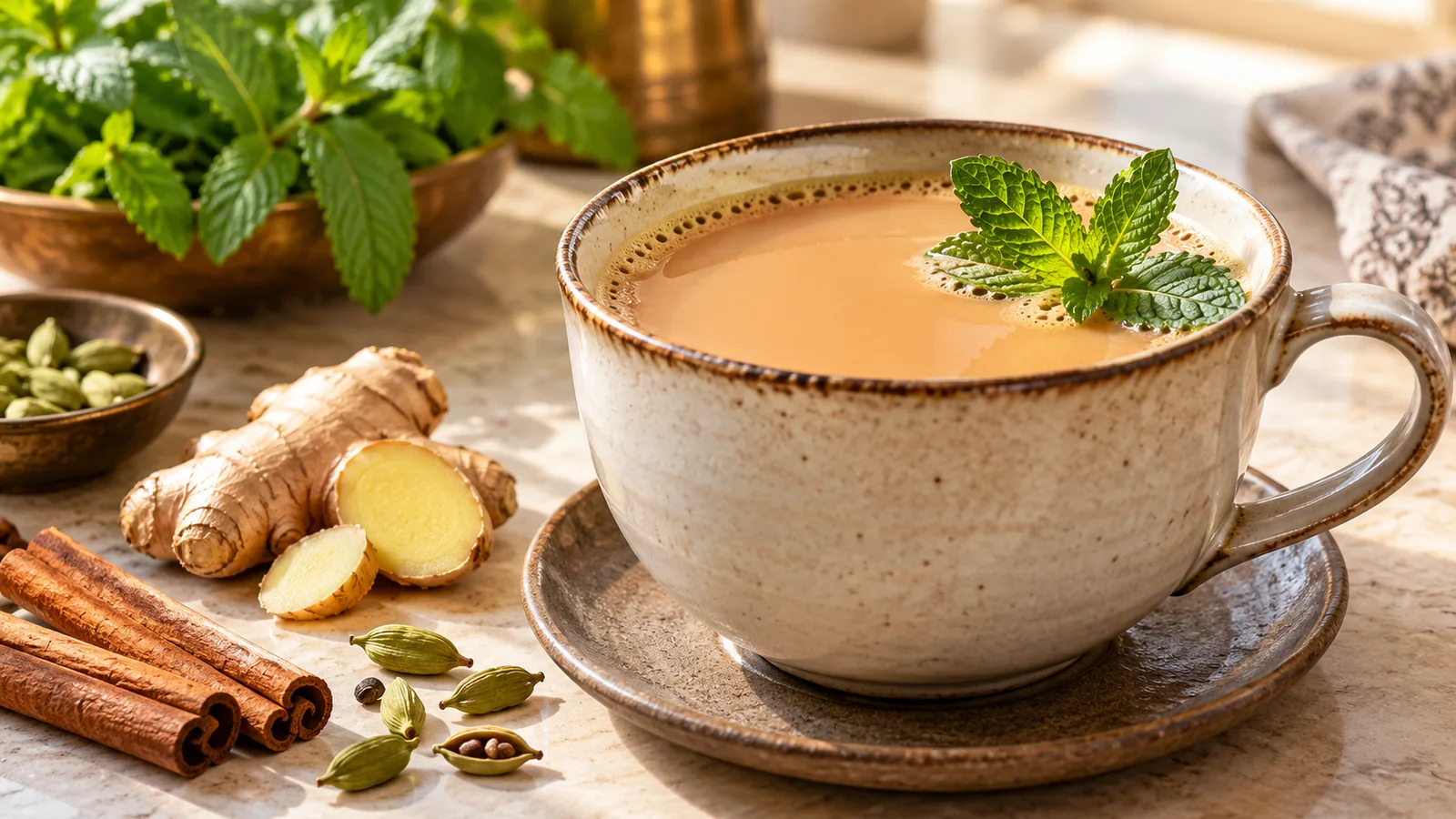
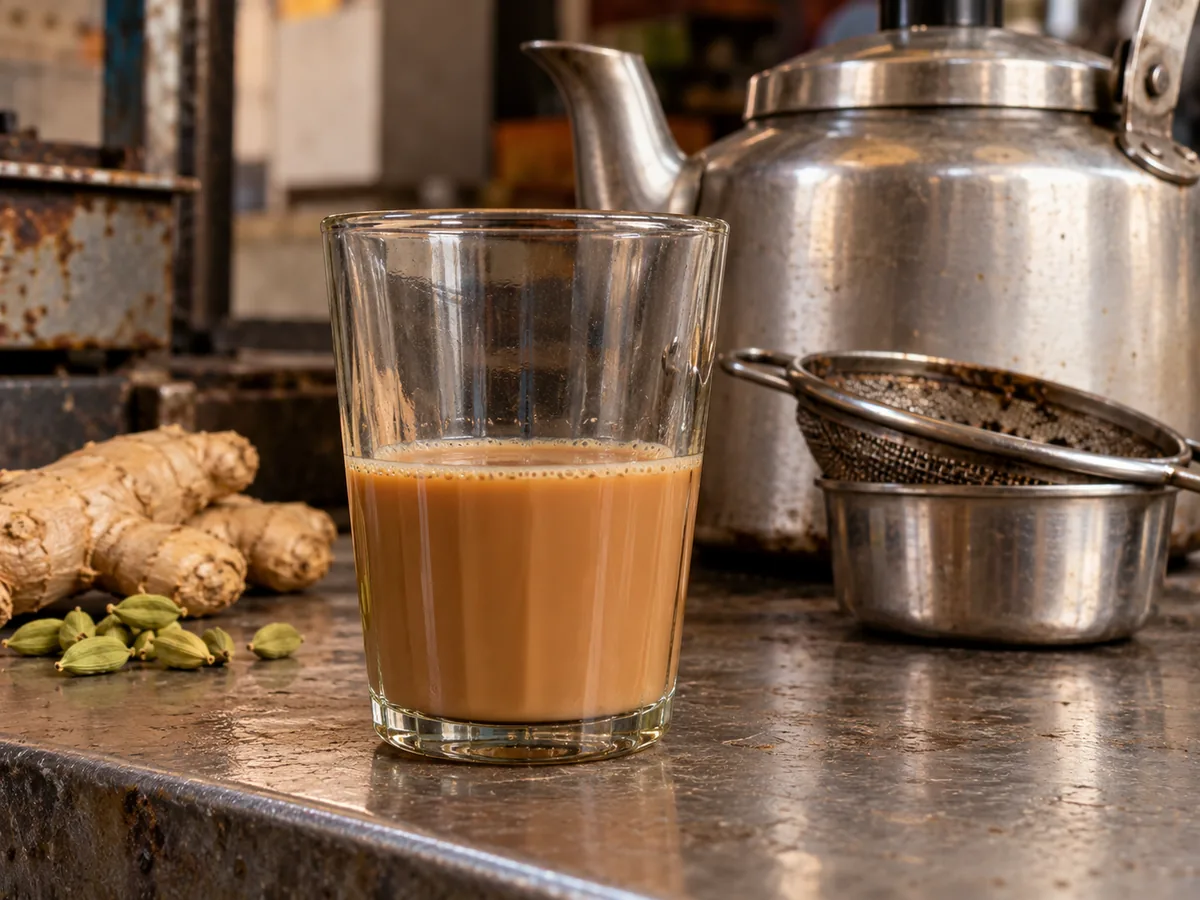
Image note: The featured and detail WebP images are AI-generated illustrations, not photographs of a TeaTurbo brew test.
Quick answer: cutting chai at a glance
Simmer 10 g crushed ginger and 2 cracked green cardamom pods in 240 ml water for 2 minutes. Add 7 g robust black CTC tea and simmer 2 minutes. Add 180 ml milk and optional sugar, bring the mixture to a rise, simmer gently 2 minutes, strain, then divide into four small heat-safe glasses at roughly 80–95 ml each. Start the water at a boil (about 100°C / 212°F). The measured formula is TeaTurbo's untested home adaptation of the small serving.
Jump to the TeaTurbo recipe card
What makes it Mumbai cutting chai?
In Mumbai, cutting chai refers to a smaller serving sold at roadside tea stalls. A National Institute of Food Technology Entrepreneurship and Management report describes these small, lower-priced servings. The name identifies the portion, not a separate tea plant or fixed spice blend. This home version adds ginger and cardamom and divides one batch among four glasses; the report does not specify this formula or an exact serving volume.
Ingredients and equipment
For four cutting-size servings, use 240 ml water (1 US cup), 180 ml whole milk (¾ US cup), 7 g granular black CTC tea, 10 g fresh ginger lightly crushed, 2 green cardamom pods lightly cracked, and up to 8 g sugar (about 2 teaspoons), if desired. Have a small deep saucepan, spoon, fine strainer, measuring jug and four small heat-safe glasses. The yield may vary because a pan's width and heat change evaporation. Use a jug to divide the batch rather than topping the glasses to their rims. This recipe contains dairy and caffeine.
Step-by-step method
- Crack the cardamom pods and crush or slice the ginger. Bring them to a boil with 240 ml water, then simmer for 2 minutes.
- Add 7 g CTC tea and simmer 2 minutes. The liquor should be dark before the milk is added.
- Add 180 ml milk and optional sugar. Watch for the mixture to rise, turn the heat down immediately, and simmer gently for 2 minutes. Stir to prevent milk sticking. Keep the pan attended.
- Strain into a measuring jug. Divide into four small heat-safe glasses, approximately 80–95 ml each, filling each only partway. Let the hot glasses cool enough to hold and drink safely.
Mumbai Cutting Chai: Four Half-Glass Servings
A strong ginger-cardamom milk tea divided into four small cutting-size servings.
By Krishna Sahani
No ratings yet · Be the first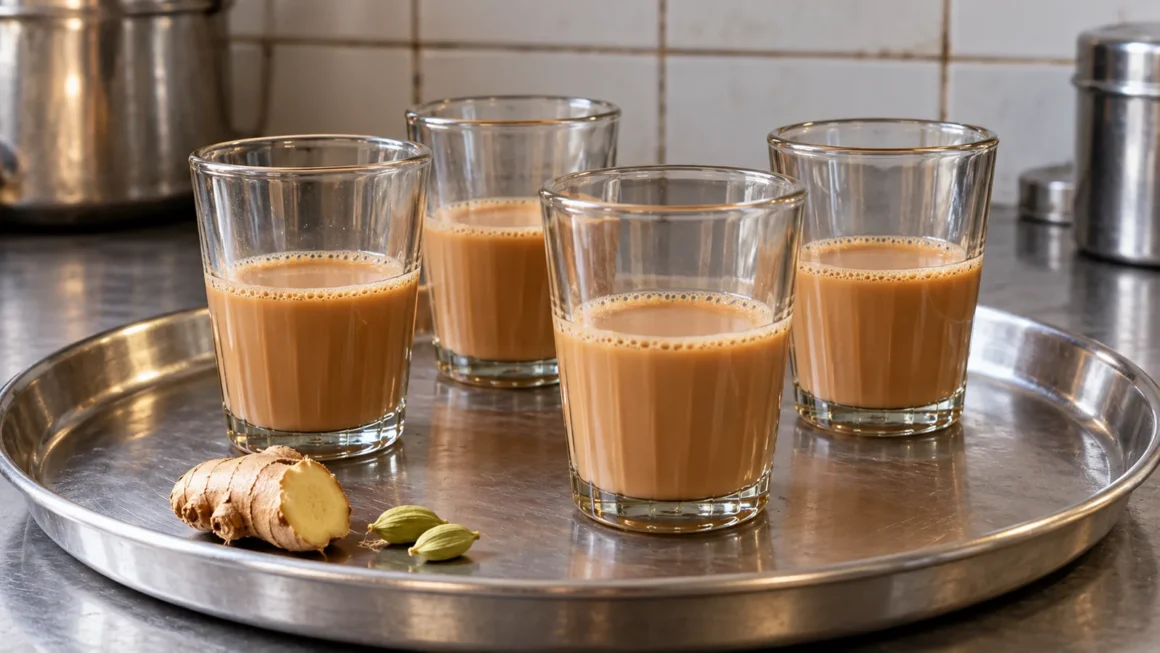
Equipment: Small deep saucepan
Fine mesh strainer
Measuring jug
Four small heat-safe glasses
Ingredients
Tea and milk
Ginger, cardamom and optional sweetener
Instructions
-
Simmer flavourings
Bring 240 ml water, crushed ginger and cracked cardamom to a boil; simmer 2 minutes. -
Cook the tea
Add 7 g Assam CTC tea and simmer for 2 minutes. -
Add milk
Add 180 ml milk and optional sugar. Bring to a rise, lower heat immediately and simmer gently for 2 minutes. -
Serve small
Strain into a jug and divide into four heat-safe small glasses, roughly 80–95 ml each, filling each glass only partway.
Brewing notes
Notes
The smaller serving defines cutting chai; this home version is about 80–95 ml per glass, with yield varying by evaporation. Water starts at 100°C / 212°F; spices 2 minutes, tea 2 minutes, milk 2 minutes. Use 7 g tea per 240 ml water, followed by 180 ml milk. One cooked infusion; measure strained yield and divide by four.
Storage
Serve fresh. Refrigerate leftover milk tea within 2 hours, or 1 hour above 32°C / 90°F; reheat gently.
Ratings
Rate this recipe
Why a stronger, smaller serving?
The aim is a short serving that still tastes like chai. The slightly water-forward ratio and 7 g CTC tea are TeaTurbo’s untested beginner starting point; if the first brew tastes harsh, reduce the tea. The government report documents smaller Mumbai servings, but it gives no required tea strength or tea-to-milk ratio.
Troubleshooting
- The batch is too bitter: Reduce tea to 6 g or shorten its water-only simmer by 30 seconds. Tea dust may be stronger than larger CTC granules.
- It tastes thin: Try 1 g more tea next time; do not turn it into a full mug and still call it a cutting.
- The four portions do not divide evenly: Measure the strained yield and divide it by four. Evaporation is not fixed.
- Milk boils over: Use a deeper pot and lower the heat at the first rise.
Serving and variations
Serve in small glasses only if they are heat-safe; a small cup is a practical alternative. Ginger and cardamom are optional flavourings, not a required vendor formula. Less sugar is a personal adjustment. A full-size mug made from this base changes the intended small serving.
Storage
Cutting chai is best poured fresh. If you retain any strained milk tea, cover and refrigerate within 2 hours, or within 1 hour above 32°C / 90°F, and reheat gently. Do not leave milk chai at room temperature through the day. USDA guidance supports these limits.
FAQs
Why is it called cutting chai?
The name refers to a smaller, lower-priced portion of chai. This recipe serves that style in four small glasses; the volume is a home starting point, not a citywide standard.
Is cutting chai always spiced?
No single spice mix defines it. This version uses ginger and cardamom; a stall's recipe may differ.
Can I use a regular mug?
Use a small heat-safe cup if needed, but pour a cutting-size amount. A large full mug changes the serving style.
Can I make the batch ahead?
Freshly strained tea gives the intended quick service. If made ahead, follow dairy refrigeration limits and reheat gently.
References and further reading
- NIFTEM: Masala Tea Making Unit project report — documents smaller, lower-priced Mumbai cutting-chai servings; it does not validate this article's measurements.
- USDA: Leftovers and Food Safety — storage time limits for milk-based leftovers.
Related TeaTurbo articles
Editorial note: Research-based preparation; awaiting TeaTurbo hands-on verification. The AI-generated images are illustrations, not photographs of a Mumbai stall or a tested batch. Author attribution in WordPress: Krishna Sahani; editorial drafting assistance by TeaTurbo's AI workflow.